József Rippl-Rónai
„Zorka“
Artist
József Rippl-Rónai
Exhibition
The Carl Laszlo Collection. Part of an art collection from Basel, Kunsthalle, Budapest 1996, p. 99.
Provenance
Carl Laszlo Collection, Basel;
Private collection, Switzerland.
Private collection, Switzerland.
Share


Description
- Iconic work from Rippl-Rónai's late phase
- Document of the relationship between Rippl-Rónai and his muse
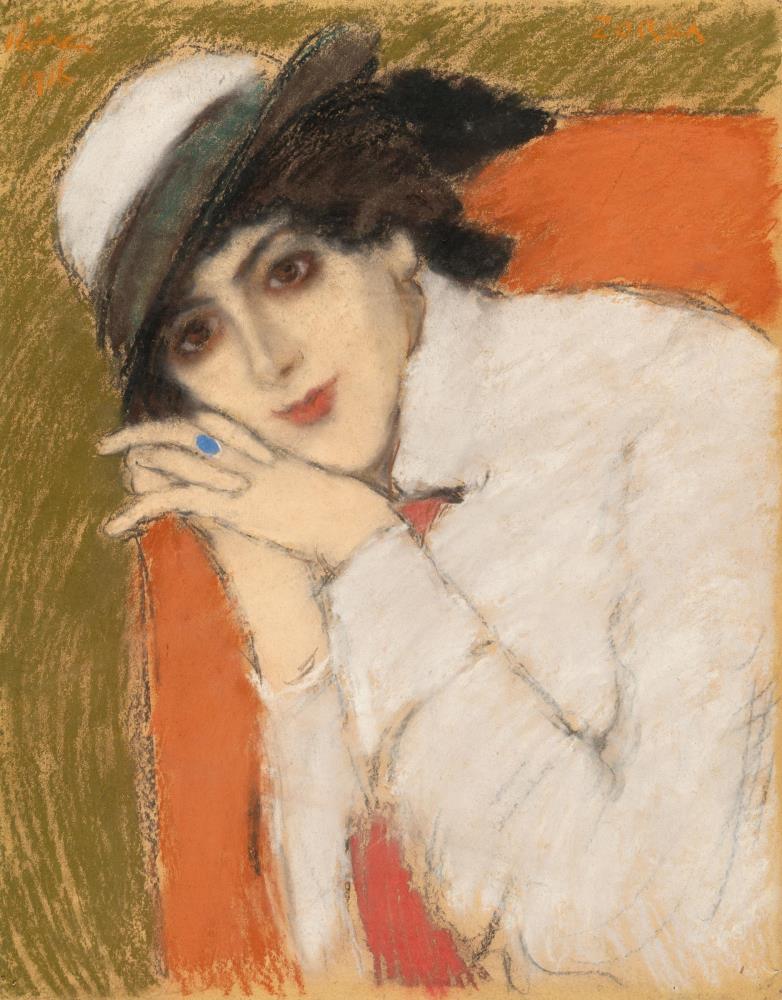
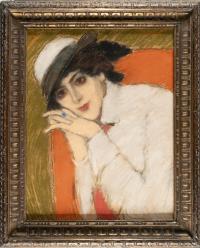
- Outstanding pastel technique with finely modulated light and shadow gradients and delicate materiality
Rippl-Rónai first saw Elza Bányai, whom he called "Zorka", in 1915, when she was about seventeen years old and working as a waitress in a restaurant in Budapest. Her striking appearance and charisma fascinated him, so he asked her to model for him. This encounter marks the beginning of an artistic and private relationship that lasts for over a decade.
Initially, Zorka's mother accompanied the young woman to her first sessions; later she was allowed to go to the painter alone. A love affair develops that strongly influences both the artist's private life and his art. The relationship between Rippl-Rónai and Zorka can initially be kept secret. However, when it became public knowledge, the painter's relationship with his wife and adopted daughter deteriorated dramatically. He only reconciled with his family two years before his death.
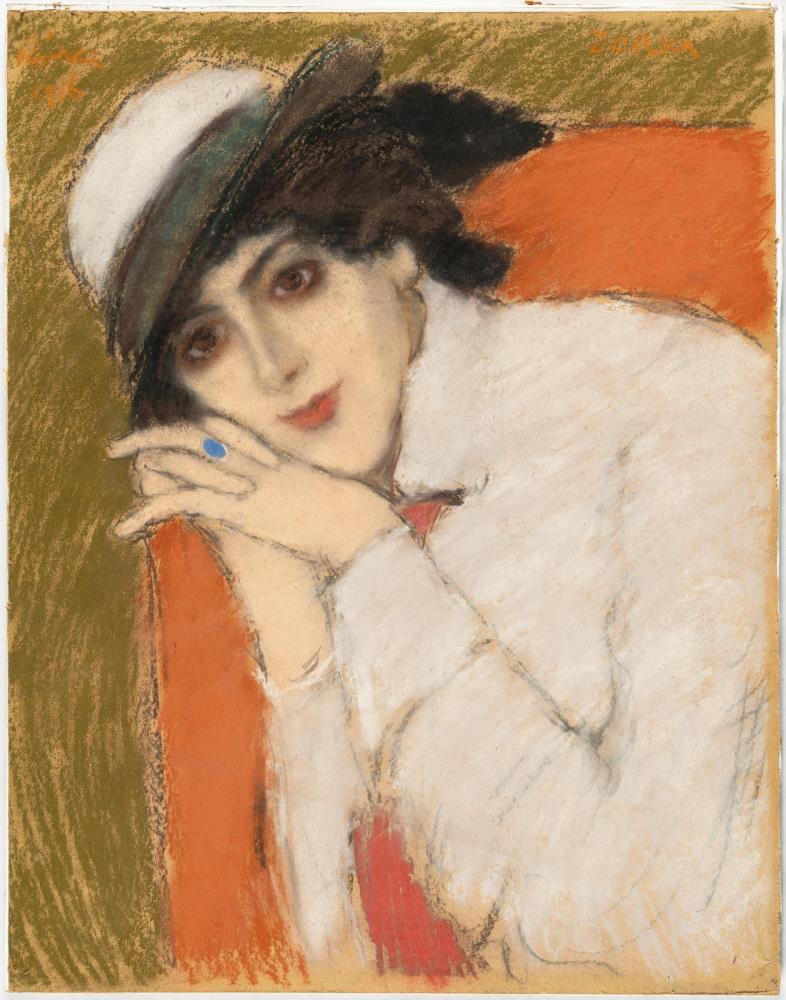
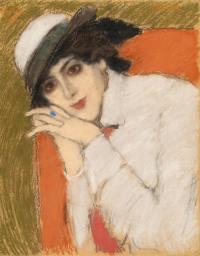
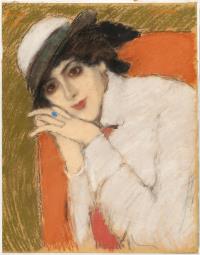
This portrait reflects the relationship between the painter and his model: the dreamy gaze, the posture of the head resting on the clasped hands, the finely modulated light and shadow in the face, the light sensuality of the expression - all this speaks to the intimacy between the two. In this late phase of his work, Zorka is regarded as the painter's most important muse. Rippl-Rónai depicted her face and figure in countless pastels, studies and paintings. It is estimated that he created almost three hundred works with her, in which she embodies various types of female appearance.
With the pastel colors used, the artist can achieve a special softness of color transitions and materiality. The technique is particularly suited to capturing the physical and emotional presence of the beloved. This sheet exemplifies the mature phase in Rippl-Rónai's work, in which the model relationship with Zorka becomes both a private experience and an artistic resource.
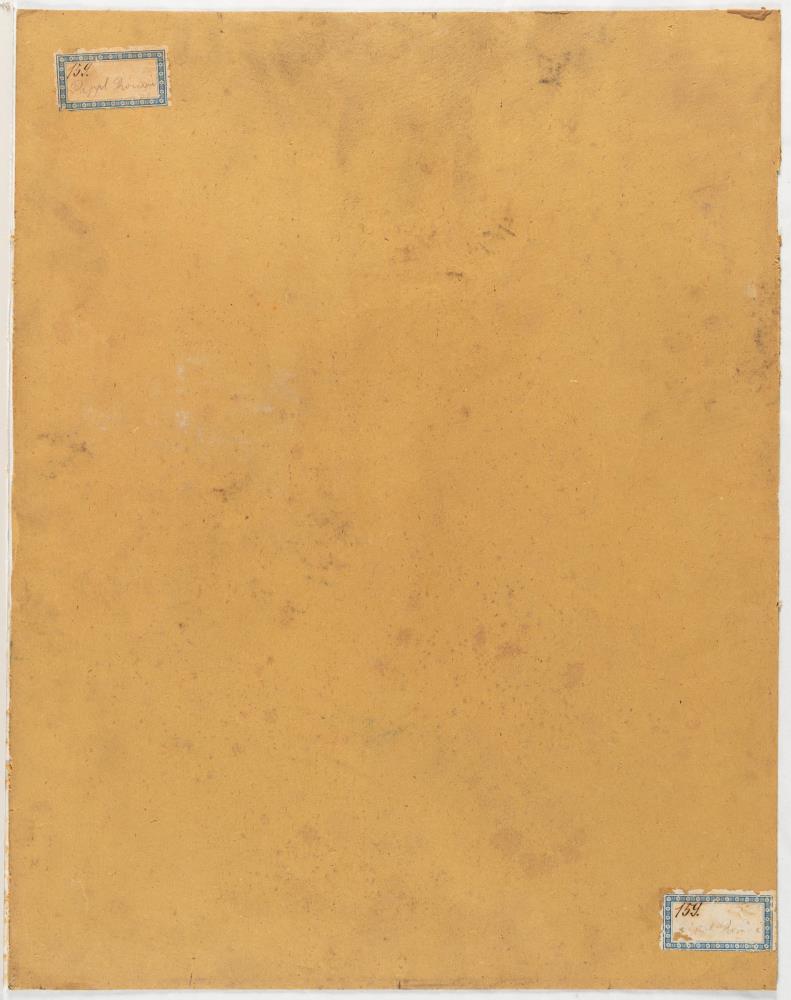
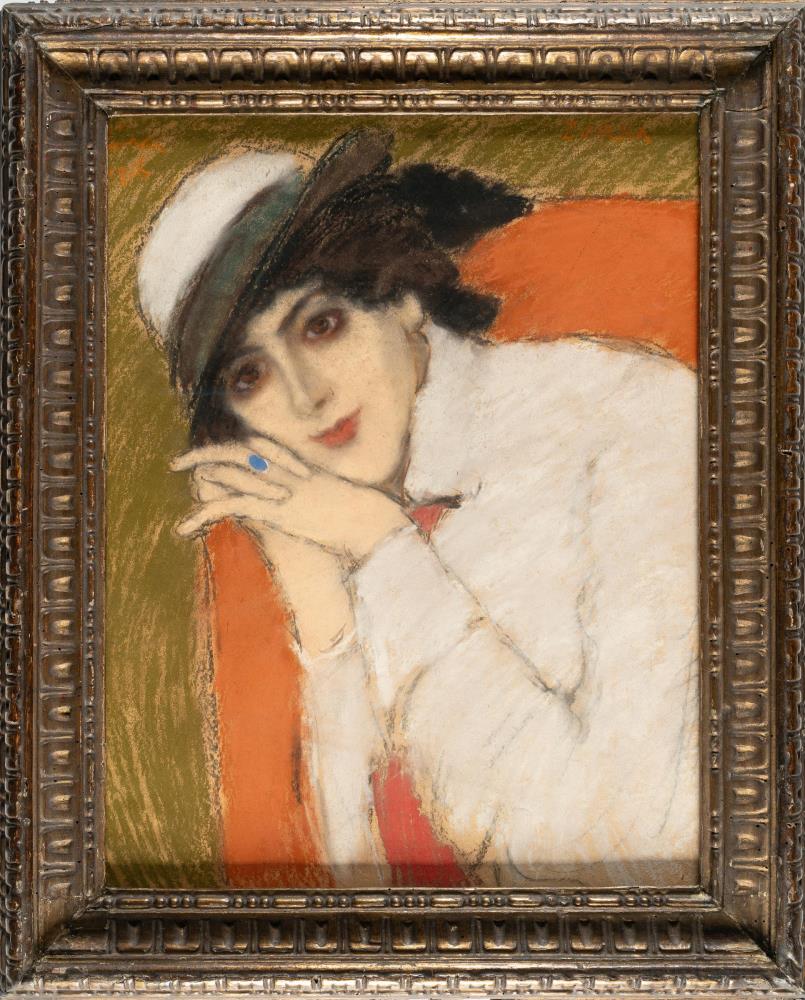
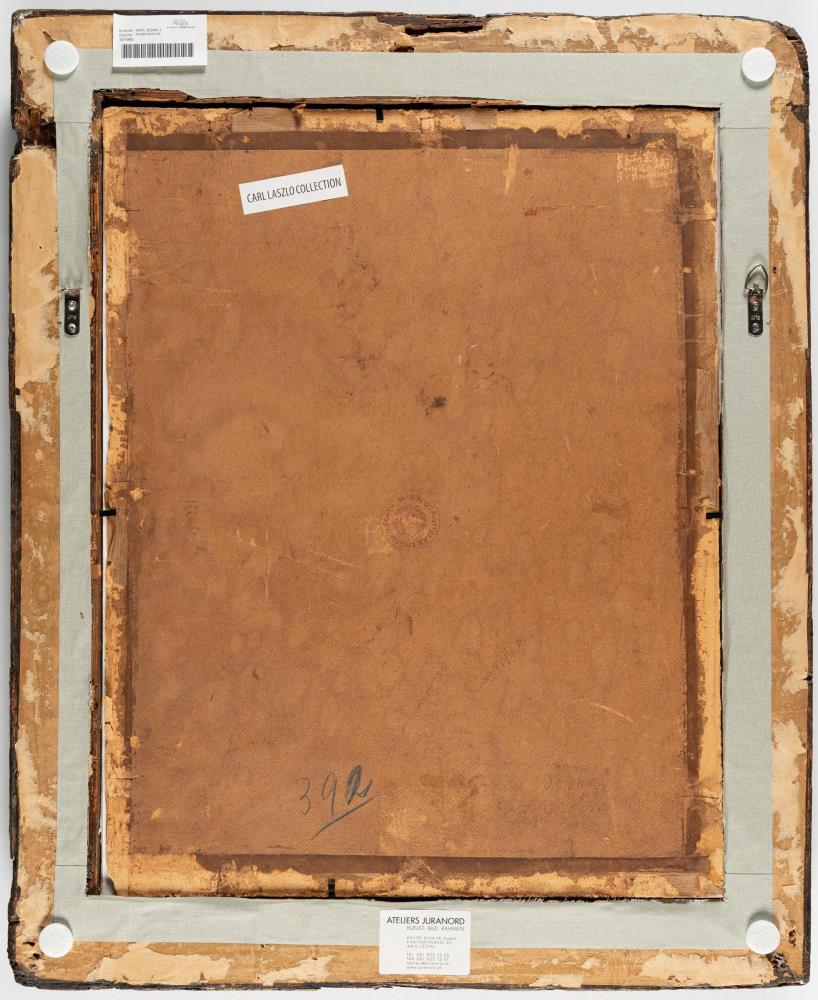
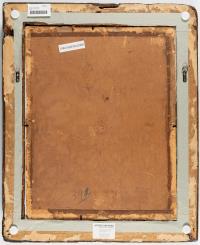
With an old Hungarian export stamp on the back of the frame.
- Document of the relationship between Rippl-Rónai and his muse
- Outstanding pastel technique with finely modulated light and shadow gradients and delicate materiality
Rippl-Rónai first saw Elza Bányai, whom he called "Zorka", in 1915, when she was about seventeen years old and working as a waitress in a restaurant in Budapest. Her striking appearance and charisma fascinated him, so he asked her to model for him. This encounter marks the beginning of an artistic and private relationship that lasts for over a decade.
Initially, Zorka's mother accompanied the young woman to her first sessions; later she was allowed to go to the painter alone. A love affair develops that strongly influences both the artist's private life and his art. The relationship between Rippl-Rónai and Zorka can initially be kept secret. However, when it became public knowledge, the painter's relationship with his wife and adopted daughter deteriorated dramatically. He only reconciled with his family two years before his death.
This portrait reflects the relationship between the painter and his model: the dreamy gaze, the posture of the head resting on the clasped hands, the finely modulated light and shadow in the face, the light sensuality of the expression - all this speaks to the intimacy between the two. In this late phase of his work, Zorka is regarded as the painter's most important muse. Rippl-Rónai depicted her face and figure in countless pastels, studies and paintings. It is estimated that he created almost three hundred works with her, in which she embodies various types of female appearance.
With the pastel colors used, the artist can achieve a special softness of color transitions and materiality. The technique is particularly suited to capturing the physical and emotional presence of the beloved. This sheet exemplifies the mature phase in Rippl-Rónai's work, in which the model relationship with Zorka becomes both a private experience and an artistic resource.
With an old Hungarian export stamp on the back of the frame.