Pablo Picasso
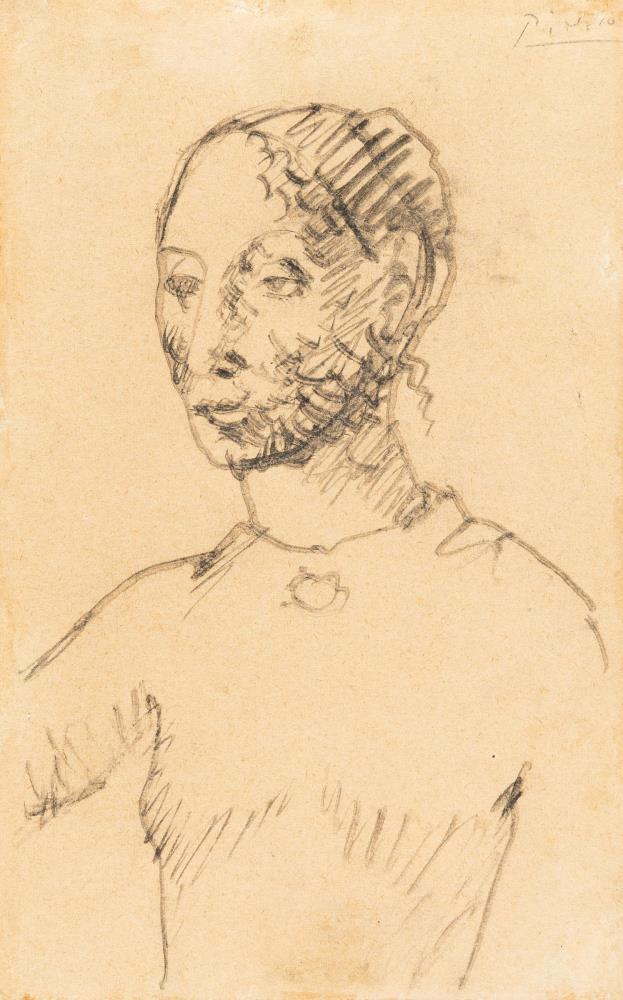
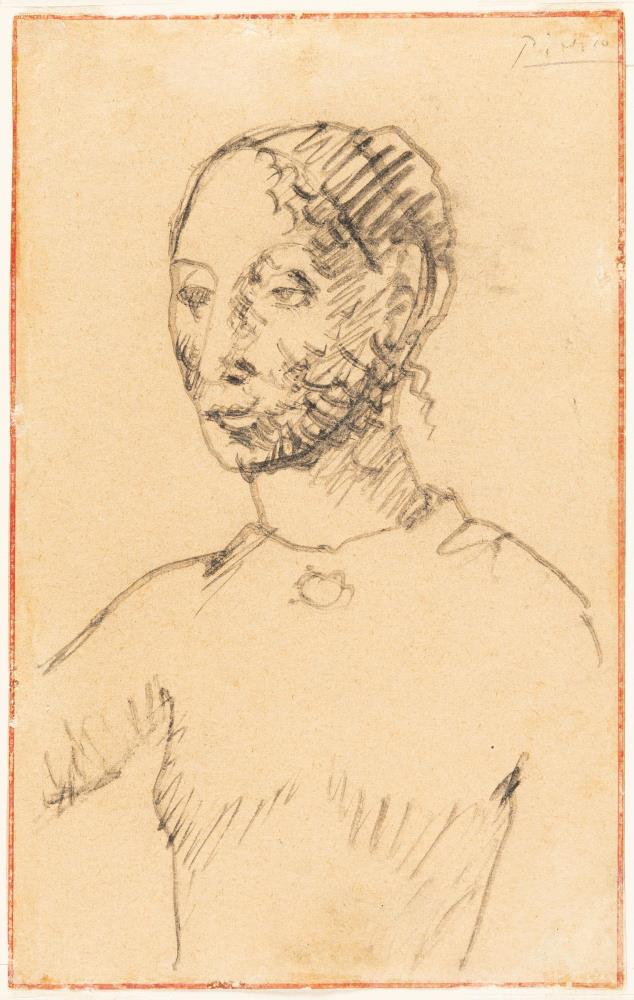
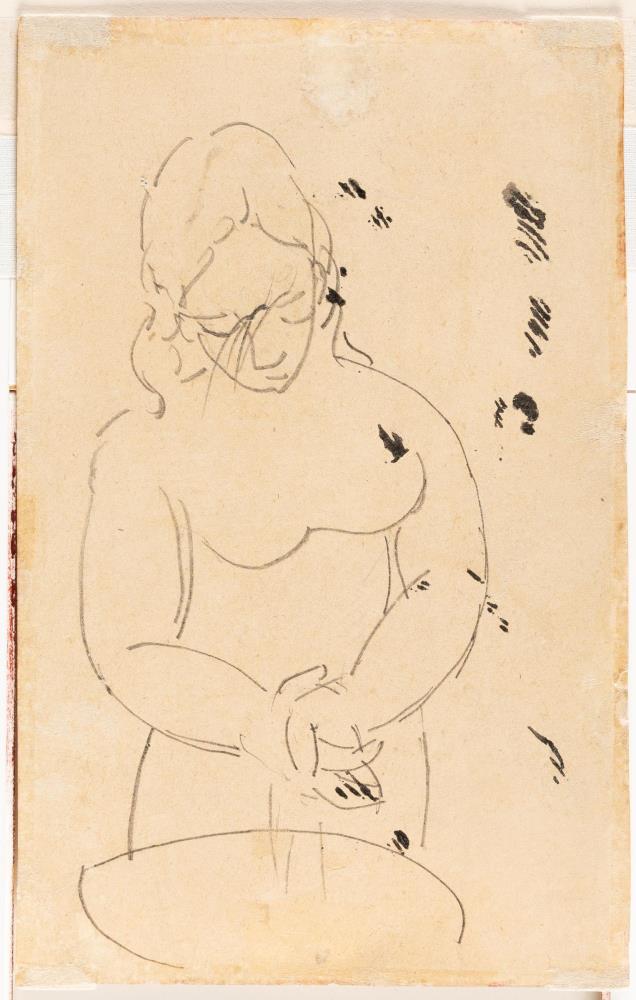
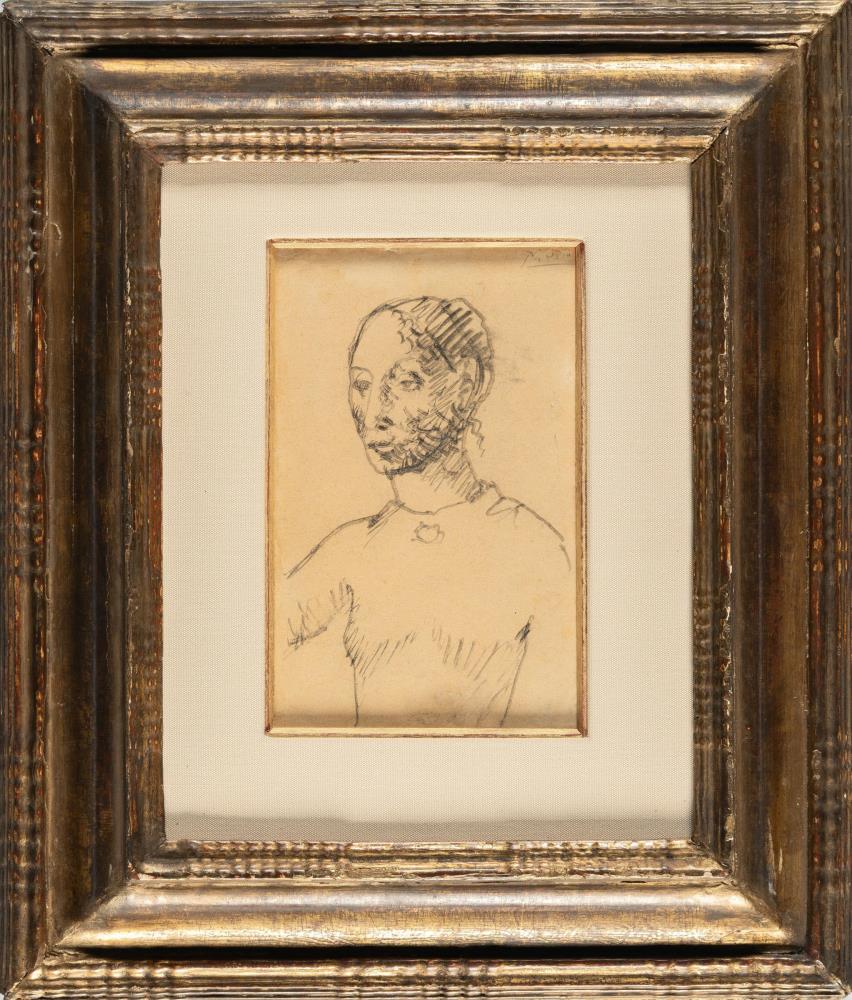
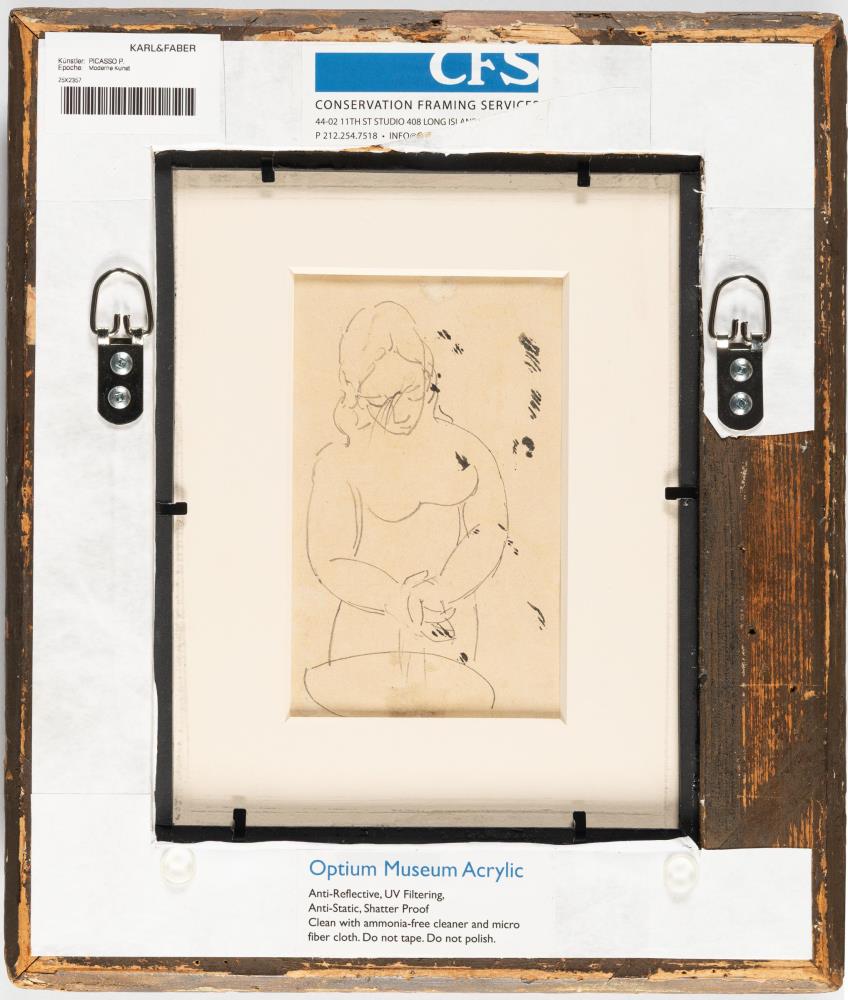
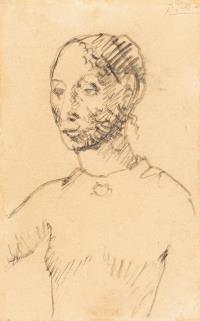
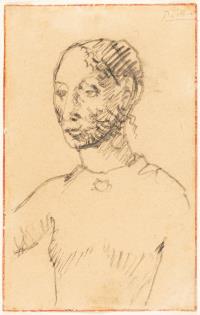
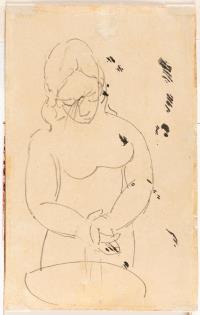
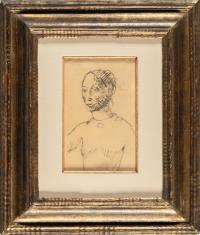
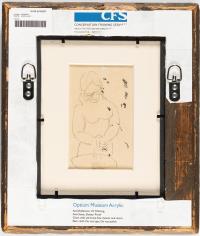
Recto: Buste de femme (buste de Gosolane)- verso: Femme nue debout
Artist
Pablo Picasso
Provenance
D. H. Kahnweiler, Paris;
Charles E. Slatkin Galleries, New York;
Leo M. Rogers, New York;
Christie's, London 27.6.1972, lot 132;
Private collection USA, acquired from the aforementioned.
Charles E. Slatkin Galleries, New York;
Leo M. Rogers, New York;
Christie's, London 27.6.1972, lot 132;
Private collection USA, acquired from the aforementioned.
Share


Description
- Picasso illustrates his ability to capture and record the world in the manner of the old masters
- Sketchy portrait of a woman from Gósol in the Pyrenees
- From the collection of Daniel-Henry Kahnweiler, Picasso's long-time gallery owner and friend
He wants to be far away from Paris and its art scene. Preferably where people originally live, in such a way that one would almost pity them as primitive in Paris. It should be an escape from the hustle and bustle, for one beautiful summer.
Together with his partner Fernande Olivier, Pablo Picasso traveled to the Pyrenees in 1906 to live in the village of Gósol. Relaxation is on the wish list, but the village will change Picasso forever. In the desolation and simplicity of life there, Picasso turned more and more to the Romanesque style. His style changes and clearly borrows from this bygone era.
The sketchy portrait of an unknown woman, probably a lady from the village, is also inspired by this new environment. Picasso presents his ability to capture and artistically reproduce his surroundings in an old-masterly manner. One almost thinks one is looking at a bust by Raphael, so delicately does Picasso turn the figure around itself, the color softly playing around the woman's facial features. The simple villager thus becomes a Madonna figure, an original saint.
With an expertise by Paloma Picasso and Diana Widmaier-Ruiz-Picasso, Comité Picasso, Paris, dated 19.11.2024. The work is registered in the archive of the Comité Picasso under the number 0196.
- Sketchy portrait of a woman from Gósol in the Pyrenees
- From the collection of Daniel-Henry Kahnweiler, Picasso's long-time gallery owner and friend
He wants to be far away from Paris and its art scene. Preferably where people originally live, in such a way that one would almost pity them as primitive in Paris. It should be an escape from the hustle and bustle, for one beautiful summer.
Together with his partner Fernande Olivier, Pablo Picasso traveled to the Pyrenees in 1906 to live in the village of Gósol. Relaxation is on the wish list, but the village will change Picasso forever. In the desolation and simplicity of life there, Picasso turned more and more to the Romanesque style. His style changes and clearly borrows from this bygone era.
The sketchy portrait of an unknown woman, probably a lady from the village, is also inspired by this new environment. Picasso presents his ability to capture and artistically reproduce his surroundings in an old-masterly manner. One almost thinks one is looking at a bust by Raphael, so delicately does Picasso turn the figure around itself, the color softly playing around the woman's facial features. The simple villager thus becomes a Madonna figure, an original saint.
With an expertise by Paloma Picasso and Diana Widmaier-Ruiz-Picasso, Comité Picasso, Paris, dated 19.11.2024. The work is registered in the archive of the Comité Picasso under the number 0196.