Albert Bloch
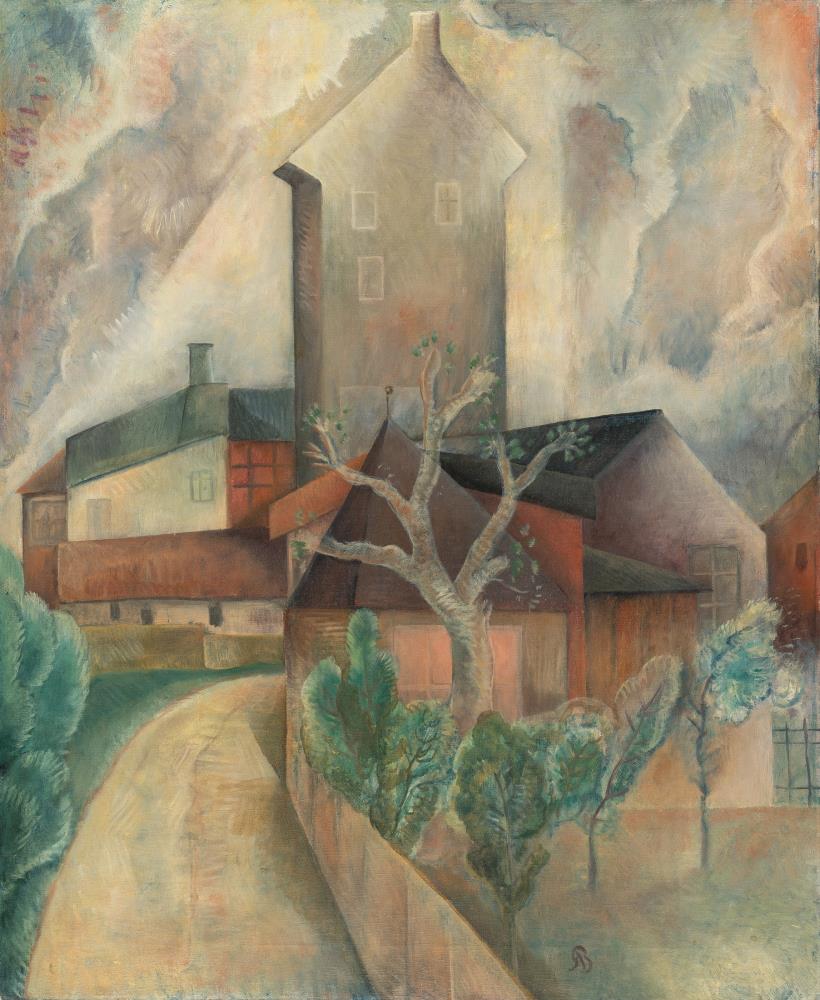
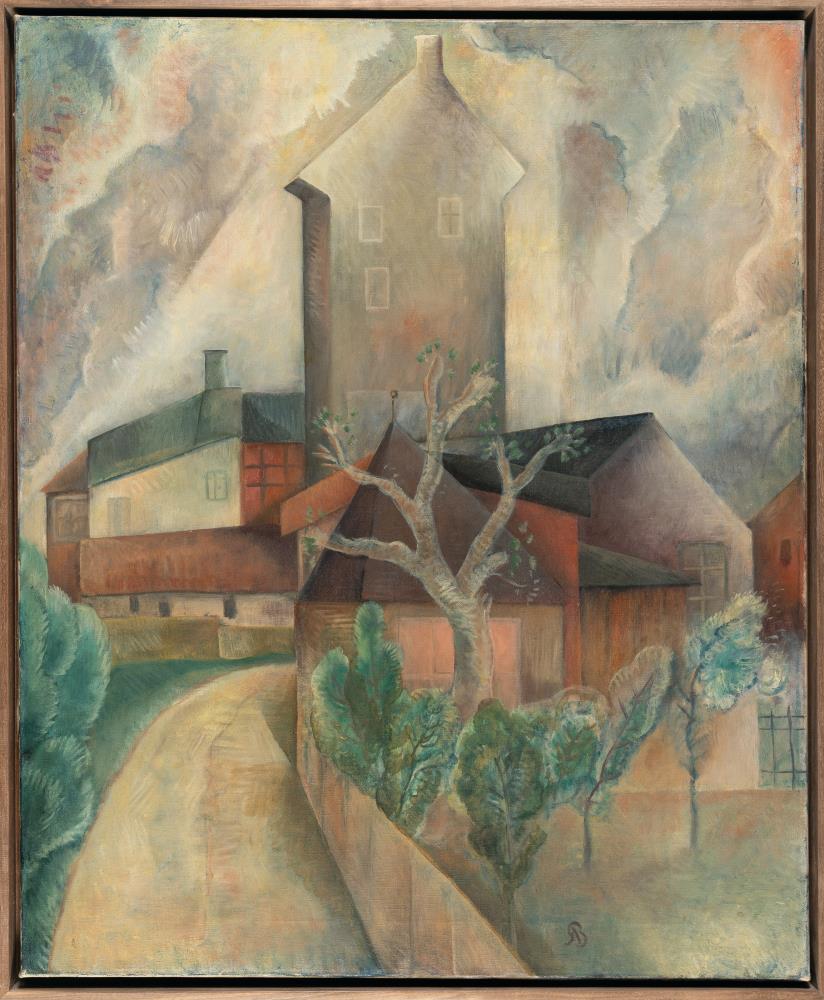
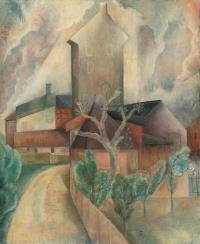
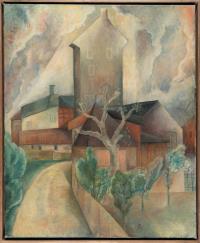
Clouds and House (Group of Houses)

Artista
Albert Bloch
1882 St. Louis/Missouri - Lawrence/Kansas 1961
Letteratura
The artist’s catalogue raisonné, no. 83 (under the title ‘Group of Houses’, ill.).
Provenienza
Private collection of Bernard Bloch, New Haven, USA;
University of Kansas, School of Fine Arts;
Private collection, USA.
University of Kansas, School of Fine Arts;
Private collection, USA.
Share


Descrizione
• One of the few surviving paintings from his early period
• Work by the only American ‘Blue Rider’
• Influenced by Kandinsky, Marc, Klee and Campendonk
Albert Bloch was born in 1882 in St. Louis, Missouri, the son of a Bohemian-Jewish immigrant and a German-Jewish mother. However, he was not raised in the Jewish faith and later converted to Christianity. From 1898 to 1900 he attended the St. Louis School of Fine Arts and, from 1905, worked for the satirical weekly ‘The Mirror’, for which he produced numerous caricatures. At the end of 1908, on the advice and with the financial support of William Marion Reedy, the editor of "The Mirror", Bloch went to Europe to study painting. He moved to Munich with his young family and continued his education largely as a self-taught artist. From 1909 to 1921, Bloch lived and worked mainly in Germany. During this period, he travelled extensively but retained his residence in Munich.
In 1911, Bloch met Wassily Kandinsky and Franz Marc, with whom he became friends. Bloch was invited to both exhibitions of the Blue Rider and met Herwarth Walden. This led to a flurry of exhibitions; among other things, he was represented at the Sonderbund’s International Art Exhibition in Cologne, held first a solo exhibition and then a joint exhibition with Paul Klee at Walden’s gallery Der Sturm, and presented his works at the International Autumn Salon in Berlin and at Hans Goltz’s gallery in Munich. Bloch’s preferred motifs are landscapes and cityscapes, circus themes and subjects from the Commedia dell’Arte.
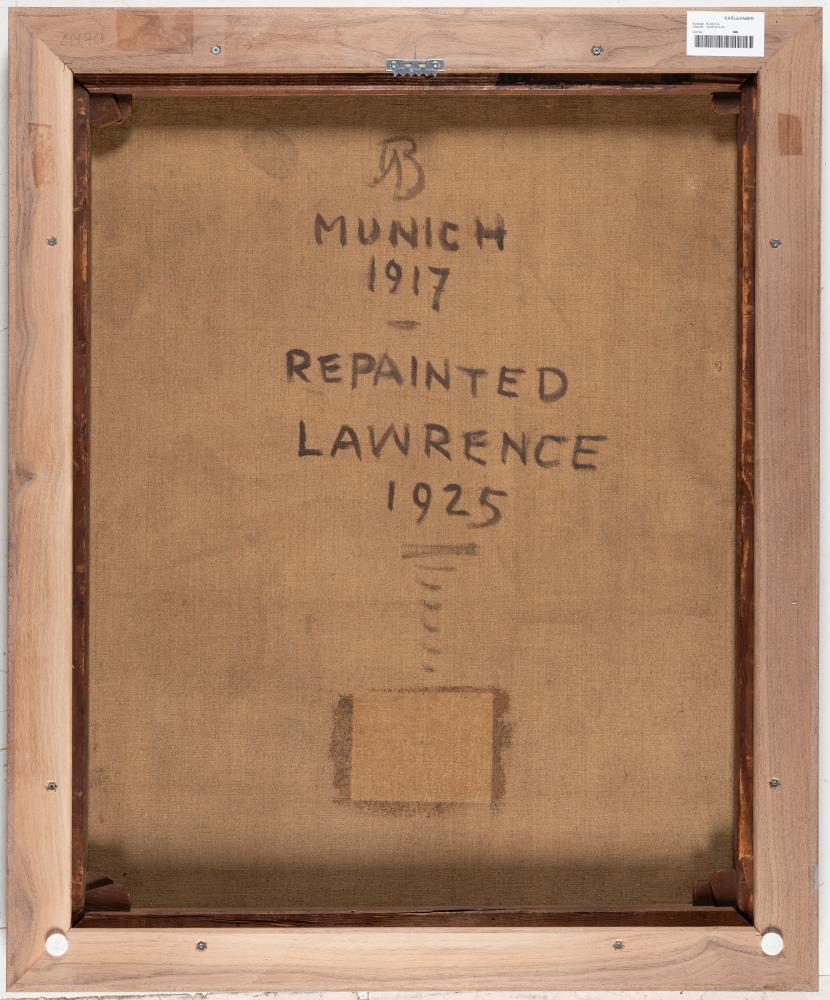
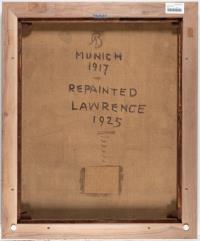
As Bloch is very critical of his own works, he destroys every painting he considers imperfect. Furthermore, many of his paintings fell victim to the ‘Degenerate Art’ campaign during the Nazi era. Consequently, only a few of Bloch’s early works have survived. This painting, begun in Munich in 1917, must have passed the artist’s critical eye, although he revised it again in America in 1925, as can be seen from the inscription on the reverse.
• Work by the only American ‘Blue Rider’
• Influenced by Kandinsky, Marc, Klee and Campendonk
Albert Bloch was born in 1882 in St. Louis, Missouri, the son of a Bohemian-Jewish immigrant and a German-Jewish mother. However, he was not raised in the Jewish faith and later converted to Christianity. From 1898 to 1900 he attended the St. Louis School of Fine Arts and, from 1905, worked for the satirical weekly ‘The Mirror’, for which he produced numerous caricatures. At the end of 1908, on the advice and with the financial support of William Marion Reedy, the editor of "The Mirror", Bloch went to Europe to study painting. He moved to Munich with his young family and continued his education largely as a self-taught artist. From 1909 to 1921, Bloch lived and worked mainly in Germany. During this period, he travelled extensively but retained his residence in Munich.
In 1911, Bloch met Wassily Kandinsky and Franz Marc, with whom he became friends. Bloch was invited to both exhibitions of the Blue Rider and met Herwarth Walden. This led to a flurry of exhibitions; among other things, he was represented at the Sonderbund’s International Art Exhibition in Cologne, held first a solo exhibition and then a joint exhibition with Paul Klee at Walden’s gallery Der Sturm, and presented his works at the International Autumn Salon in Berlin and at Hans Goltz’s gallery in Munich. Bloch’s preferred motifs are landscapes and cityscapes, circus themes and subjects from the Commedia dell’Arte.
As Bloch is very critical of his own works, he destroys every painting he considers imperfect. Furthermore, many of his paintings fell victim to the ‘Degenerate Art’ campaign during the Nazi era. Consequently, only a few of Bloch’s early works have survived. This painting, begun in Munich in 1917, must have passed the artist’s critical eye, although he revised it again in America in 1925, as can be seen from the inscription on the reverse.