Cornelia Schleime
Stupid Sheep
Artista
Cornelia Schleime
1953 Berlin
Mostra
Cornelia Schleime. Wer aus mir trinkt, wird ein Reh, Galerie Michael Schultz, Berlin 2010, colour ill. p. 25;
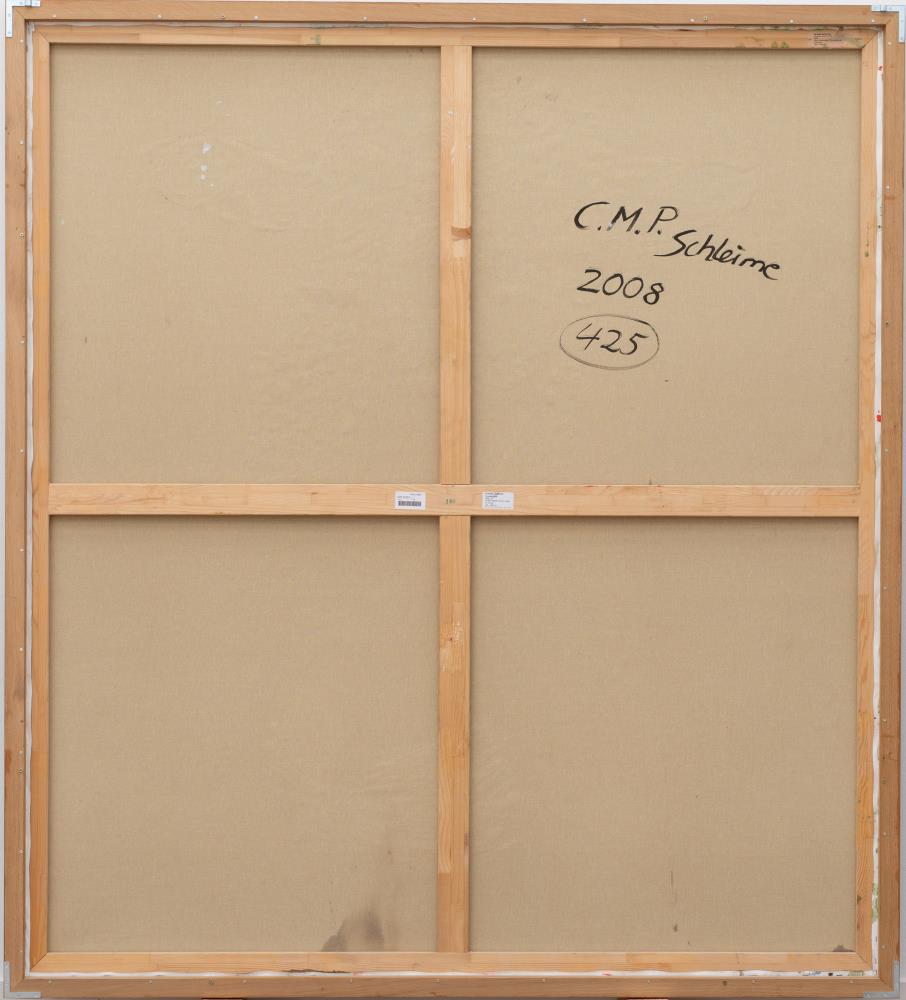
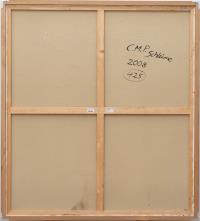
Zweifelhaftes Verlangen - Cornelia Schleime, Galerie Noah, Augsburg, 2016/2017, cat. no. 06, with label on the reverse.
Zweifelhaftes Verlangen - Cornelia Schleime, Galerie Noah, Augsburg, 2016/2017, cat. no. 06, with label on the reverse.
Provenienza
Michael Schultz Gallery, Berlin, with label on the reverse;
Galerie Supper, Baden-Baden;
Private collection, Baden-Baden, acquired from the aforementioned.
Galerie Supper, Baden-Baden;
Private collection, Baden-Baden, acquired from the aforementioned.
Share


Descrizione
• Captivating combination of figuration and symbolic alienation
• Exemplary composition representative of Cornelia Schleime’s artistic practice
• Cornelia Schleime was indicated for expulsion from the GDR in 1984 and quickly became an internationally recognised artist
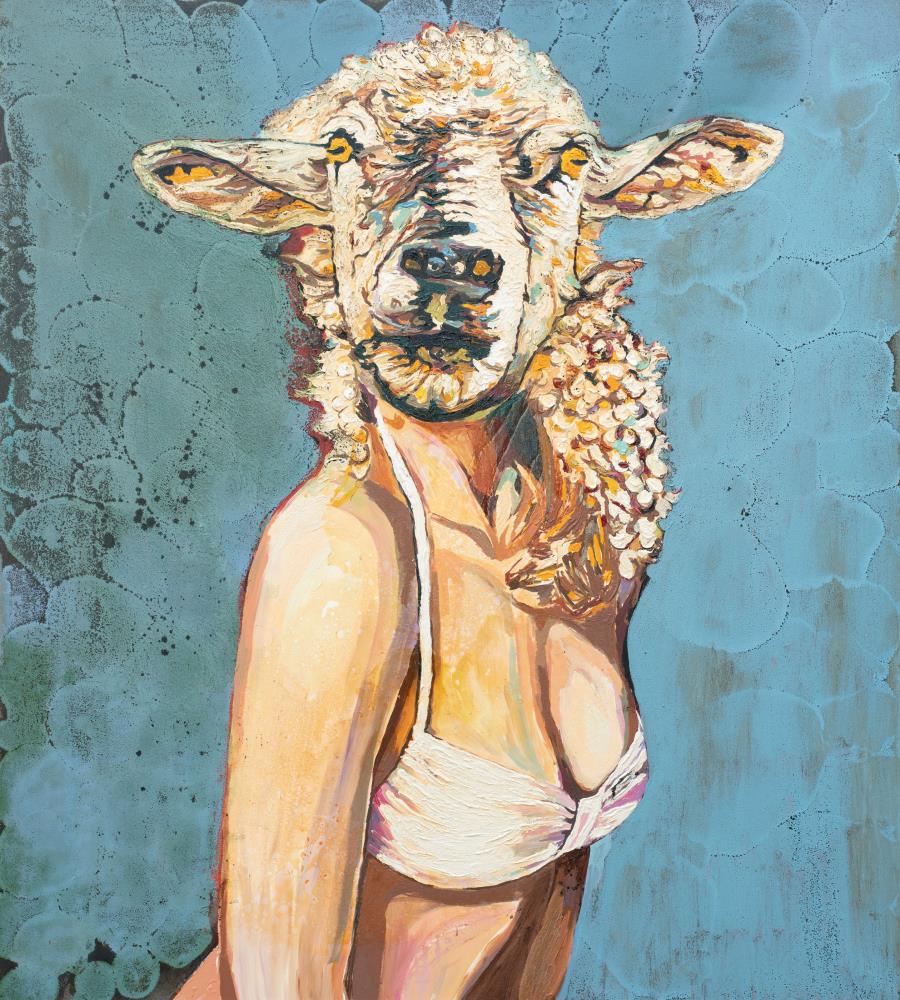
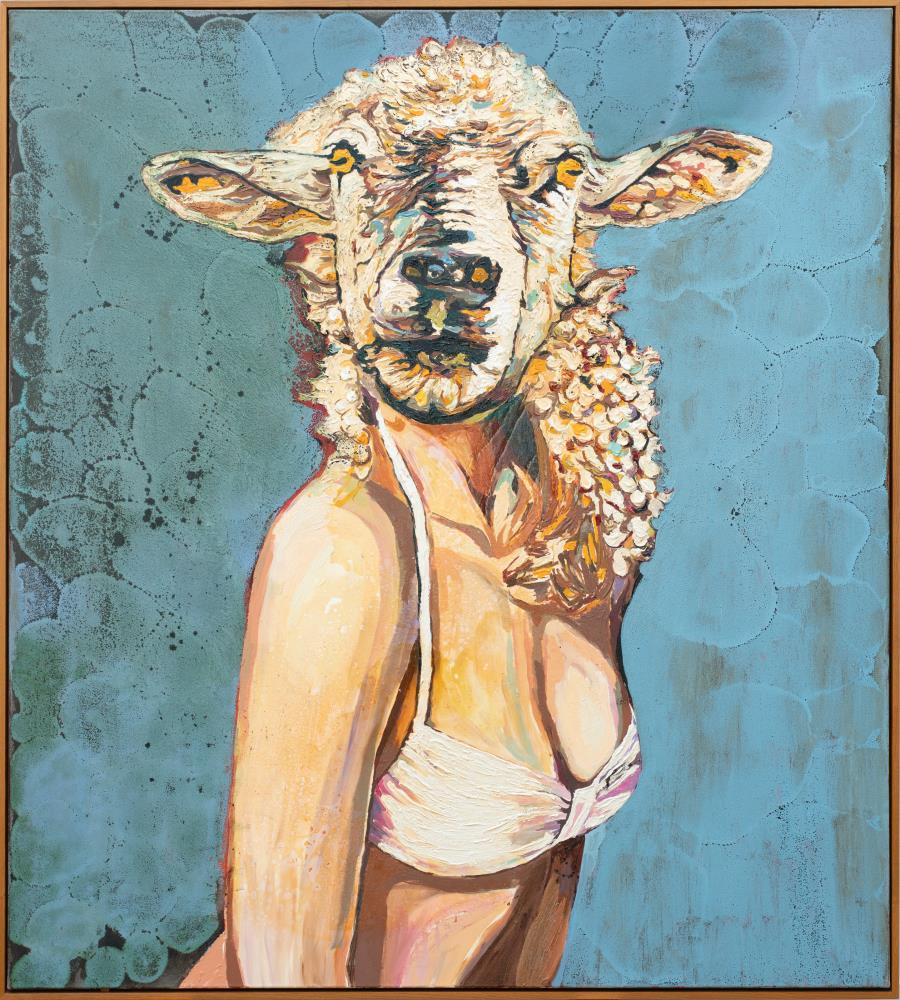
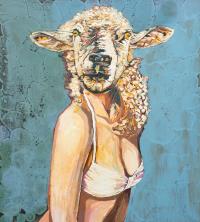
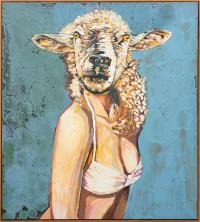
With this work, Cornelia Schleime achieves an outstanding combination of figuration, psychological intensification and symbolic alienation. Depicted is a female half-figure whose human body is combined with the head of a sheep. At first glance, this appears jarring, but on closer inspection reveals itself as an exploration of identity, attribution and prevailing power relations.
The painter is iconographically deeply rooted in European cultural history, as evidenced by the hybridisation of human and animal, a central motif here. Furthermore, the sheep stands as a symbol of gentleness, conformity and intellectual subordination. In its combination with the female body, a tension arises between social attribution and individual self-assertion.
Against the backdrop of Schleime’s biography – particularly her experiences of state repression in the GDR – the work can be read as a reflection on conformity and deviation.
The ‘sheep’ here stands not only for an individual attribution, but also for collective mechanisms of conformity. Ultimately, the figure defies a clear interpretation; it appears both vulnerable and defiant at the same time. Neither victim nor accuser, this hybrid creature asserts a peculiar presence.
"Dummes Schaf" proves exemplary of Schleime’s artistic practice: it combines an immediately accessible visual language with a profound, often uncomfortable engagement with social structures. It is precisely in the tension between ironic subversion and existential seriousness that the work unfolds its lasting impact.
• Exemplary composition representative of Cornelia Schleime’s artistic practice
• Cornelia Schleime was indicated for expulsion from the GDR in 1984 and quickly became an internationally recognised artist
With this work, Cornelia Schleime achieves an outstanding combination of figuration, psychological intensification and symbolic alienation. Depicted is a female half-figure whose human body is combined with the head of a sheep. At first glance, this appears jarring, but on closer inspection reveals itself as an exploration of identity, attribution and prevailing power relations.
The painter is iconographically deeply rooted in European cultural history, as evidenced by the hybridisation of human and animal, a central motif here. Furthermore, the sheep stands as a symbol of gentleness, conformity and intellectual subordination. In its combination with the female body, a tension arises between social attribution and individual self-assertion.
Against the backdrop of Schleime’s biography – particularly her experiences of state repression in the GDR – the work can be read as a reflection on conformity and deviation.
The ‘sheep’ here stands not only for an individual attribution, but also for collective mechanisms of conformity. Ultimately, the figure defies a clear interpretation; it appears both vulnerable and defiant at the same time. Neither victim nor accuser, this hybrid creature asserts a peculiar presence.
"Dummes Schaf" proves exemplary of Schleime’s artistic practice: it combines an immediately accessible visual language with a profound, often uncomfortable engagement with social structures. It is precisely in the tension between ironic subversion and existential seriousness that the work unfolds its lasting impact.