Rembrandt Harmensz. van Rijn
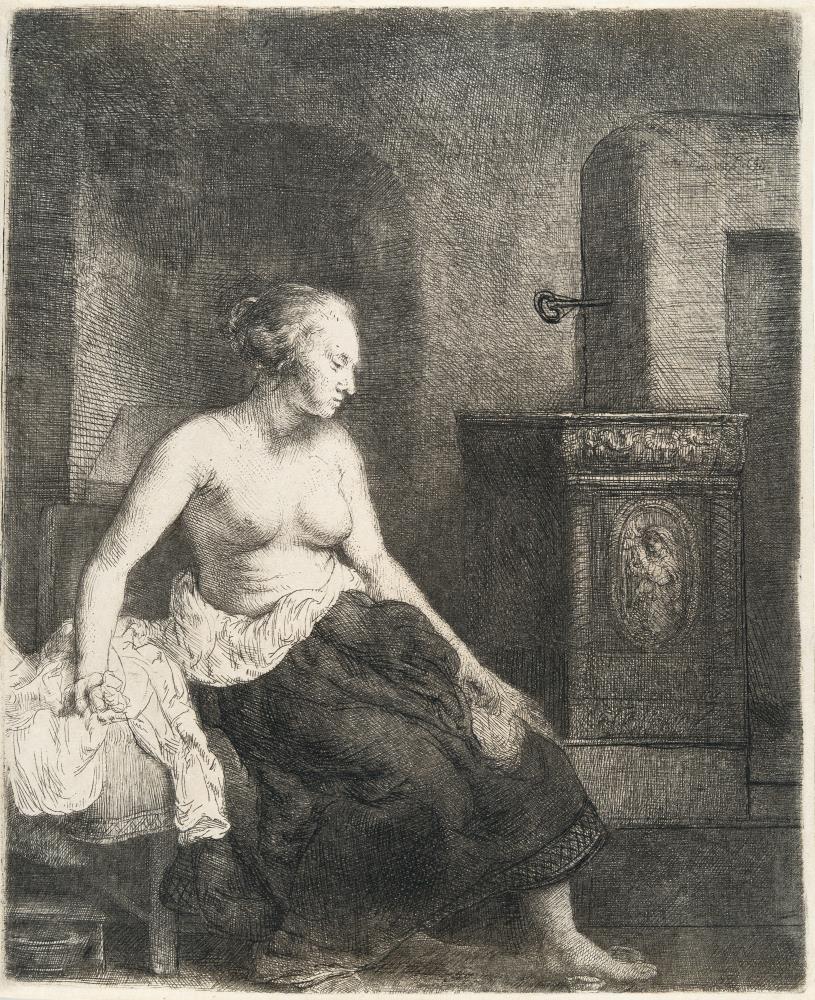
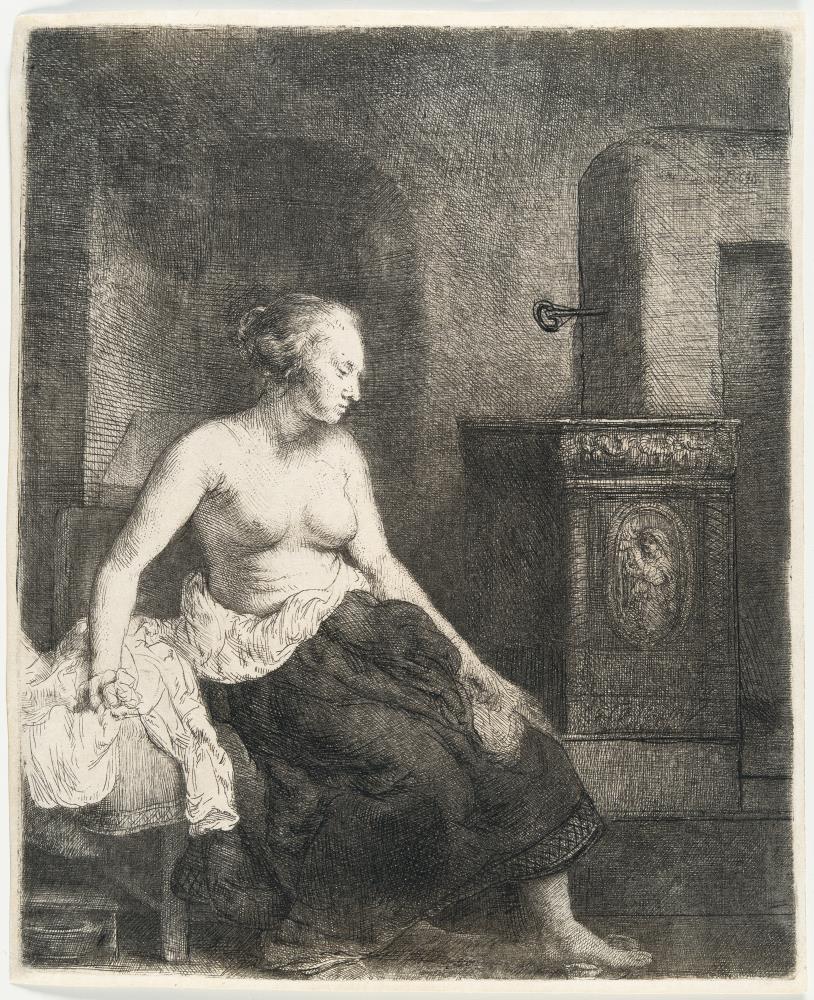
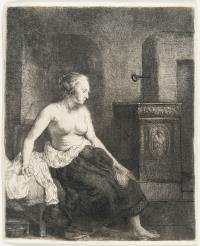
Halbbekleidete Frau, am Ofen sitzend
Artista
Rembrandt Harmensz. van Rijn
1606 Leiden - Amsterdam 1669
Ulteriori informazioni
Bartsch 197; White/Boon 197 VII (of VII); Hinterding/Rutgers (The New Hollstein) 307 VI (of VII).
Provenienza
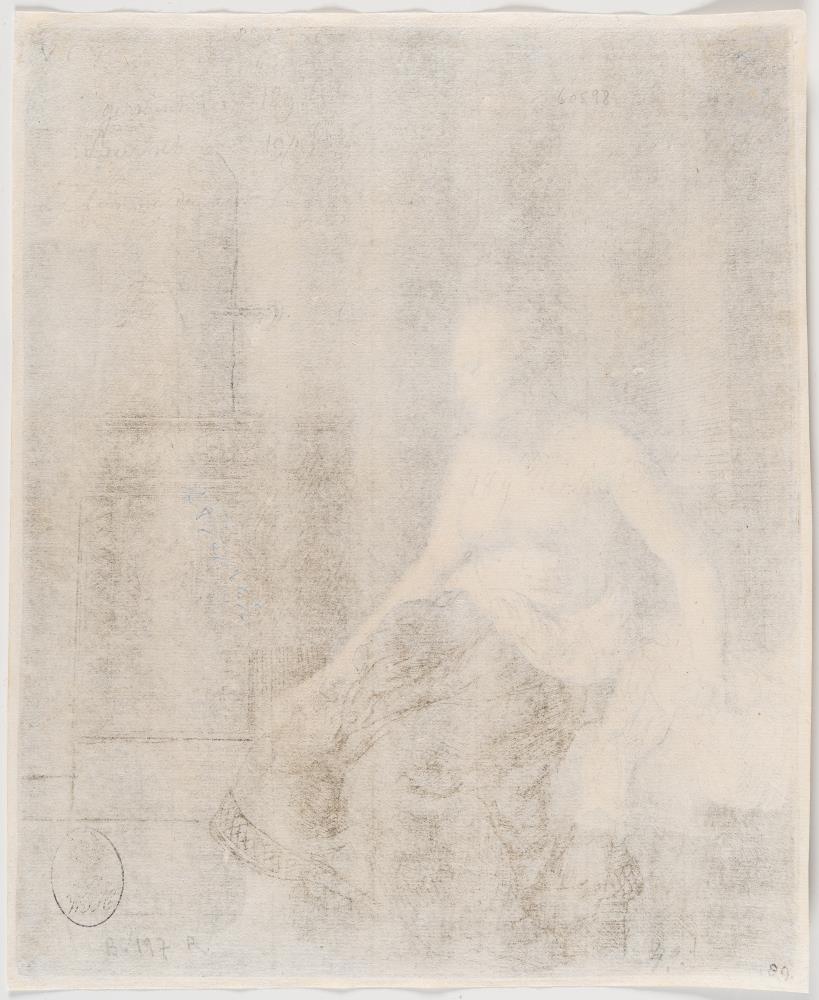
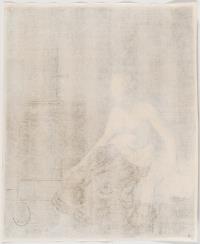
Willem Isaack Hooft (1782 - 1863), Amsterdam, verso with the collector's stamp (Lugt 2631).
Share


Descrizione
A fine impression of New Hollstein's sixth state (of seven), printed in dark brown ink. The woman is now depicted without a bonnet, and with the unintentional scratch on her chest above her left breast. With a fine margin around the platemark.
This domestic genre scene and study of a female nude is one of Rembrandt's most atmospheric etchings. Its tranquility and careful treatment of light and shadow are reminiscent of the interiors of Jan Vermeer or Pieter de Hooch. From 1658 to 1661, the female nude was the main theme in Rembrandt's printmaking. Overall, fewer etchings were produced during this period, but of his ten plates from this period, six featured depictions of women who were partially or completely unclothed. Their luminous warmth of color and dreamlike sensuality have led to these nudes being compared to those of Titian. Rembrandt's nudes are characterised by their touching realism and vulnerability. This depiction is the largest of Rembrandt's printed studies of the human body. – The paper slightly time-stained. The upper right corner on the reverse thinned. A number written in ballpoint pen and very faint pencil notes on the reverse side, otherwise in good condition. Very rare.
This domestic genre scene and study of a female nude is one of Rembrandt's most atmospheric etchings. Its tranquility and careful treatment of light and shadow are reminiscent of the interiors of Jan Vermeer or Pieter de Hooch. From 1658 to 1661, the female nude was the main theme in Rembrandt's printmaking. Overall, fewer etchings were produced during this period, but of his ten plates from this period, six featured depictions of women who were partially or completely unclothed. Their luminous warmth of color and dreamlike sensuality have led to these nudes being compared to those of Titian. Rembrandt's nudes are characterised by their touching realism and vulnerability. This depiction is the largest of Rembrandt's printed studies of the human body. – The paper slightly time-stained. The upper right corner on the reverse thinned. A number written in ballpoint pen and very faint pencil notes on the reverse side, otherwise in good condition. Very rare.