Salvador Dalí
Pamplemousse erotique




Artist
Salvador Dalí
1904 - Figueras - 1989
Further information
Vgl. Michler/Löpsinger 344-355.
Mit einer Expertise von Nicolas R., Robert P. und Olivier M. Descharnes, Archives Descharnes, Azay-le-Rideau, vom 14.6.2013. Das Werk ist im Archiv unter der Nummer "d 5225" registriert.
Mit einer Expertise von Nicolas R., Robert P. und Olivier M. Descharnes, Archives Descharnes, Azay-le-Rideau, vom 14.6.2013. Das Werk ist im Archiv unter der Nummer "d 5225" registriert.
Exhibition
Retrospective of the gallery’s activities marking its 40th anniversary, Galerie Orangerie-Reinz, Cologne 2000/01.
Literature
Field, Albert, The Official Catalogue of the Graphic Works of Salvador Dalí, New York 1969, nos. 69–11.
Provenance
Jean Schneider, Basel, acquired directly from the artist in 1969 (until 2000);
Galerie Orangerie-Reinz, Cologne;
Private collection, acquired from the above in 2000;
Bonhams, London 18 June 2013, Lot 29.
Galerie Orangerie-Reinz, Cologne;
Private collection, acquired from the above in 2000;
Bonhams, London 18 June 2013, Lot 29.
Share


Description
• A typical example of Dalí’s playful fusion of scientific illustration with surreal metamorphosis and erotic imagery
• A reworking of botanical illustrations from the *Pomologie Française* of 1846
• Created in the context of the print series "Flordali (Les Fruits)" from 1969/70
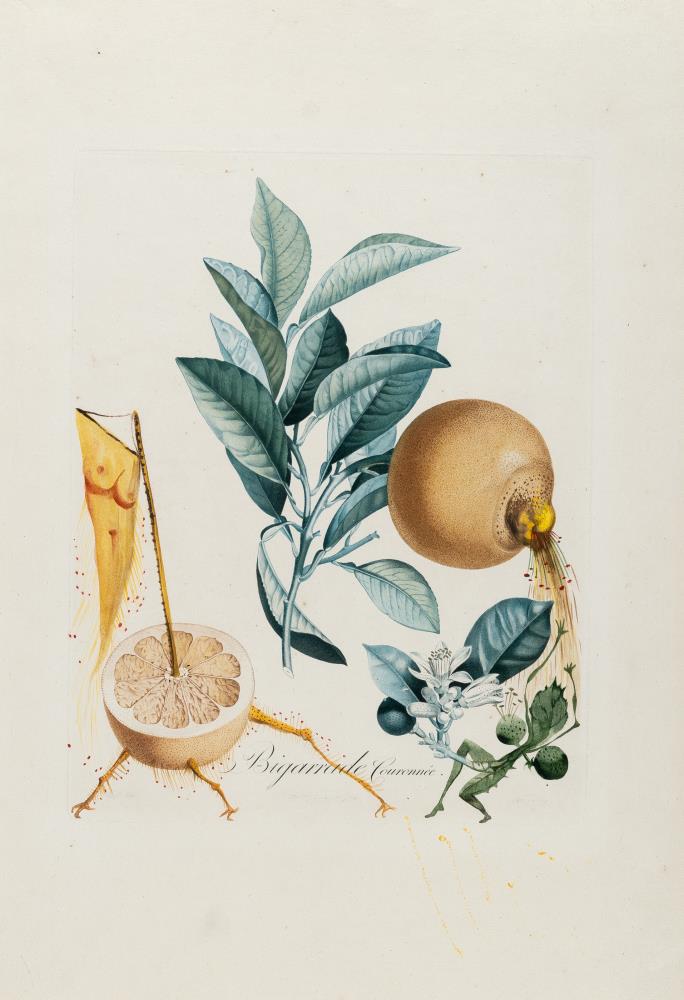
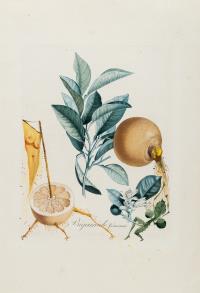
The present work, "Pamplemousse érotique", is part of a series of works commissioned by the publisher Jean-Paul Schneider and produced by Dalí in 1969. For this purpose, the artist reworked illustrations from the botanical reference work "Pomologie Française" by Antoine Poiteau, published in 1846, using gouache and watercolour. These compositions served as the basis for the twelve-part print series "Flordali (Les Fruits)", which was published by Schneider in 1969/70 and immediately enjoyed great popularity among collectors.
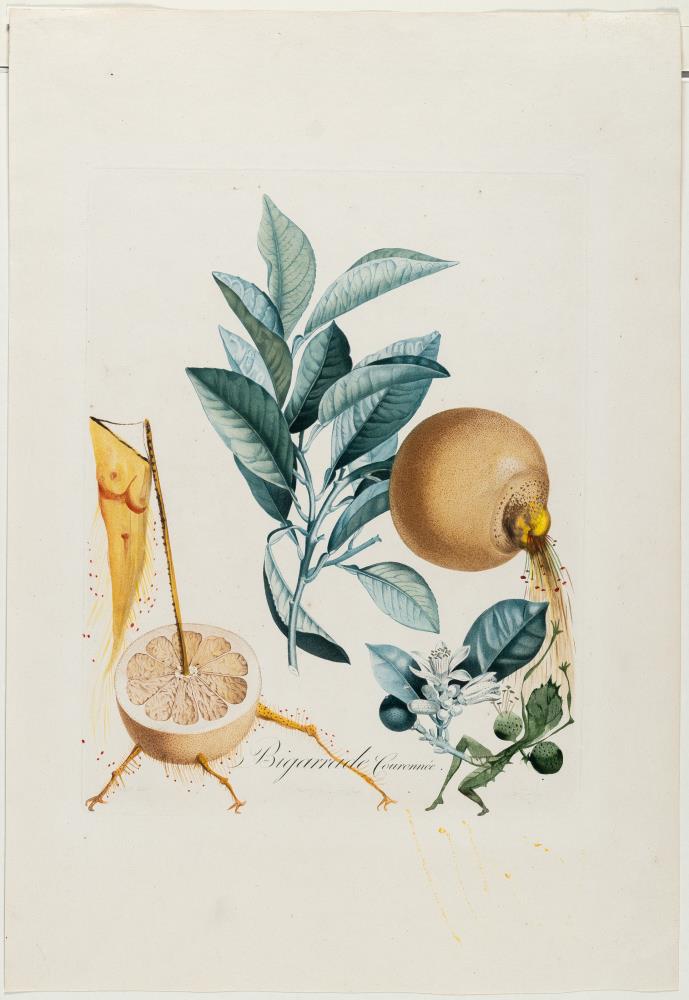
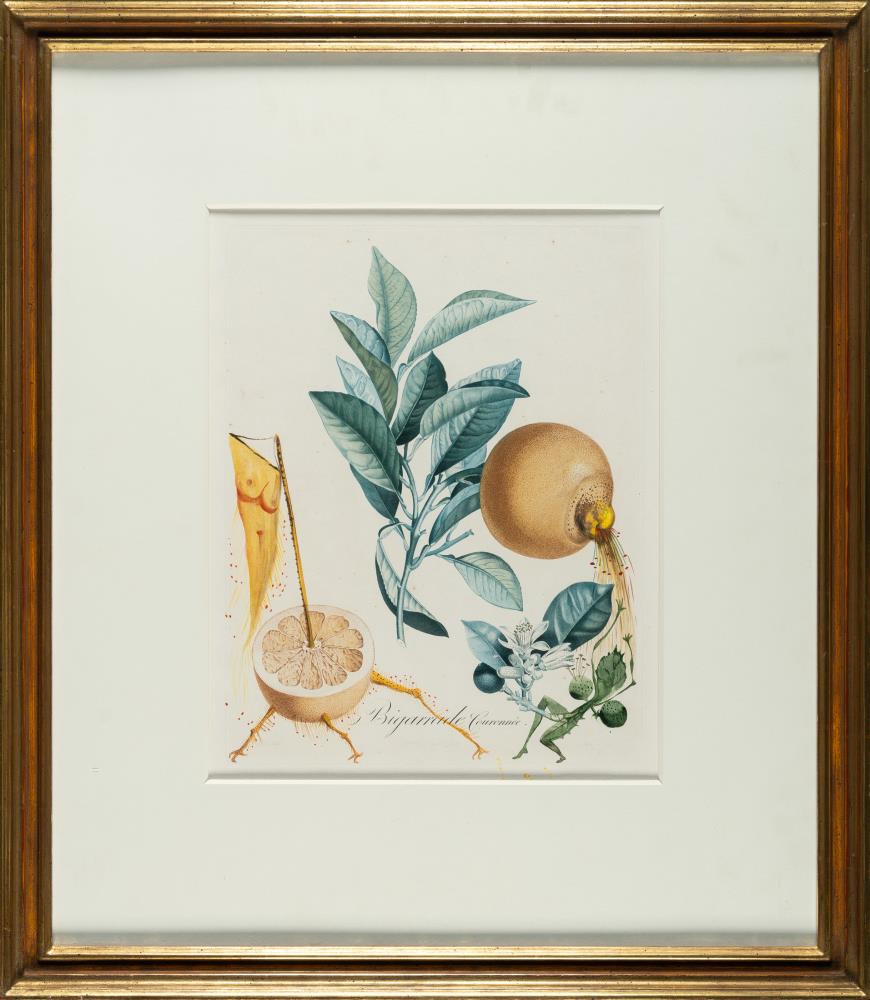
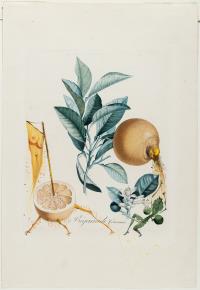
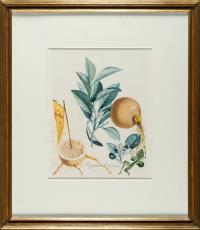
Dalí breathes new life into the old botanical illustrations in a humorous and playful manner: Behind sober, scientific depictions, demons and fairies suddenly lurk. The artist makes body parts of bizarre fantasy creatures grow out of fruits and plants. On our sheet, a grapefruit half waddles across the picture on hairy bird’s legs, hoisting a flag featuring a naked female body. From a second fruit, a fountain of juice pours onto a green leaf figure, which tries unsuccessfully to ward it off with its arms.
At the heart of Dalí’s fruit series lies the concept of metamorphosis and illusion. Dalí claimed to have possessed, even as a child, the ability to recognise hidden figures and patterns in a picture or even a cloud formation. The artist later explained in relation to his jewellery designs: "I see the human form in trees, leaves, animals; the animal and the plant in man. My art (...) shows the metamorphosis that takes place; people create and transform themselves. When they sleep, they transform – into flowers, plants, trees." (from: Dalí, Jewels-Joyas, The Collection of the Gala-Salvador Dalí Foundation, Turin 2001, p. 36).
• A reworking of botanical illustrations from the *Pomologie Française* of 1846
• Created in the context of the print series "Flordali (Les Fruits)" from 1969/70
The present work, "Pamplemousse érotique", is part of a series of works commissioned by the publisher Jean-Paul Schneider and produced by Dalí in 1969. For this purpose, the artist reworked illustrations from the botanical reference work "Pomologie Française" by Antoine Poiteau, published in 1846, using gouache and watercolour. These compositions served as the basis for the twelve-part print series "Flordali (Les Fruits)", which was published by Schneider in 1969/70 and immediately enjoyed great popularity among collectors.
Dalí breathes new life into the old botanical illustrations in a humorous and playful manner: Behind sober, scientific depictions, demons and fairies suddenly lurk. The artist makes body parts of bizarre fantasy creatures grow out of fruits and plants. On our sheet, a grapefruit half waddles across the picture on hairy bird’s legs, hoisting a flag featuring a naked female body. From a second fruit, a fountain of juice pours onto a green leaf figure, which tries unsuccessfully to ward it off with its arms.
At the heart of Dalí’s fruit series lies the concept of metamorphosis and illusion. Dalí claimed to have possessed, even as a child, the ability to recognise hidden figures and patterns in a picture or even a cloud formation. The artist later explained in relation to his jewellery designs: "I see the human form in trees, leaves, animals; the animal and the plant in man. My art (...) shows the metamorphosis that takes place; people create and transform themselves. When they sleep, they transform – into flowers, plants, trees." (from: Dalí, Jewels-Joyas, The Collection of the Gala-Salvador Dalí Foundation, Turin 2001, p. 36).