Günther Uecker
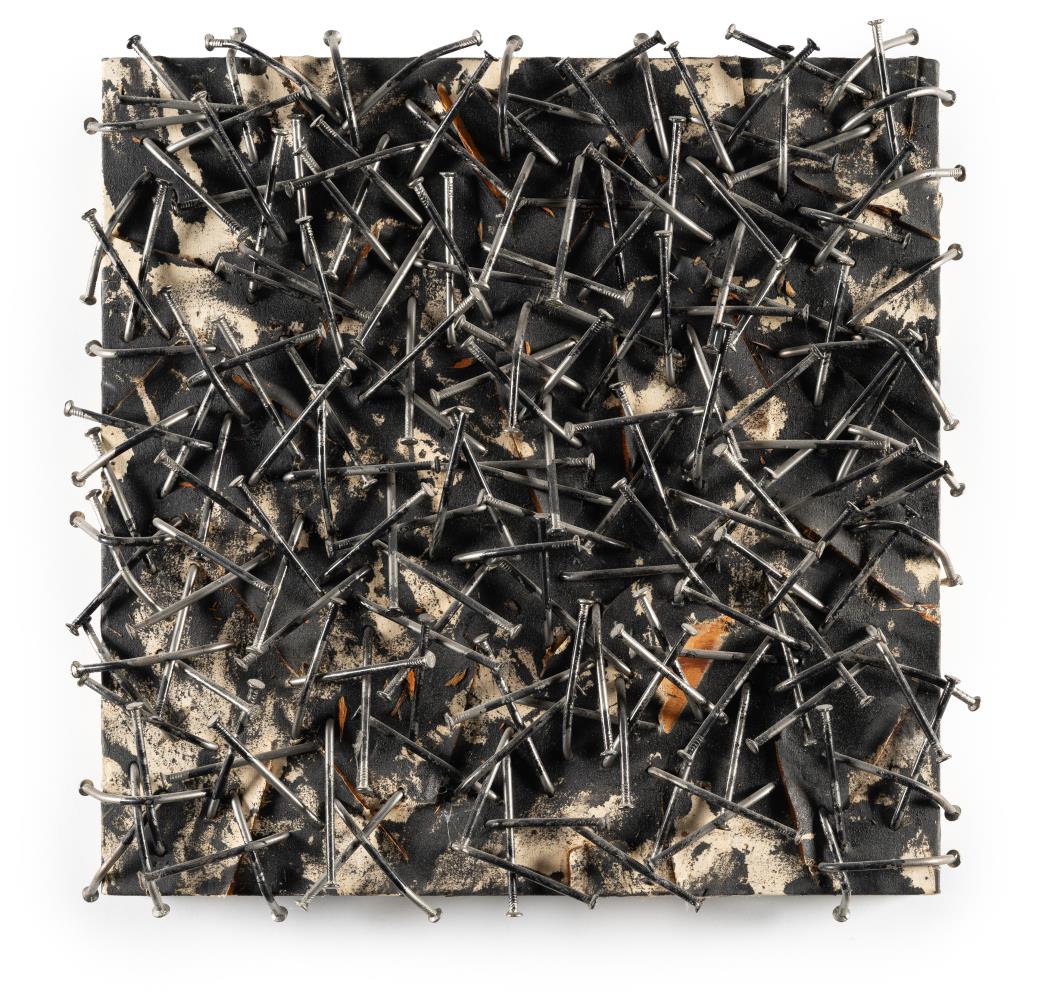
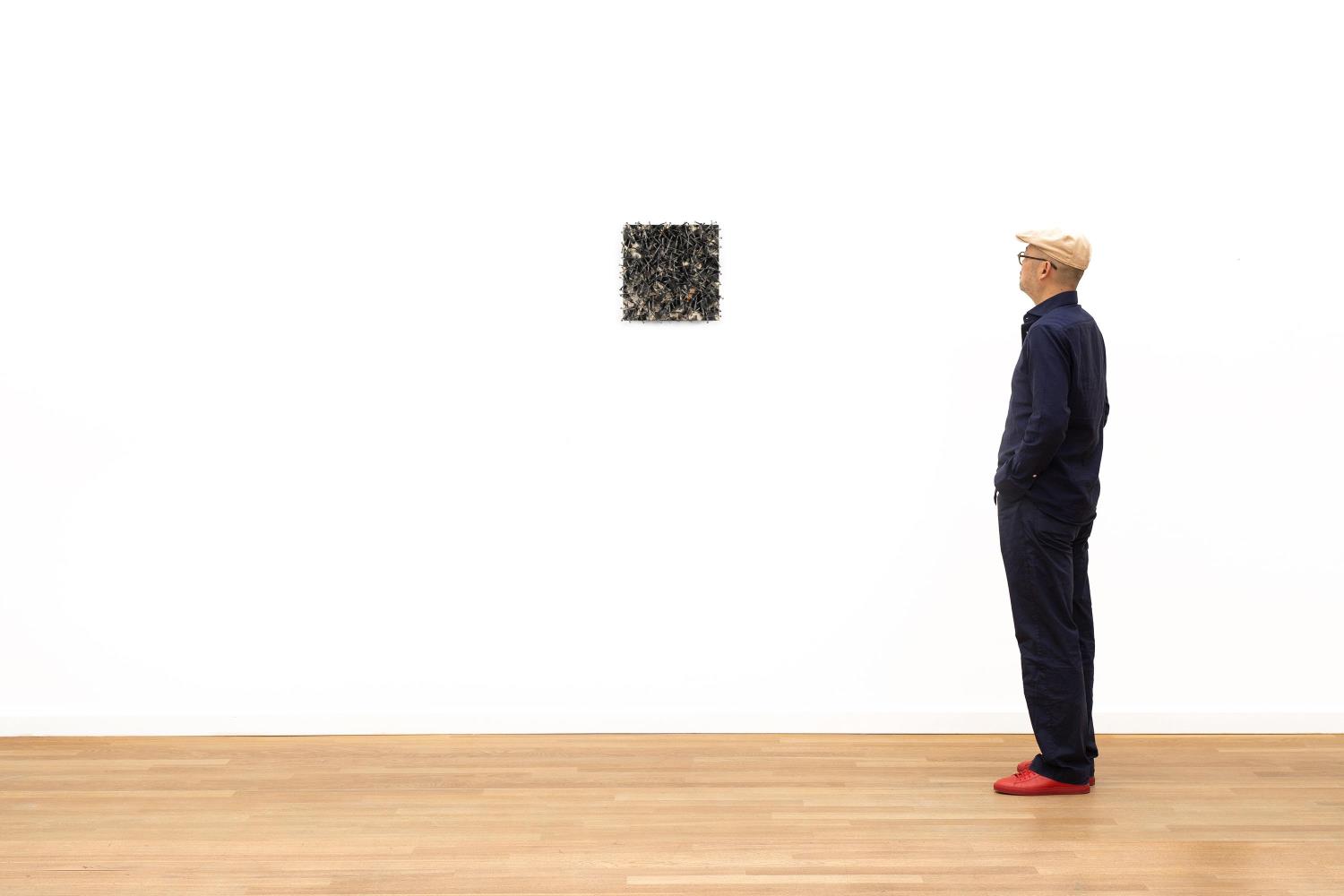
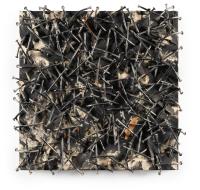
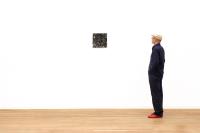
"Verletztes Feld" (Injured Field)
Artist
Günther Uecker
1930 Wendorf – Düsseldorf 2025
Further information
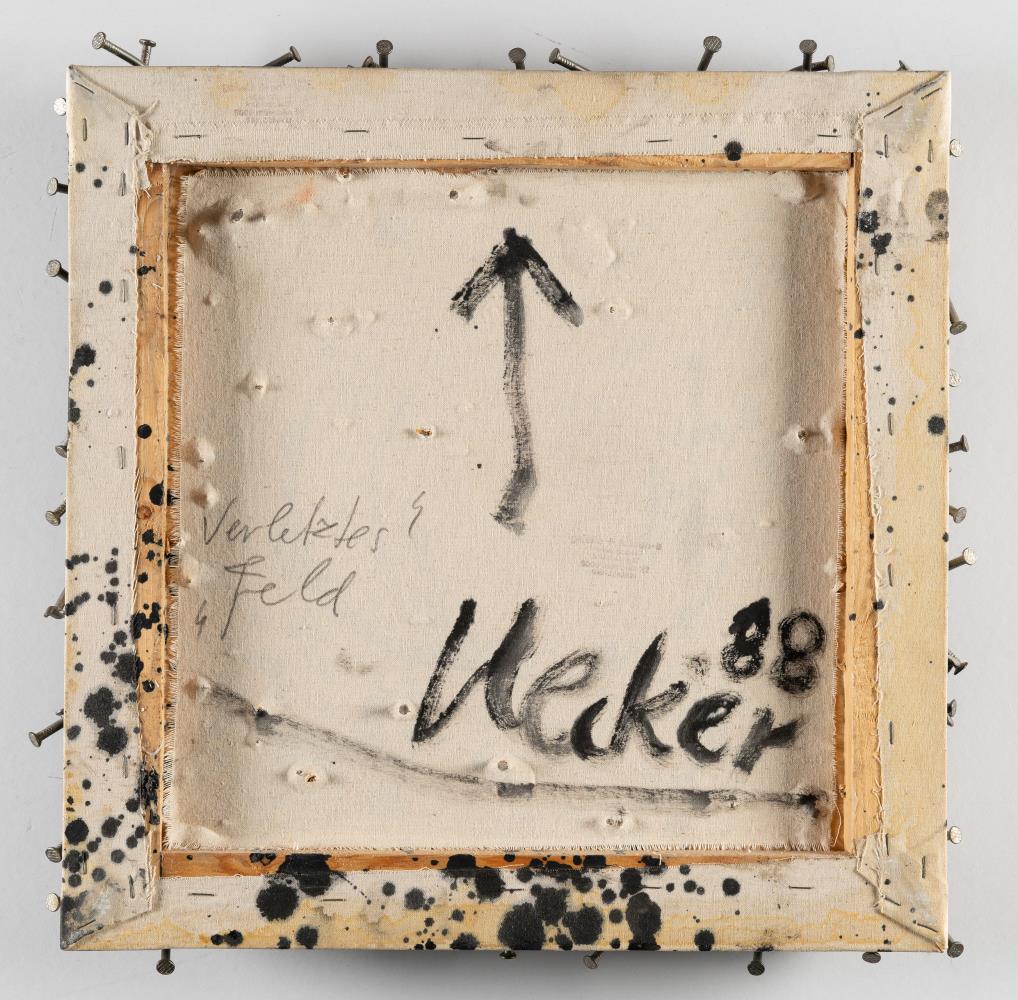
Dieses Werk ist im Uecker-Archiv unter der Nummer GU.88.038 registriert und wird vorgemerkt für die Aufnahme in das entstehende Uecker-Werkverzeichnis.
Provenance
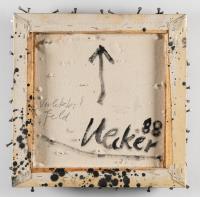
Galerie Waßermann + Edition e, Munich, stamped on the reverse of the canvas;
Private collection, Southern Germany, acquired from the aforementioned gallery C. 1990.
Private collection, Southern Germany, acquired from the aforementioned gallery C. 1990.
Share


Description
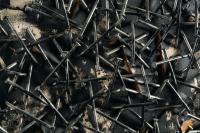
• Powerful nail picture, compact and of original strength
• Nail pictures are characteristic of Günther Uecker’s work, his distinctive contribution to the renewal of art from the 1960s onwards
• Günther Uecker is the most prominent artist of the ZERO group and, since ‘ZERO – Countdown to Tomorrow’ at the Guggenheim Museum in New York, has enjoyed worldwide recognition in collections and museums
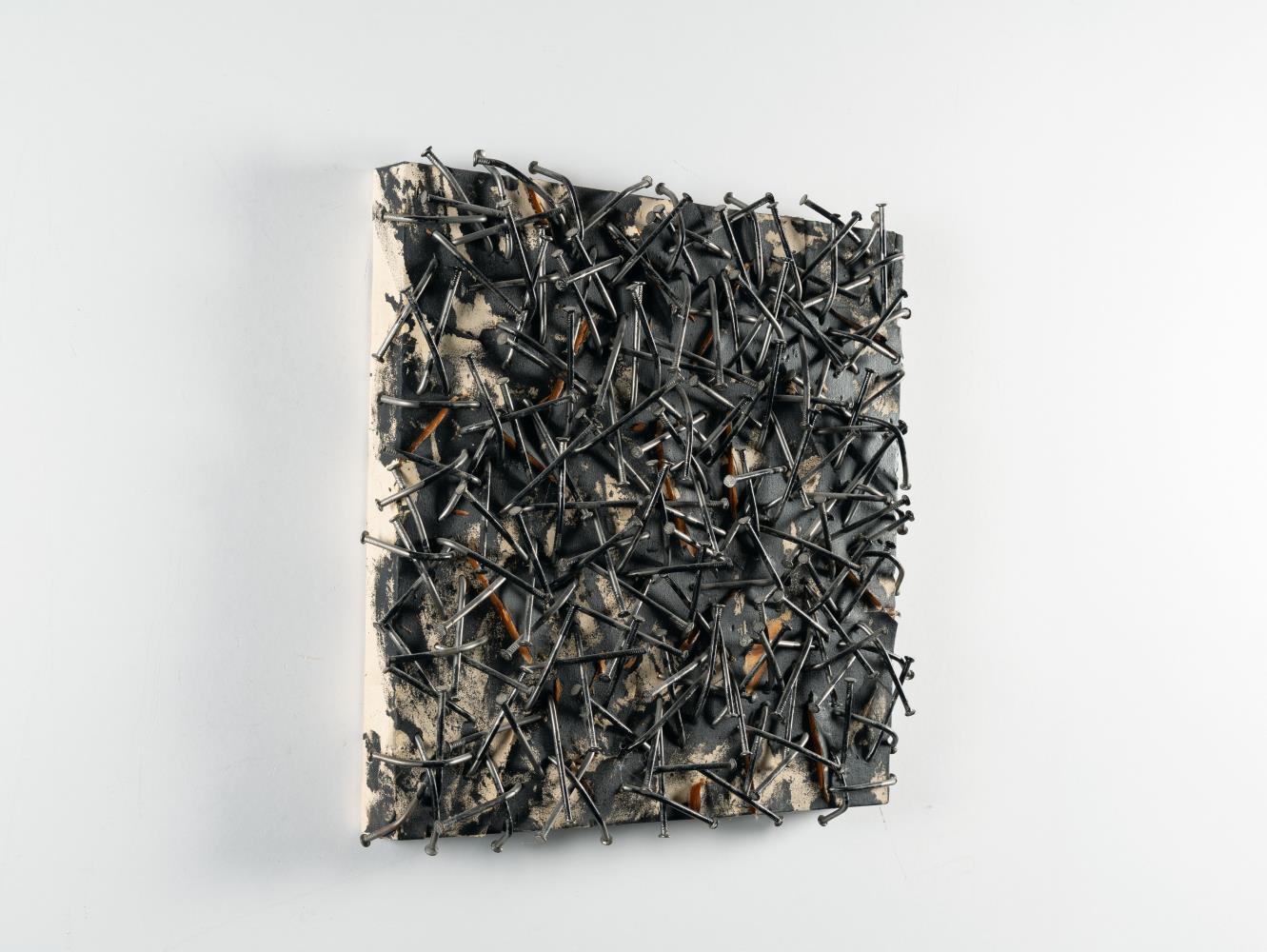
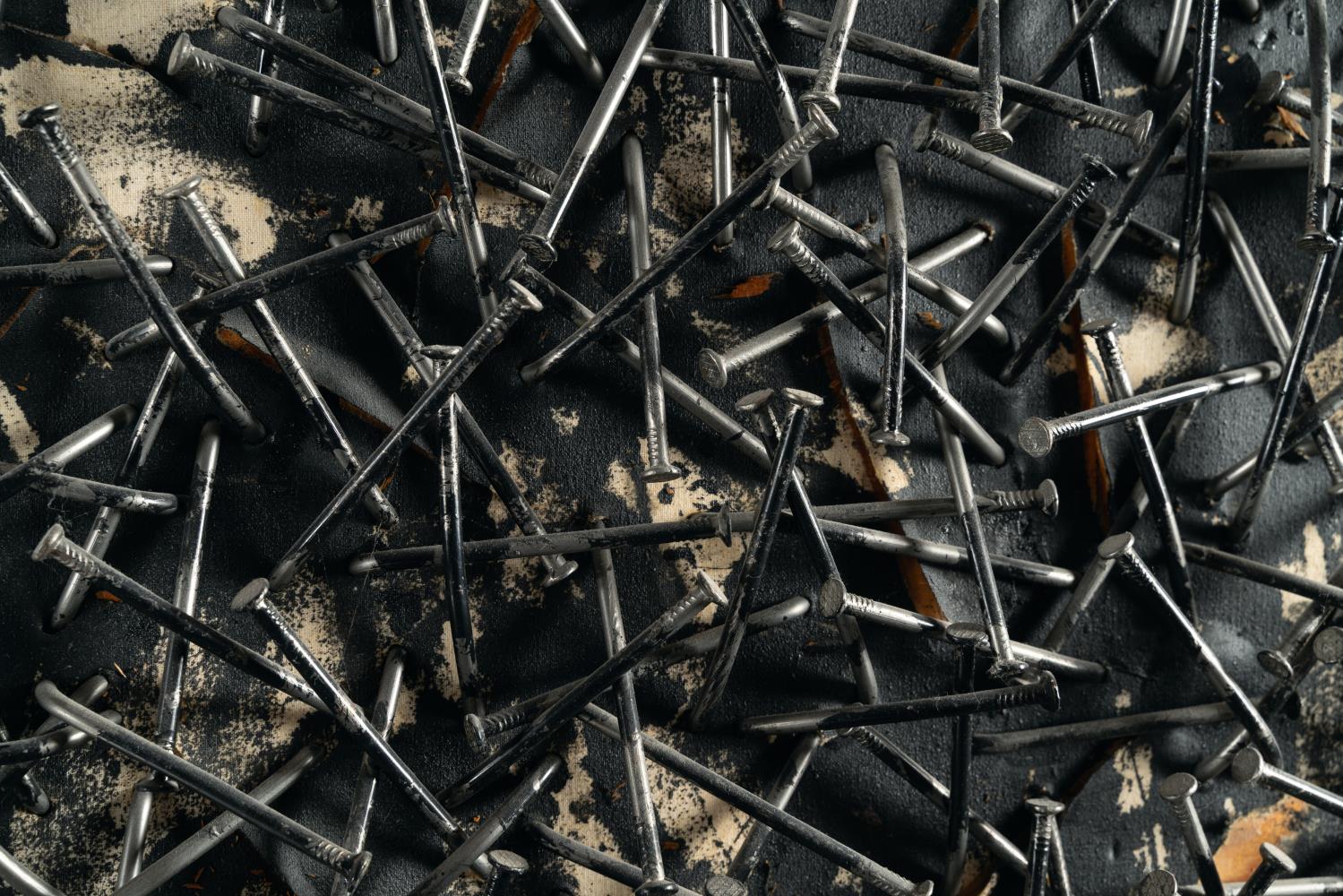
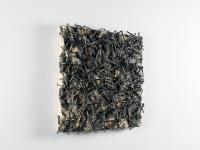
As early as the mid-1960s, Günther Uecker replaced homogeneous, uniformly nailed rows with expressive, organic structures featuring broken surfaces. In works such as "Verletztes Feld", the nails are driven freehand, without a fixed system, into a wooden panel covered with white canvas and then bent in different directions. This creates tears and splinters, which are isolated and reveal the raw wood beneath. Only in a final step does Uecker apply brushstrokes of black oil paint to the field of nails, thereby further heightening the work’s expressive tension. The dynamic creative process remains inscribed in the work and thus becomes an essential vehicle of expression. The raw force we associate with this exhausting creative act lends the picture an archaic character. The slightly irregular arrangement of the nails makes the physical exertion involved in the work’s creation strikingly apparent. In Uecker’s paintings, the nails are often driven in during a single, cathartic action. Further clues to the artist’s physical presence are provided by the size of the gaps, which are determined by the span of his fingers. Instead of mysterious artistry and spatial illusion, what we see here is a comprehensible craft process, which constitutes the special appeal of Uecker’s works. Furthermore, the interplay of light and shadow always plays a decisive role in the composition: the visual impression of the work changes with each incidence of light and emphasises the sculptural dimension of the pieces.
• Nail pictures are characteristic of Günther Uecker’s work, his distinctive contribution to the renewal of art from the 1960s onwards
• Günther Uecker is the most prominent artist of the ZERO group and, since ‘ZERO – Countdown to Tomorrow’ at the Guggenheim Museum in New York, has enjoyed worldwide recognition in collections and museums
As early as the mid-1960s, Günther Uecker replaced homogeneous, uniformly nailed rows with expressive, organic structures featuring broken surfaces. In works such as "Verletztes Feld", the nails are driven freehand, without a fixed system, into a wooden panel covered with white canvas and then bent in different directions. This creates tears and splinters, which are isolated and reveal the raw wood beneath. Only in a final step does Uecker apply brushstrokes of black oil paint to the field of nails, thereby further heightening the work’s expressive tension. The dynamic creative process remains inscribed in the work and thus becomes an essential vehicle of expression. The raw force we associate with this exhausting creative act lends the picture an archaic character. The slightly irregular arrangement of the nails makes the physical exertion involved in the work’s creation strikingly apparent. In Uecker’s paintings, the nails are often driven in during a single, cathartic action. Further clues to the artist’s physical presence are provided by the size of the gaps, which are determined by the span of his fingers. Instead of mysterious artistry and spatial illusion, what we see here is a comprehensible craft process, which constitutes the special appeal of Uecker’s works. Furthermore, the interplay of light and shadow always plays a decisive role in the composition: the visual impression of the work changes with each incidence of light and emphasises the sculptural dimension of the pieces.