Robert Filliou
Tool Cross
Artist
Robert Filliou
1926 Sauve - Chanteloube 1987
Exhibition
Sammlung Feelisch; Museum am Ostwall, Dortmund 1970;
Fluxus, Aspekte eines Phänomens, Kunst- und Museumsverein Wuppertal 1981/82, s/w Abb., S. 99;
Robert Filliou, Musée d'Art Contemporain, Nimes 1990, s/w Abb. S. 55;
Sechziger Jahre - die neuen Abenteuer der Objekte, Museum Ludwig, Köln 1997, farb. Abb. S. 57;
Aller Anfang ist Merz, Sprengelmuseum Hannover 2000/01, Kat.-Nr. 276, farb. Abb. S. 119;
ICONOCLASH: jenseits der Bilderkriege in Wissenschaft, Religion und Kunst, ZKM, Karlsruhe 2002, farb. Abb. S. 634;
Robert Filliou: Genie ohne Talent, Kunstpalast Düsseldorf 2003/04, Kat.-Nr.43, farb. Abb. S. 128;
Die algorithmische Revolution: zur Geschichte der interaktiven Kunst, ZKM, Karlsruhe 2004, farb. Abb. S. 12;
Robert Filliou - the secret of permanent creation, MHKA, Antwerpen 2016, farb. Abb. S. 217.
Fluxus, Aspekte eines Phänomens, Kunst- und Museumsverein Wuppertal 1981/82, s/w Abb., S. 99;
Robert Filliou, Musée d'Art Contemporain, Nimes 1990, s/w Abb. S. 55;
Sechziger Jahre - die neuen Abenteuer der Objekte, Museum Ludwig, Köln 1997, farb. Abb. S. 57;
Aller Anfang ist Merz, Sprengelmuseum Hannover 2000/01, Kat.-Nr. 276, farb. Abb. S. 119;
ICONOCLASH: jenseits der Bilderkriege in Wissenschaft, Religion und Kunst, ZKM, Karlsruhe 2002, farb. Abb. S. 634;
Robert Filliou: Genie ohne Talent, Kunstpalast Düsseldorf 2003/04, Kat.-Nr.43, farb. Abb. S. 128;
Die algorithmische Revolution: zur Geschichte der interaktiven Kunst, ZKM, Karlsruhe 2004, farb. Abb. S. 12;
Robert Filliou - the secret of permanent creation, MHKA, Antwerpen 2016, farb. Abb. S. 217.
Literature
Filliou, Robert, Teaching and Learning as Performing Arts, Cologne 1970, b/w ill. p. 196.
Provenance
Private collection, North Rhine-Westphalia.
Share


Description
• Rare major work of the Fluxus movement, appearing on the international art market for the first time
• ‘Werkzeugkreuz’ led to initial considerations for the ‘Permanent Creation Tool Shed’, a tool store and place of perpetual creation and creative thinking
• The work has been exhibited in all major exhibitions on Robert Filliou and Fluxus art; Filliou participated in documenta in 1972 and 1977 and was exhibited, among other venues, at Skulptur Projekte Münster in 1987
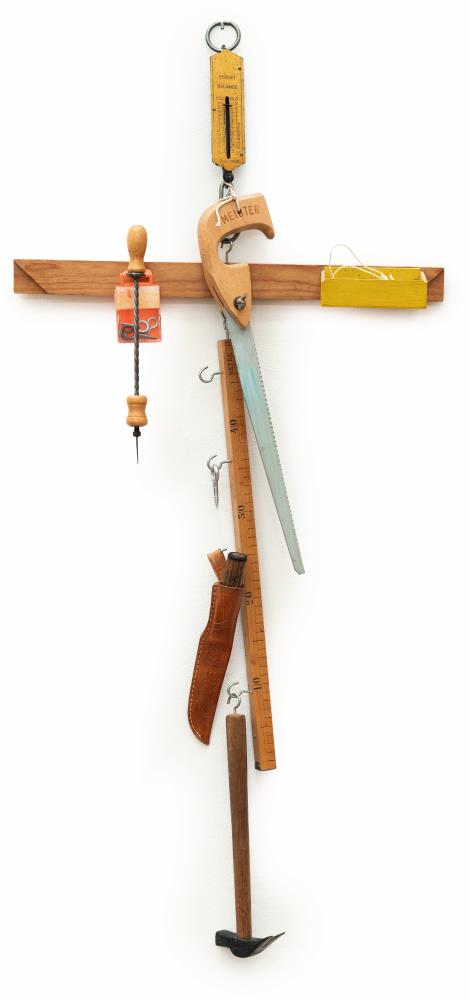
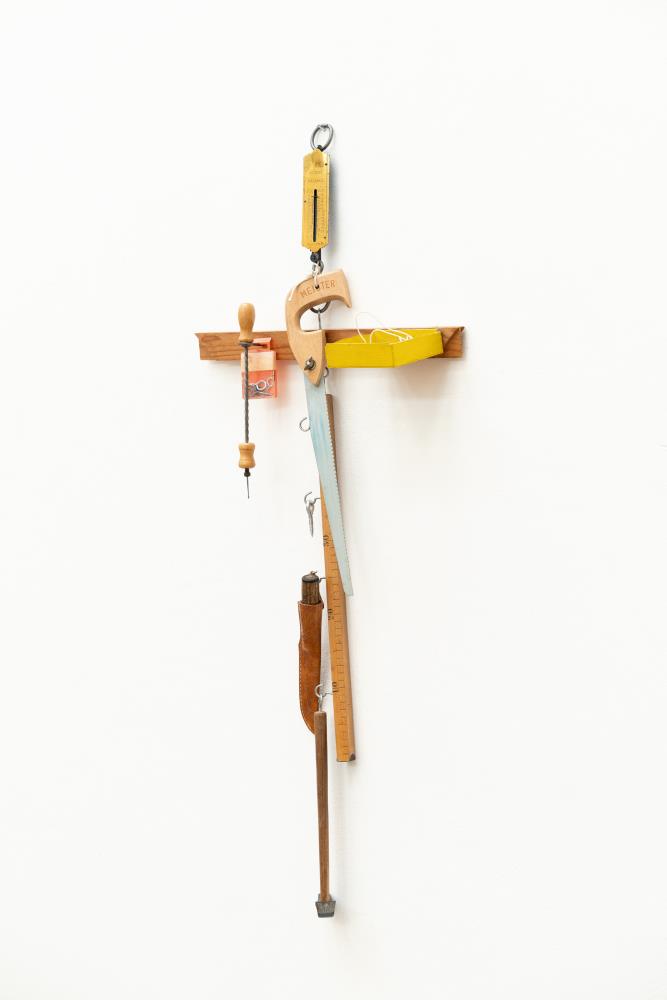
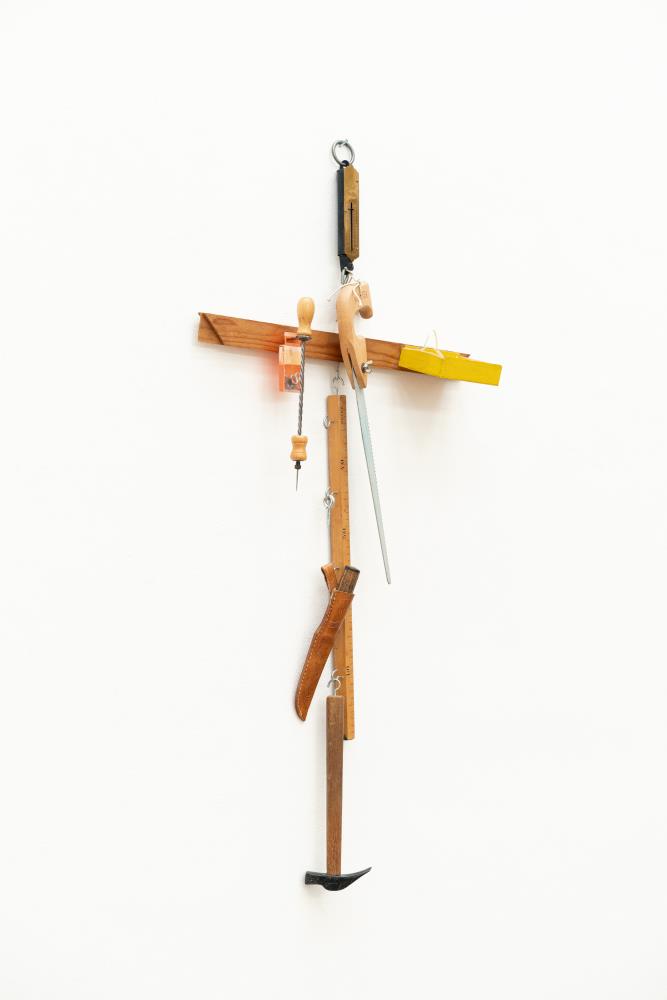
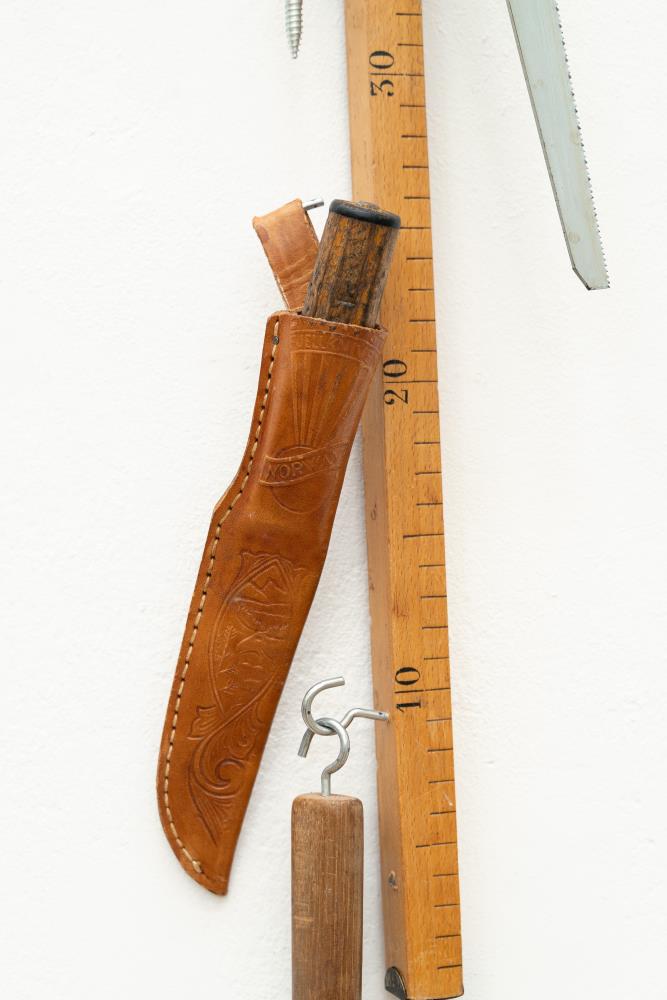
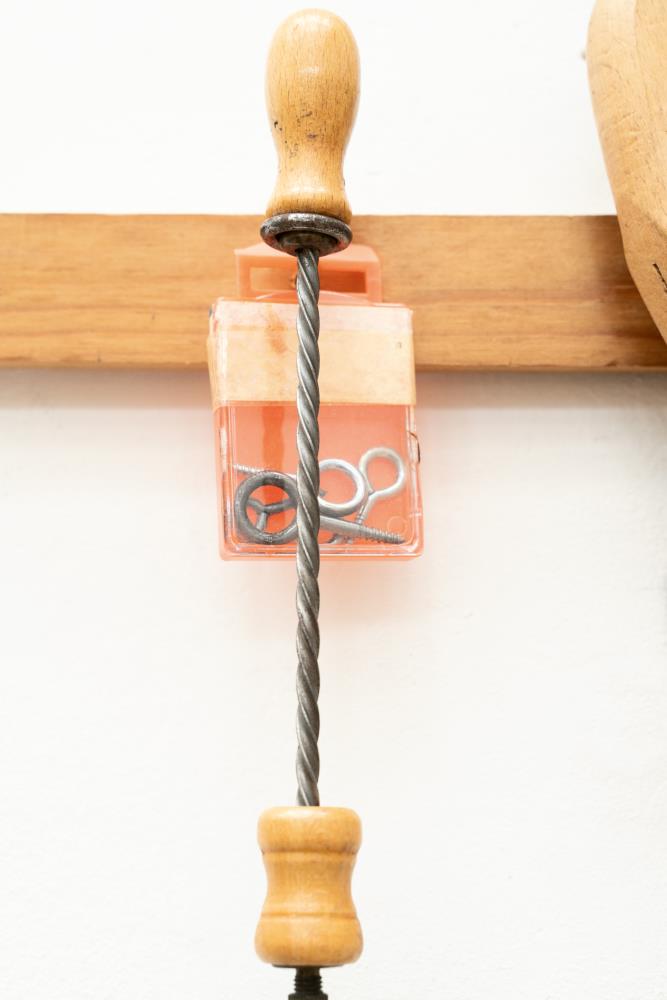
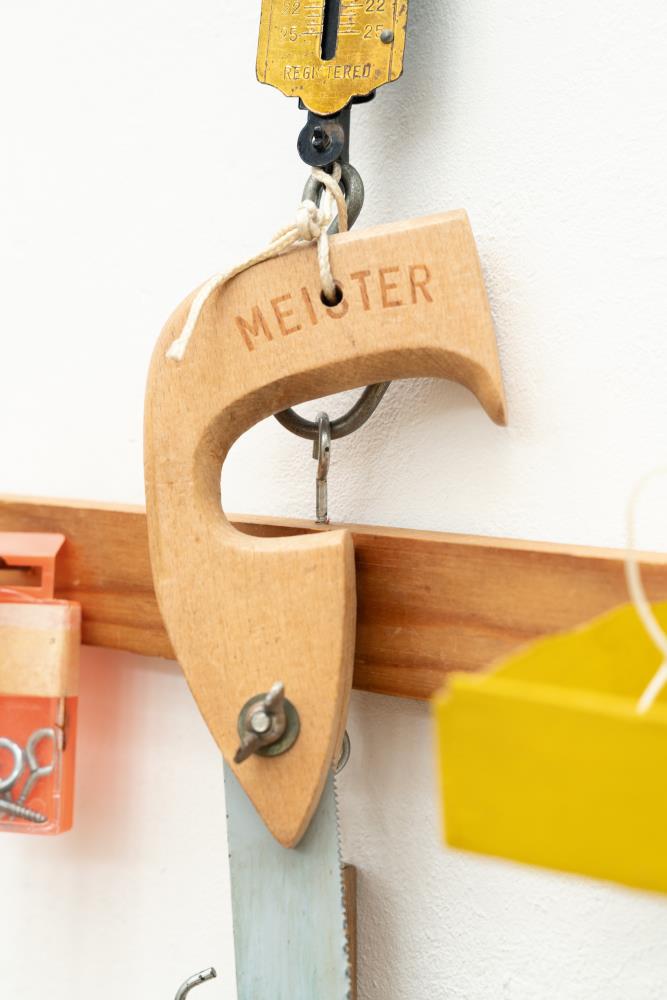
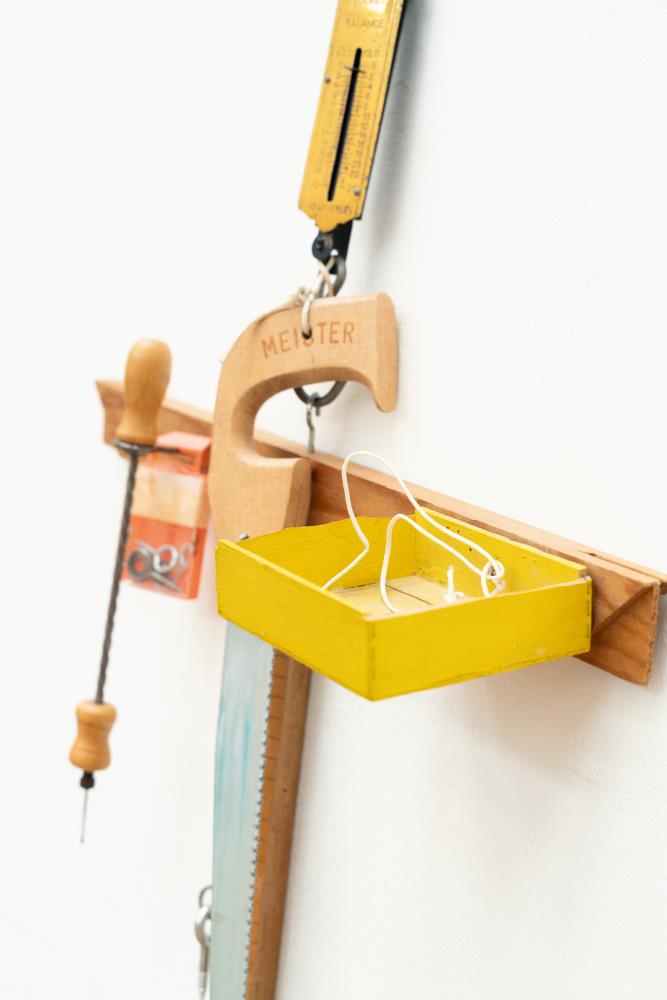
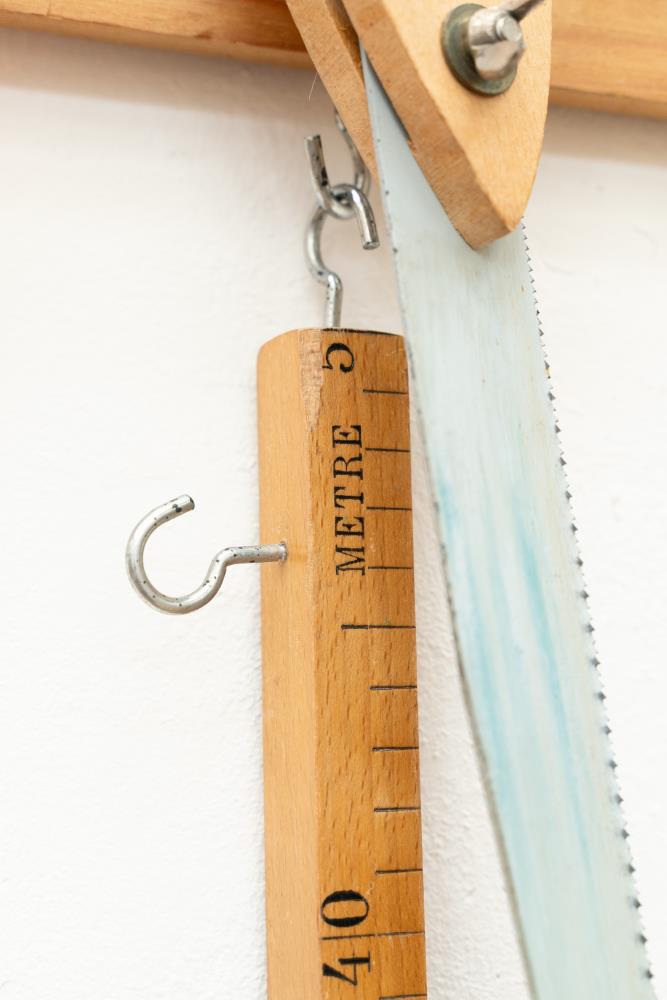
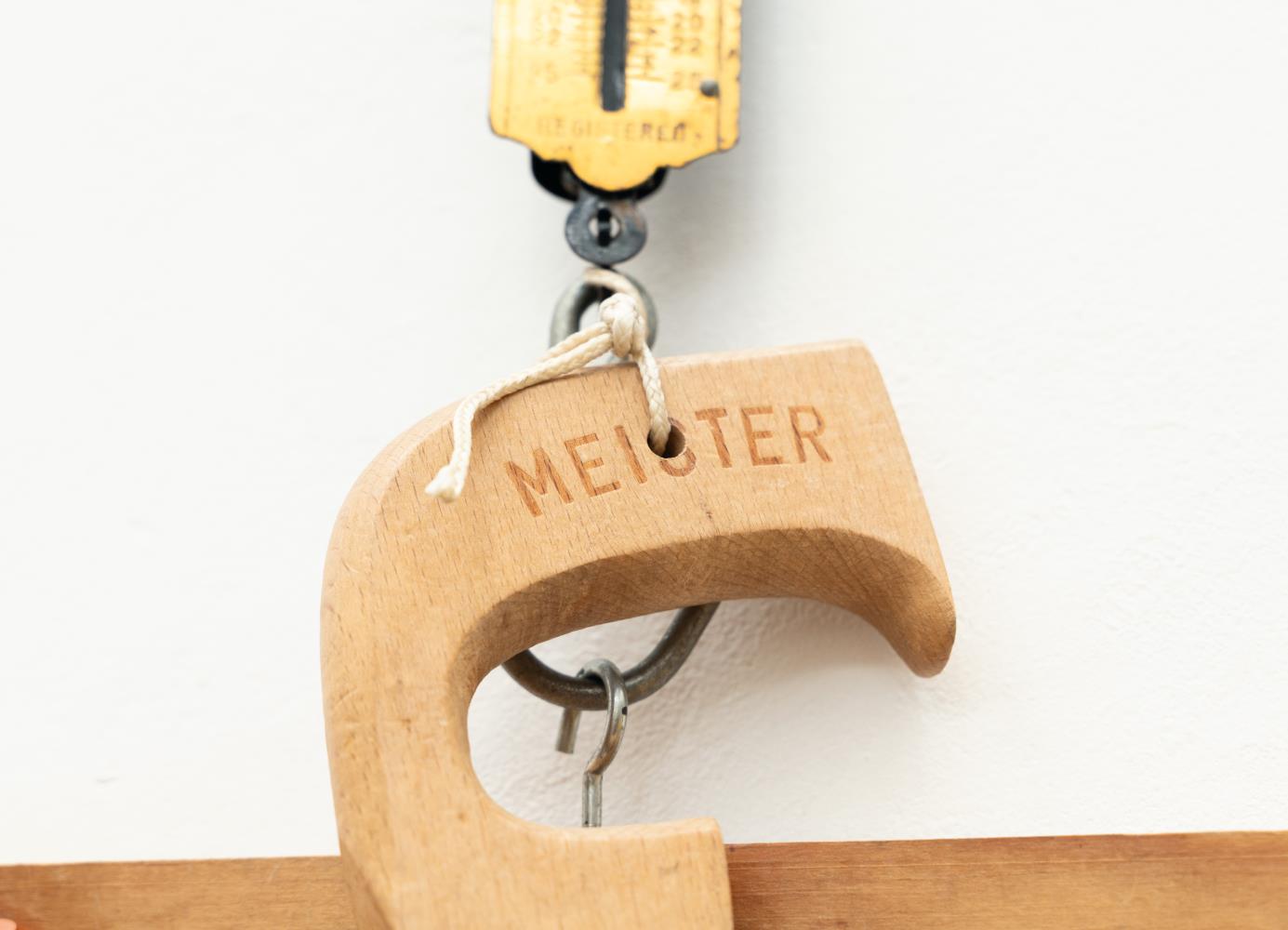
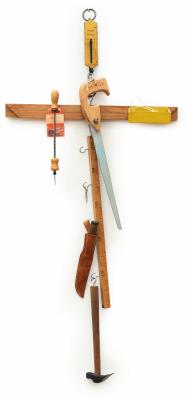
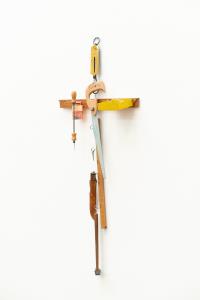
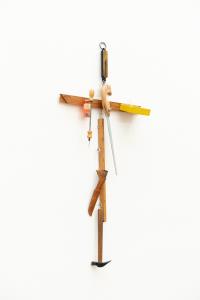
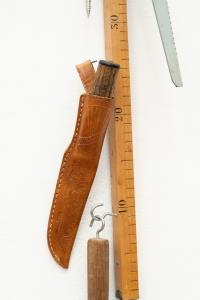
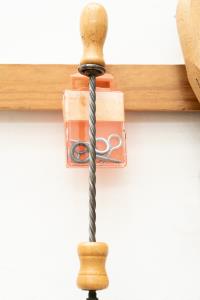
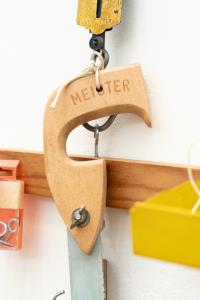
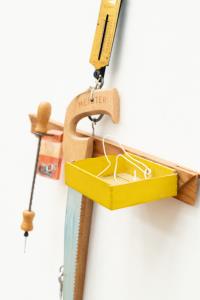
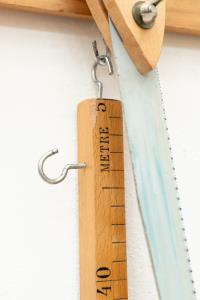
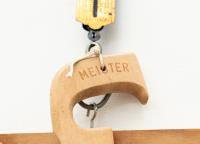
Robert Filliou’s "Tool Cross" captivates with its fusion of the everyday and the spiritual: Hammer, saw, screwdriver, tape measure and knife are arranged in a cross-shaped formation, thereby transcending the mundane – they are brought into a marvellous balance! The words ‘Balance’, ‘Metre’ and ‘Master’ can be read on the tools: an invitation to the viewer to become creatively active.
Before the French-born Robert Filliou (1926–1987) turned to art, he had already led an eventful life: During the Second World War, he joined the Resistance and became a member of the Communist Party; he later studied economics in the USA and subsequently worked in South Korea, Egypt and Spain.
In 1969, Filliou moved to Düsseldorf; his friends included Dieter Roth and Daniel Spoerri, as well as other artists associated with the Fluxus movement.
This movement challenges the traditional concept of art and blurs genre boundaries through concerts and happenings, object and film works, publications and multiples – the aim is to bring art and life together and to explore the everyday through an artistic lens.
The ‘Tool Cross’ is linked to Filliou’s initial ideas for the ‘Permanent Creation-Tool Shed’. A tool shed, a place of perpetual creation, creative thought and action. Creation is to be understood here as a process in which everyone can participate – even if it is merely playfully reshaping the contents of a toolbox into a new form.
Only superficially does the Tool Cross here resemble a Christian symbol, playing on the viewer’s associations. In fact, Filliou’s artistic understanding is strongly shaped by his engagement with Zen Buddhism and his endeavour to bring things into balance. Within art, there is no hierarchy of values for Filliou; everything is of equal worth!
• ‘Werkzeugkreuz’ led to initial considerations for the ‘Permanent Creation Tool Shed’, a tool store and place of perpetual creation and creative thinking
• The work has been exhibited in all major exhibitions on Robert Filliou and Fluxus art; Filliou participated in documenta in 1972 and 1977 and was exhibited, among other venues, at Skulptur Projekte Münster in 1987
Robert Filliou’s "Tool Cross" captivates with its fusion of the everyday and the spiritual: Hammer, saw, screwdriver, tape measure and knife are arranged in a cross-shaped formation, thereby transcending the mundane – they are brought into a marvellous balance! The words ‘Balance’, ‘Metre’ and ‘Master’ can be read on the tools: an invitation to the viewer to become creatively active.
Before the French-born Robert Filliou (1926–1987) turned to art, he had already led an eventful life: During the Second World War, he joined the Resistance and became a member of the Communist Party; he later studied economics in the USA and subsequently worked in South Korea, Egypt and Spain.
In 1969, Filliou moved to Düsseldorf; his friends included Dieter Roth and Daniel Spoerri, as well as other artists associated with the Fluxus movement.
This movement challenges the traditional concept of art and blurs genre boundaries through concerts and happenings, object and film works, publications and multiples – the aim is to bring art and life together and to explore the everyday through an artistic lens.
The ‘Tool Cross’ is linked to Filliou’s initial ideas for the ‘Permanent Creation-Tool Shed’. A tool shed, a place of perpetual creation, creative thought and action. Creation is to be understood here as a process in which everyone can participate – even if it is merely playfully reshaping the contents of a toolbox into a new form.
Only superficially does the Tool Cross here resemble a Christian symbol, playing on the viewer’s associations. In fact, Filliou’s artistic understanding is strongly shaped by his engagement with Zen Buddhism and his endeavour to bring things into balance. Within art, there is no hierarchy of values for Filliou; everything is of equal worth!