Karl Hartung
Demon group
Artist
Karl Hartung
Provenance
Nachlass des Künstlers; Privatbesitz, Nordrhein-Westfalen.
Share


Description
- Work full of tension and resolution, fullness and emptiness
- Also created under the influence of Henry Moore
- The bronze plays with expectations of space, dimension and pattern recognition
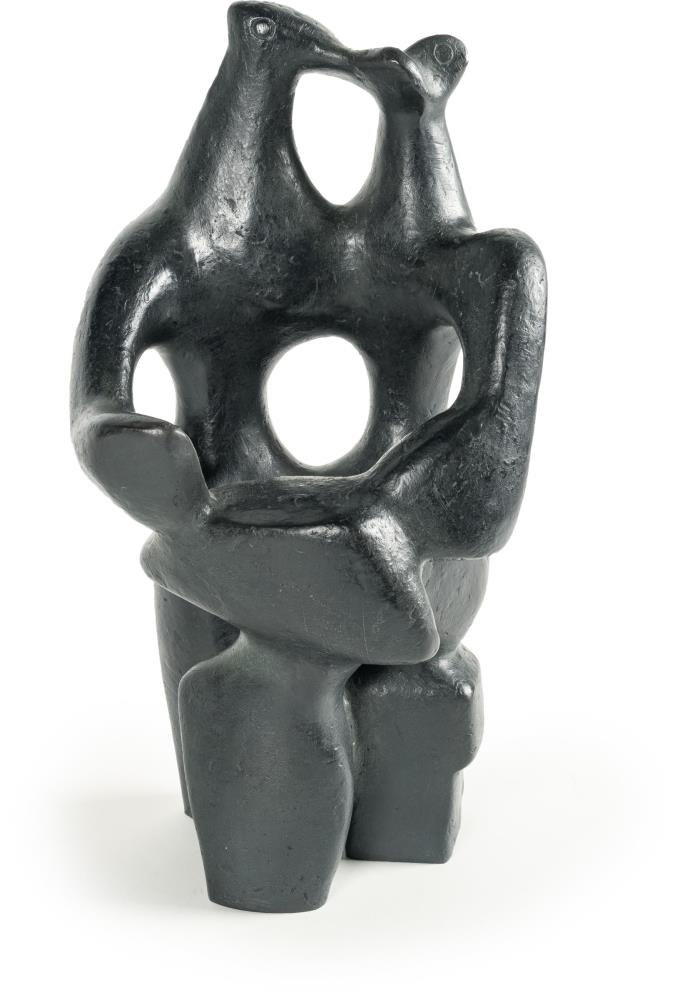
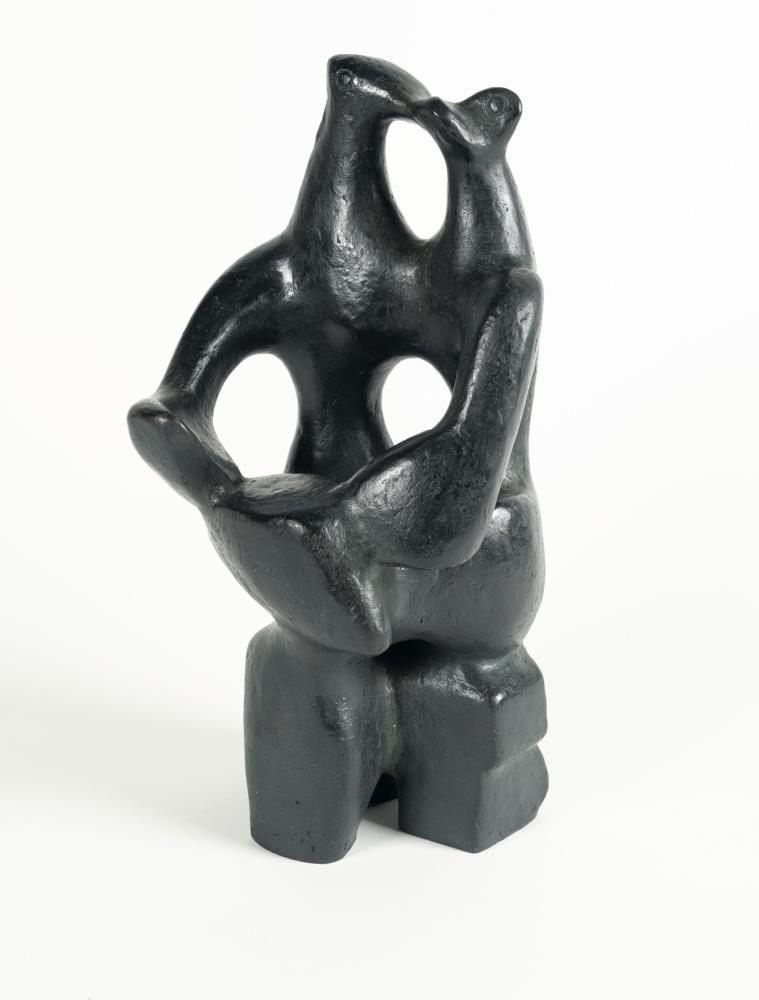
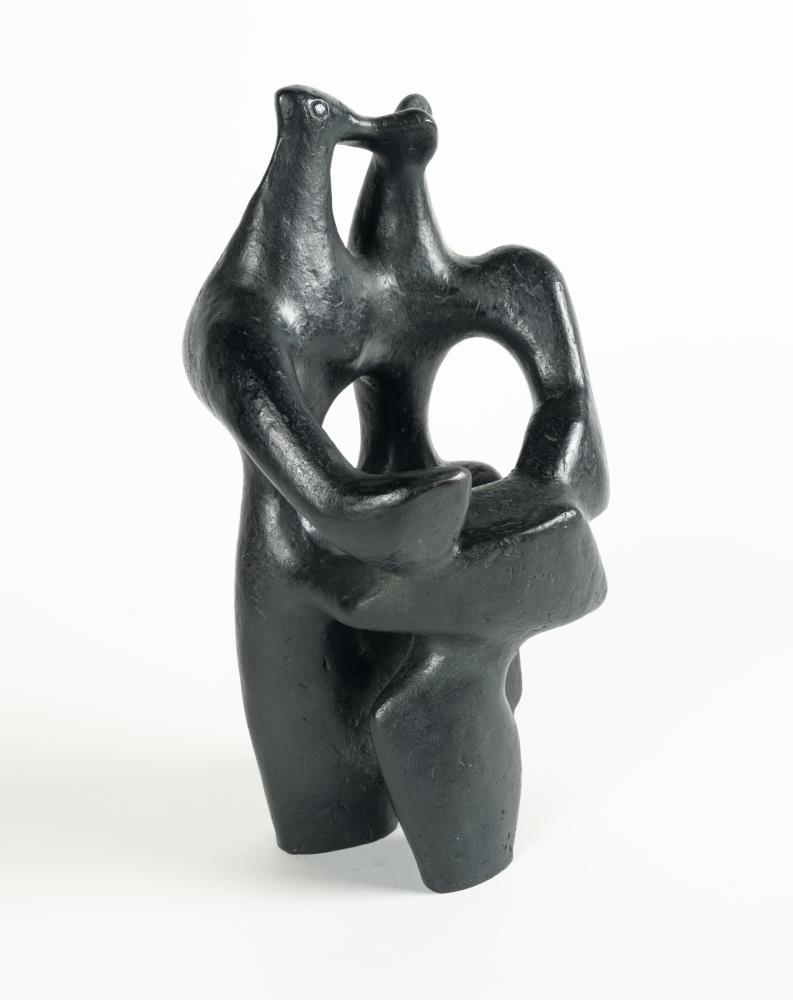
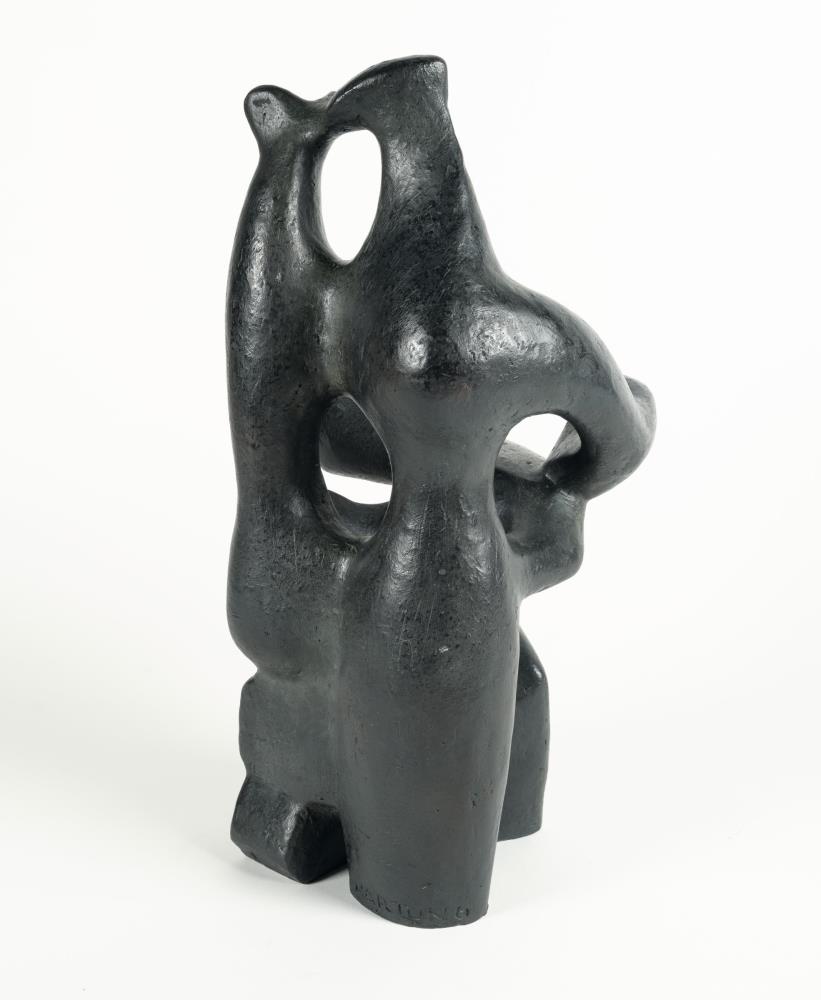
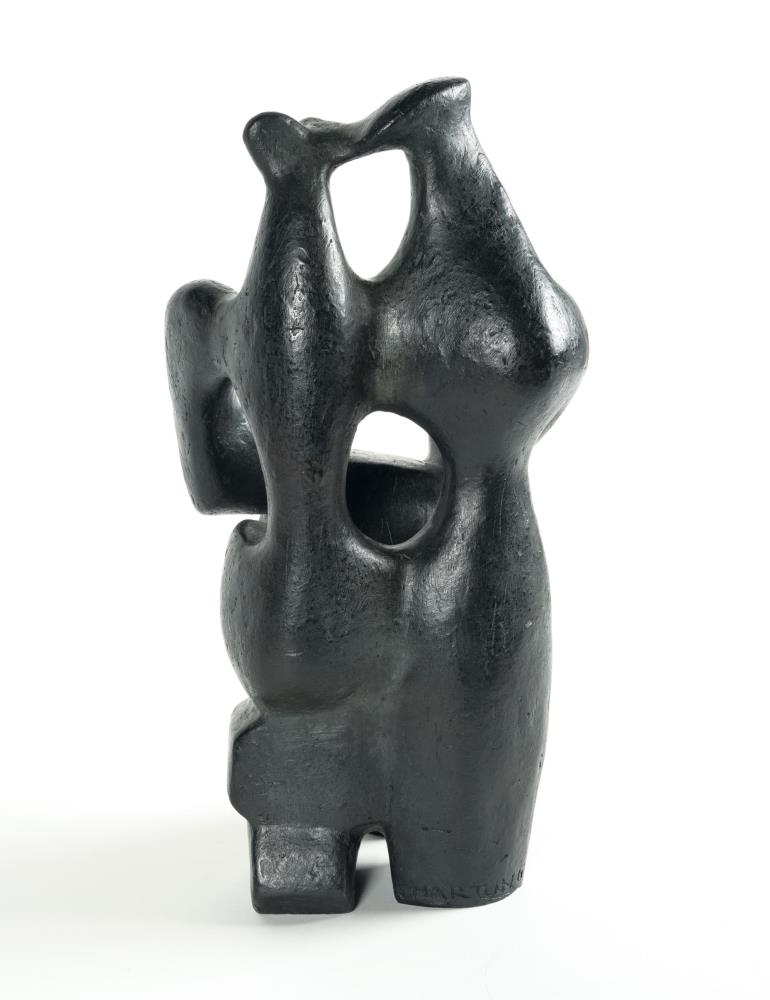
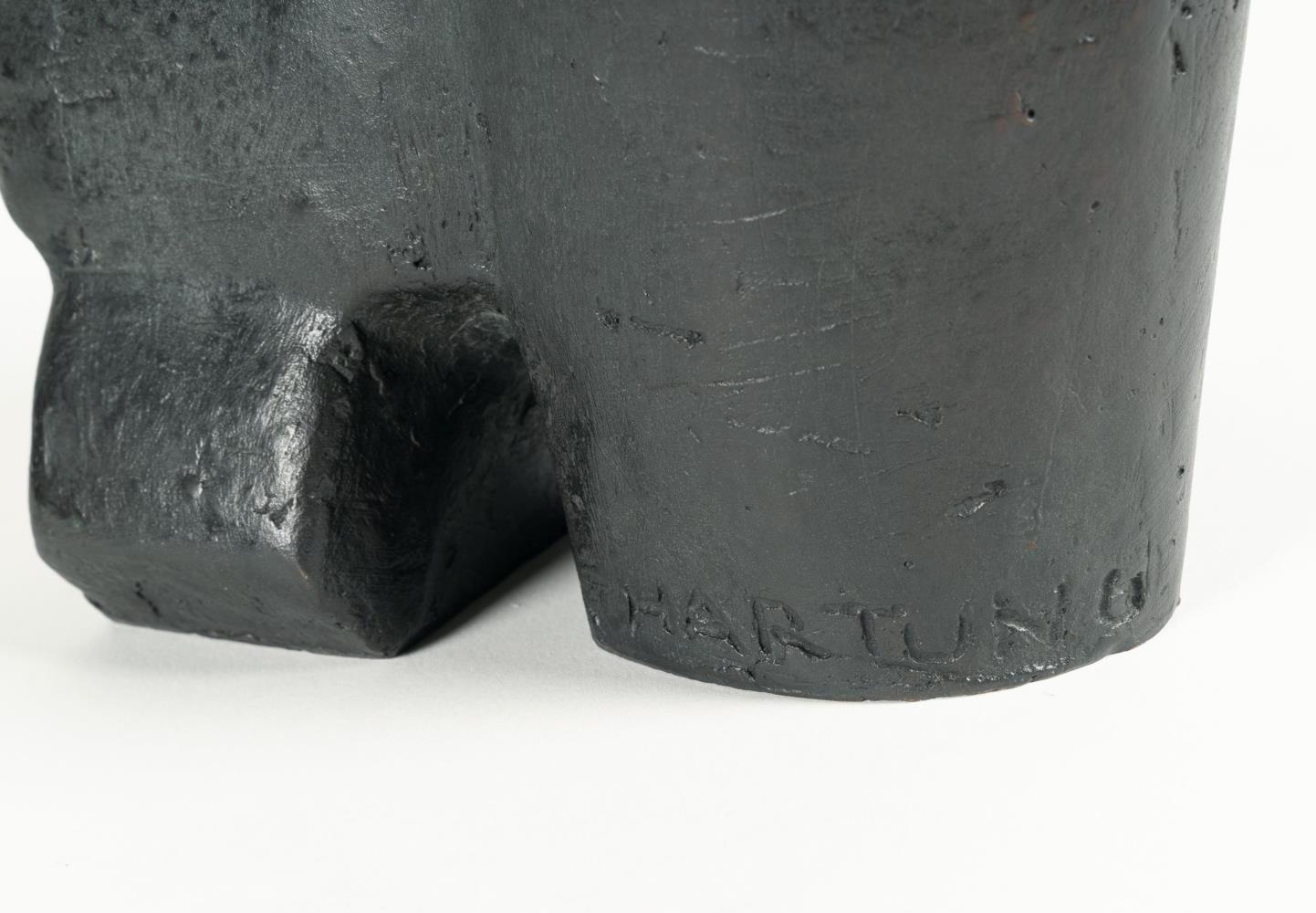
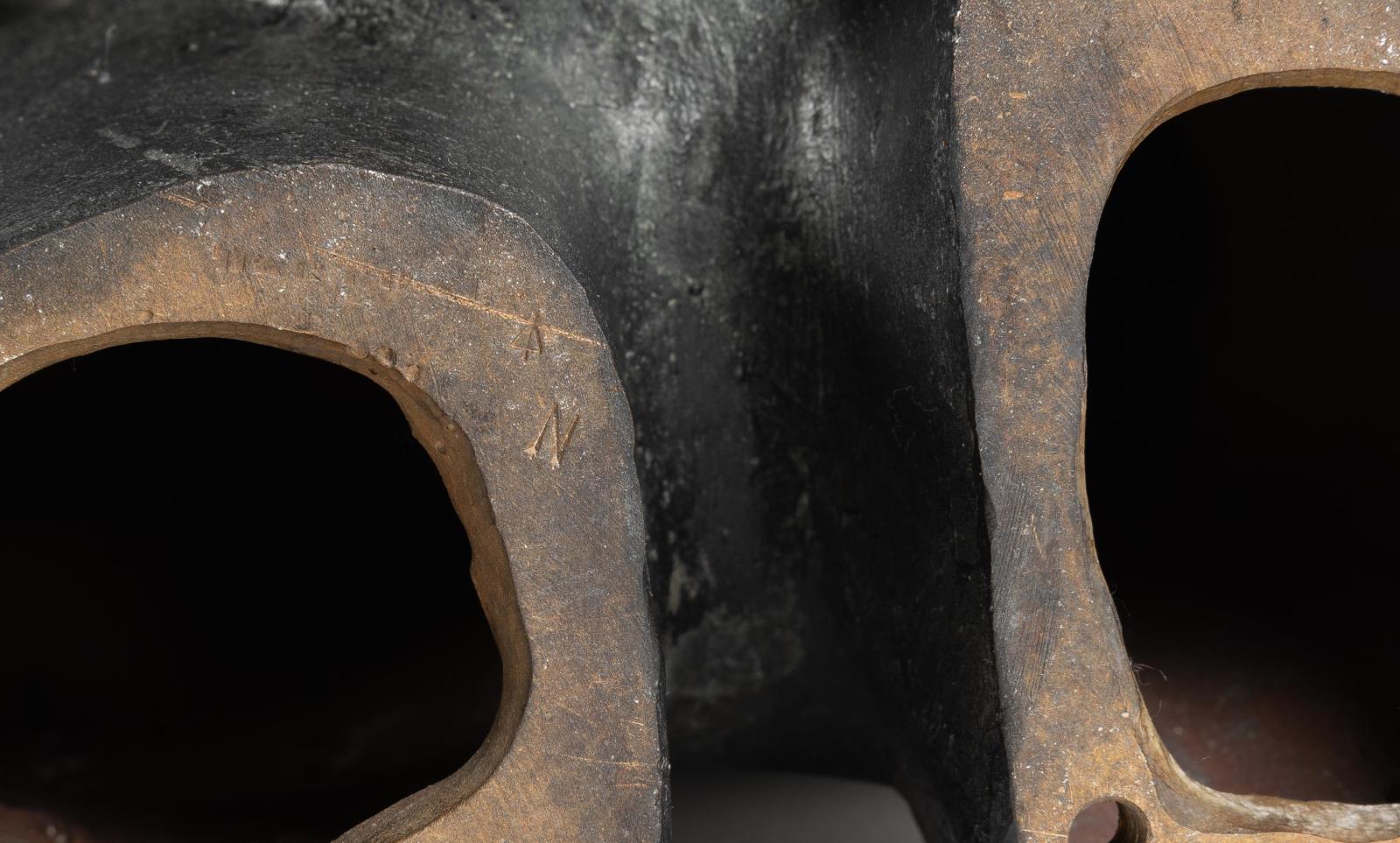
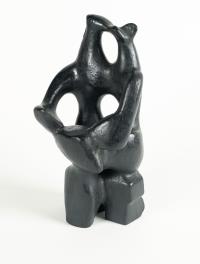
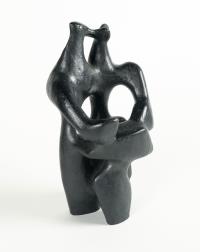
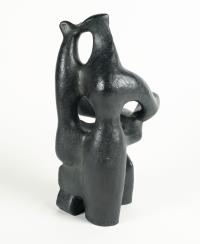
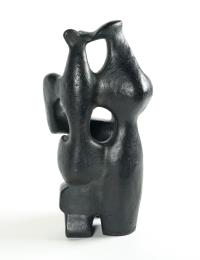
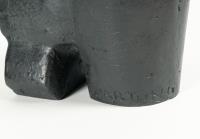
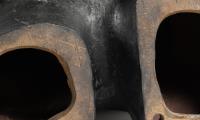
Demons! And then a whole group of them! The title of Karl Hartung's bronze sculpture sounds as if it could teach us to fear. In contrast, the figure itself invites us to look at it again and again and to fantasize. Hartung created an anamorphic sculpture at the end of the 1940s, influenced by the work of Henry Moore. Sometimes you almost think you recognize a pair of figures, then they are bird-like features that immediately fall apart again. The artist masterfully demonstrates his ability to play with tension and resolution, as his "Demon Group" consists of fullness and mass as well as omission and emptiness. The "holes" provide glimpses and vistas; as the sculpture is circled or turned, new forms and reference possibilities appear again and again, the family that has just been recognized becomes a tree stump that quickly dissolves into clouds of smoke ...
This visual indeterminacy and open space for interpretation is also reflected in the title of the work. Where "group of demons" initially brings to mind the infernal hosts of the Christian world of figures, the original, ancient Greek wording and the ideas associated with it should rather be considered. In this world, the demons are to be understood as spectres, spiritual beings that bring fate to the living. They change, are never fixed, transcend spheres and their explanations are not always clear. Interpreting them requires an alert mind. Just like the figure offered here, they change depending on the angle, but are nevertheless rigid and unchangeable in themselves, for as fluid and intangible as they may be for mortals, the fate of the living is final. Sophocles has his tragic King Oedipus state this immutability and elusiveness of (his own) fate: What should man care where the power of fate rules over him?
The terracotta version of this sculpture is in the possession of the Karl Hartung estate. Other related works in this group are the "Dancing Couple" (1947, Krause 367) and the 116 cm tall "Demon" (1950, Krause 443).
Krause 371.
We would like to thank the Karl Hartung estate for their kind information.
- Also created under the influence of Henry Moore
- The bronze plays with expectations of space, dimension and pattern recognition
Demons! And then a whole group of them! The title of Karl Hartung's bronze sculpture sounds as if it could teach us to fear. In contrast, the figure itself invites us to look at it again and again and to fantasize. Hartung created an anamorphic sculpture at the end of the 1940s, influenced by the work of Henry Moore. Sometimes you almost think you recognize a pair of figures, then they are bird-like features that immediately fall apart again. The artist masterfully demonstrates his ability to play with tension and resolution, as his "Demon Group" consists of fullness and mass as well as omission and emptiness. The "holes" provide glimpses and vistas; as the sculpture is circled or turned, new forms and reference possibilities appear again and again, the family that has just been recognized becomes a tree stump that quickly dissolves into clouds of smoke ...
This visual indeterminacy and open space for interpretation is also reflected in the title of the work. Where "group of demons" initially brings to mind the infernal hosts of the Christian world of figures, the original, ancient Greek wording and the ideas associated with it should rather be considered. In this world, the demons are to be understood as spectres, spiritual beings that bring fate to the living. They change, are never fixed, transcend spheres and their explanations are not always clear. Interpreting them requires an alert mind. Just like the figure offered here, they change depending on the angle, but are nevertheless rigid and unchangeable in themselves, for as fluid and intangible as they may be for mortals, the fate of the living is final. Sophocles has his tragic King Oedipus state this immutability and elusiveness of (his own) fate: What should man care where the power of fate rules over him?
The terracotta version of this sculpture is in the possession of the Karl Hartung estate. Other related works in this group are the "Dancing Couple" (1947, Krause 367) and the 116 cm tall "Demon" (1950, Krause 443).
Krause 371.
We would like to thank the Karl Hartung estate for their kind information.