Ella Bergmann-Michel
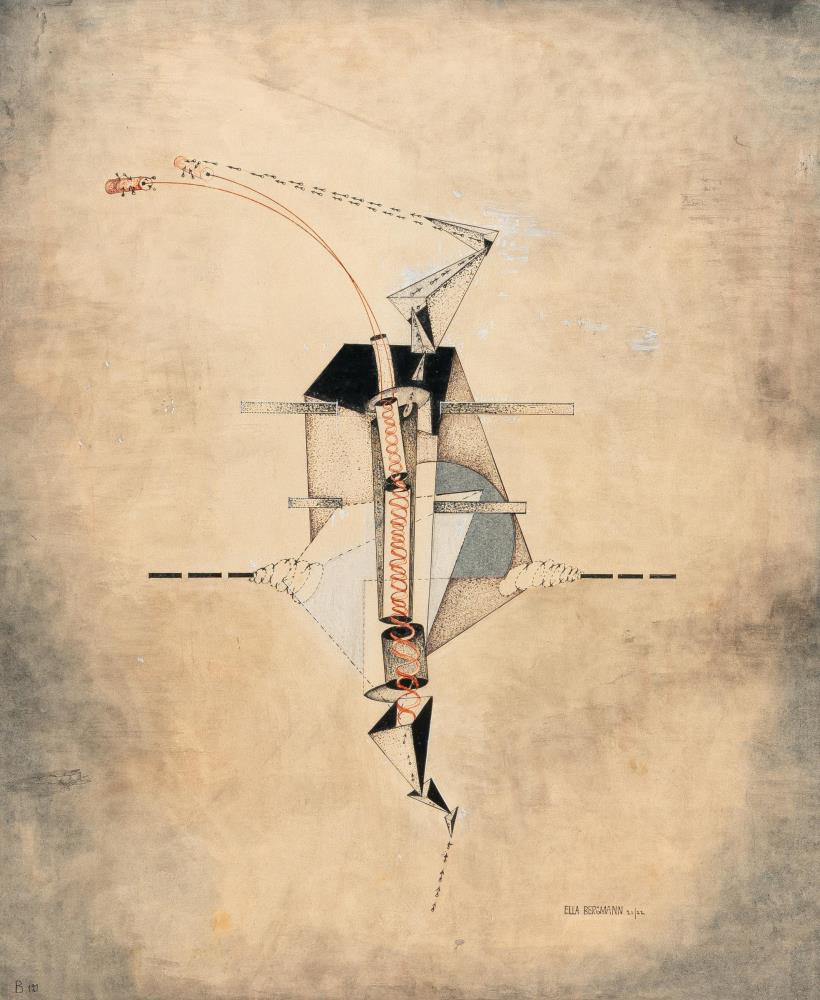
„funktionelle vegetation“
Artist
Ella Bergmann-Michel
Exhibition
Ella Bergmann-Michel & Robert Michel. Le Progrès à bras-le-corps. Full speed ahead (of time). Getting to grips with progress, Galerie Eric Mouchet/Galerie Zlotowski, Paris 2018, ill. p. 123 ;
Ella Bergmann-Michel and Robert Michel. Ein Künstlerpaar der Moderne, Sprengel Museum, Hanover 2018, col. ill. p. 69.
Ella Bergmann-Michel and Robert Michel. Ein Künstlerpaar der Moderne, Sprengel Museum, Hanover 2018, col. ill. p. 69.
Provenance
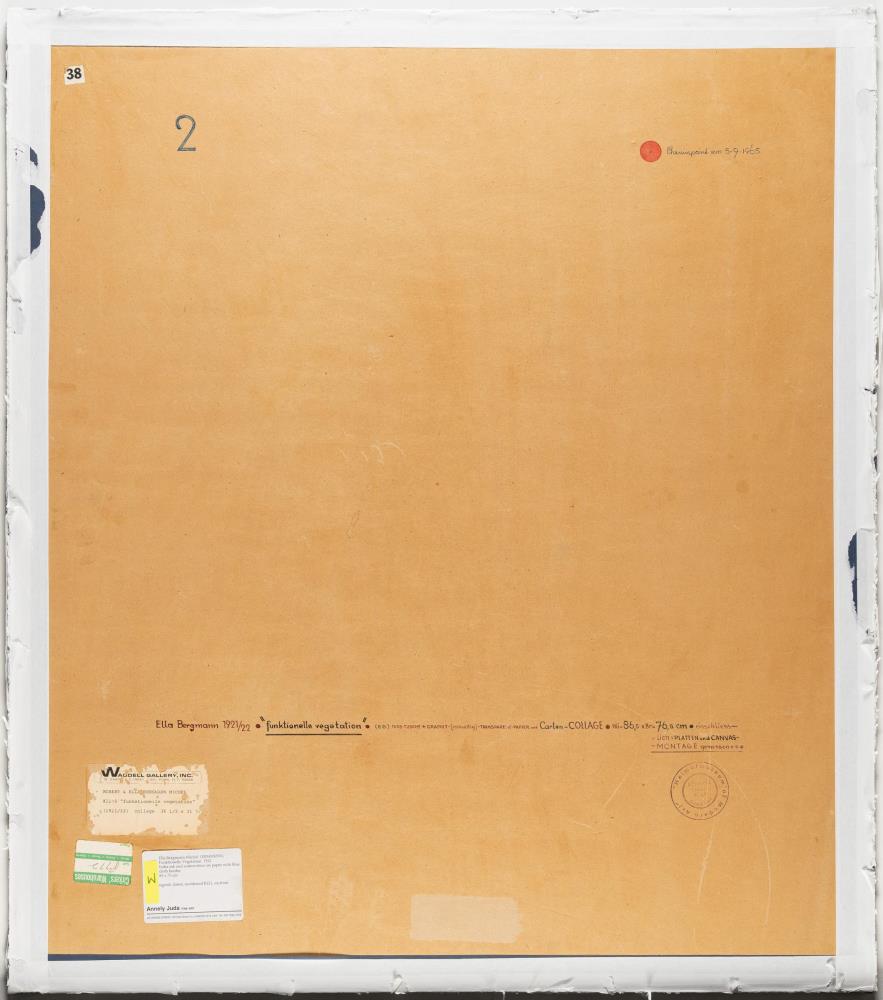
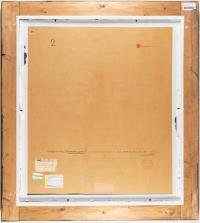
Probably Collection Irwin Salmon Chanin, New York (1891-1988), presumably acquired directly from the artist via his wife Sylvia Schofler, inscribed on the reverse "Chaninpoint vom 5.9.1965";
Waddell Gallery, New York, 1968/1971, with the label on the verso;
Annely Juda Fine Art, London, 2015, with the label on the reverse;
Galerie Eric Mouchet and Galerie Zlotowski, Paris, 2018;
Private collection, Berlin.
Waddell Gallery, New York, 1968/1971, with the label on the verso;
Annely Juda Fine Art, London, 2015, with the label on the reverse;
Galerie Eric Mouchet and Galerie Zlotowski, Paris, 2018;
Private collection, Berlin.
Share


Description
- Pioneer of both the picture collage technique and the wheel motif
- Playing with the concepts of plant growth and the growth of mathematical functions
- The variety of individual parts creates dynamism
Alongside her husband Robert Michel, Kurt Schwitters, Willi Baumeister and László Moholy-Nagy, Ella Bergmann-Michel, known to friends as EBM for short, was one of the most important protagonists of the avant-garde and a pioneer of collage. The artist couple Bergmann/Michel met in 1917 while studying at the University of Fine Arts in Weimar and from then on worked closely together for the rest of their lives. For a short time, they worked at the newly founded Bauhaus, but soon settled in the "Schmelz" in the Taunus, an old paint mill in Michel's birthplace, which they later called the "Heimatmuseum of Modern Art". They became close friends with Johannes Mohlzahn and Kurt Schwitters as well as the photographers Martha Hoepffner and Ilse Bing. In addition to her extremely varied artistic work, Ella Bergmann-Michel worked as a commercial artist, photographer and documentary filmmaker and produced various interior designs. In the mid-1920s, she was involved in the social reform movement "das neue frankfurt", where she headed the "Arbeitsgemeinschaft für neuen Film/Liga für unabhängigen Film" together with Paul Seligmann from 1930. Due to the political developments of the 1930s, the artist couple largely withdrew from the public art scene. To support their family, Robert Michel ran a fish farm at the Schmelzmühle, while Ella Bergmann-Michel farmed and reared small livestock. The couple only resumed their artistic activities after the end of the Second World War. Thanks to the exhibition "Pioneers of Collage" in Leverkusen in 1963, the life's work of the artist couple Bergmann/Michel was rediscovered and made known.
After her time at the academy, during which she created numerous expressionist-influenced woodcuts, Ella Bergmann-Michel produced her first dada-futurist works from 1917/18, material pictures glued together from found objects, so-called assemblages, and paper collages. These works are mostly dominated by circular forms that are clearly reminiscent of wheel mechanics. This certainly makes EBM the pioneer of both the collage technique and the wheel motif (which is still mostly unrecognized today), which can only be found a short time later in the works of her husband Robert Michel and Kurt Schwitters.
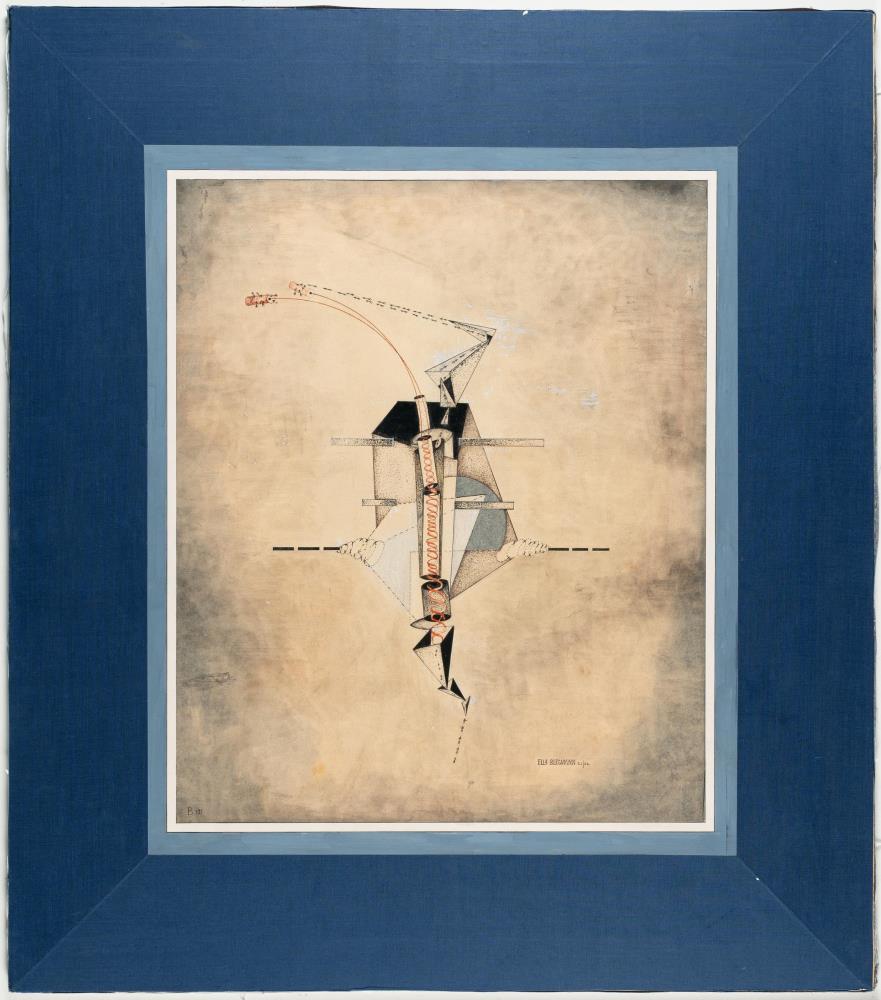
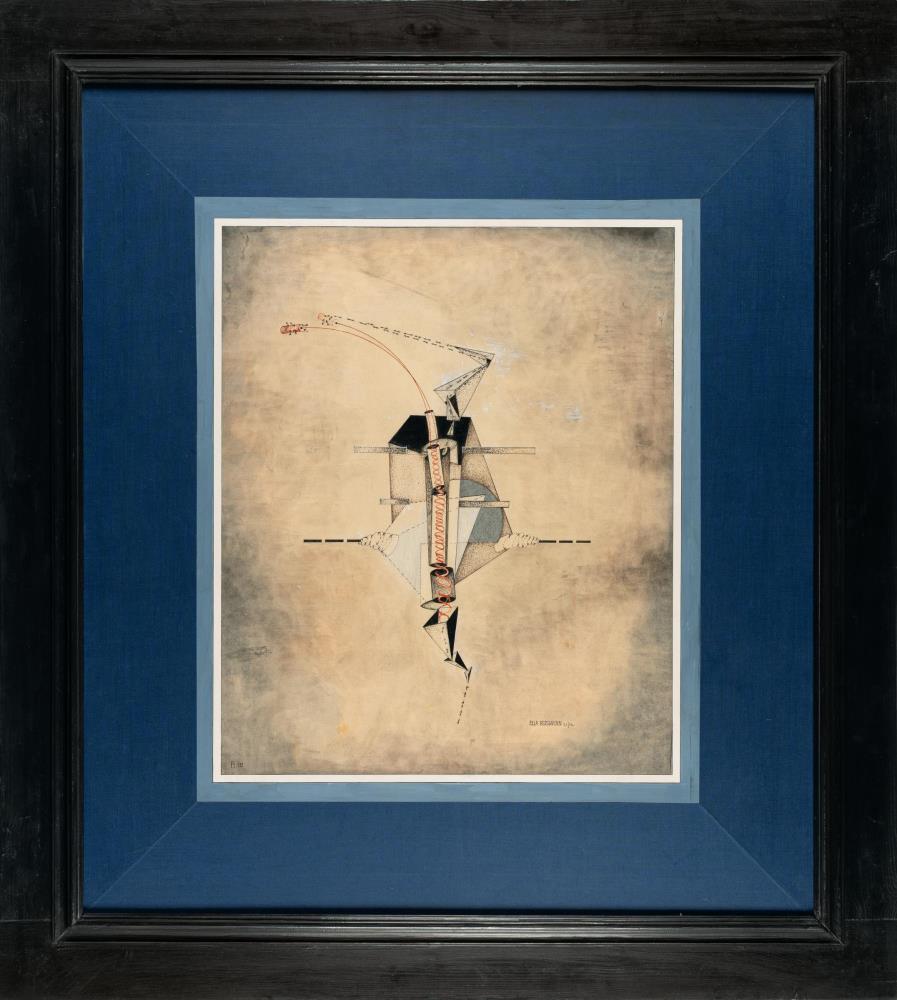
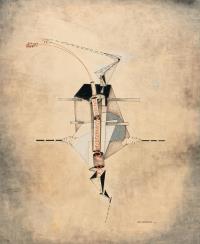
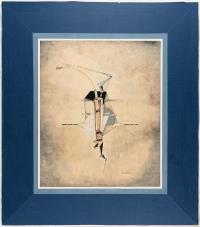
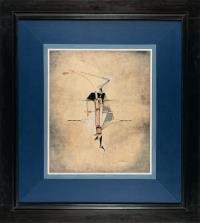
The functional vegetation is shown in geometricized individual forms, the interior of which is criss-crossed by tubes and arrow lines. The variety of interlocking and interdependent individual parts creates a dynamic and gives the work the character of a moving figure. Bergmann-Michel plays with the concepts of plant growth and the growth of mathematical functions, which appear as curves and graphs in the drawing.
- Playing with the concepts of plant growth and the growth of mathematical functions
- The variety of individual parts creates dynamism
Alongside her husband Robert Michel, Kurt Schwitters, Willi Baumeister and László Moholy-Nagy, Ella Bergmann-Michel, known to friends as EBM for short, was one of the most important protagonists of the avant-garde and a pioneer of collage. The artist couple Bergmann/Michel met in 1917 while studying at the University of Fine Arts in Weimar and from then on worked closely together for the rest of their lives. For a short time, they worked at the newly founded Bauhaus, but soon settled in the "Schmelz" in the Taunus, an old paint mill in Michel's birthplace, which they later called the "Heimatmuseum of Modern Art". They became close friends with Johannes Mohlzahn and Kurt Schwitters as well as the photographers Martha Hoepffner and Ilse Bing. In addition to her extremely varied artistic work, Ella Bergmann-Michel worked as a commercial artist, photographer and documentary filmmaker and produced various interior designs. In the mid-1920s, she was involved in the social reform movement "das neue frankfurt", where she headed the "Arbeitsgemeinschaft für neuen Film/Liga für unabhängigen Film" together with Paul Seligmann from 1930. Due to the political developments of the 1930s, the artist couple largely withdrew from the public art scene. To support their family, Robert Michel ran a fish farm at the Schmelzmühle, while Ella Bergmann-Michel farmed and reared small livestock. The couple only resumed their artistic activities after the end of the Second World War. Thanks to the exhibition "Pioneers of Collage" in Leverkusen in 1963, the life's work of the artist couple Bergmann/Michel was rediscovered and made known.
After her time at the academy, during which she created numerous expressionist-influenced woodcuts, Ella Bergmann-Michel produced her first dada-futurist works from 1917/18, material pictures glued together from found objects, so-called assemblages, and paper collages. These works are mostly dominated by circular forms that are clearly reminiscent of wheel mechanics. This certainly makes EBM the pioneer of both the collage technique and the wheel motif (which is still mostly unrecognized today), which can only be found a short time later in the works of her husband Robert Michel and Kurt Schwitters.
The functional vegetation is shown in geometricized individual forms, the interior of which is criss-crossed by tubes and arrow lines. The variety of interlocking and interdependent individual parts creates a dynamic and gives the work the character of a moving figure. Bergmann-Michel plays with the concepts of plant growth and the growth of mathematical functions, which appear as curves and graphs in the drawing.