Hermann Max Pechstein
Calla-Lilien
Artist
Hermann Max Pechstein
Provenance
Herbert Tannenbaum Gallery, New York;
Julius Wyler Collection, New York;
Eva Wyler Collection, New York, by inheritance from the aforementioned;
Daniel B. Grossmann Inc, New York;
Collection Joan B. Kroc, New York, acquired from the aforementioned in 1983;
Christie's, Collection of Joan B. Kroc, New York 3.5.2006, lot 359;
Harry P. Kamen Collection, New York;
Private collection, Switzerland.
Julius Wyler Collection, New York;
Eva Wyler Collection, New York, by inheritance from the aforementioned;
Daniel B. Grossmann Inc, New York;
Collection Joan B. Kroc, New York, acquired from the aforementioned in 1983;
Christie's, Collection of Joan B. Kroc, New York 3.5.2006, lot 359;
Harry P. Kamen Collection, New York;
Private collection, Switzerland.
Share


Description
- Pechstein's compositional mastery is evident in this simple floral still life
- The work was created in 1917, during the period of his Palau and war paintings
- From the collection of Herbert Tannenbaum, the important German-American art dealer
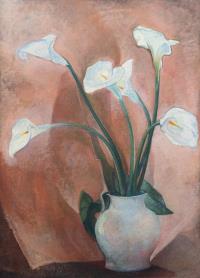
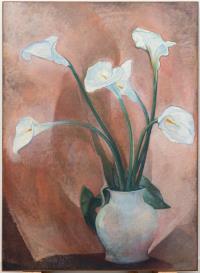
Calla lilies are beautiful. This does not refer to an individual floristic taste - marriages are said to have broken down over a preference for gerberas, for example - but to the origin of the word. It comes from the ancient Greek kalós and means exactly that: beautiful.
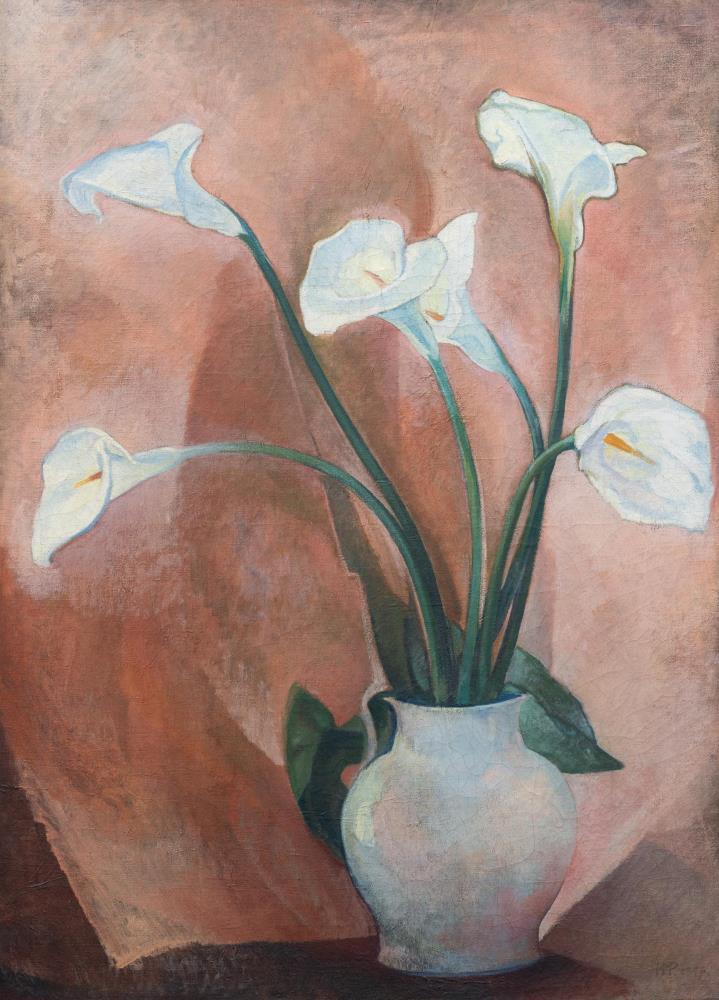
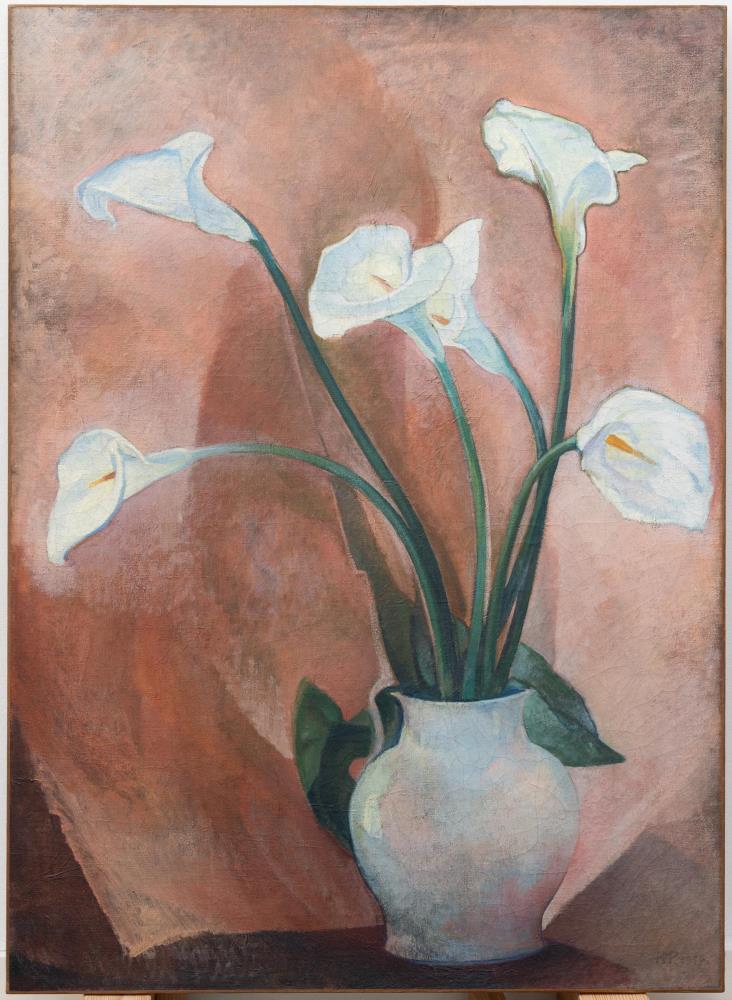
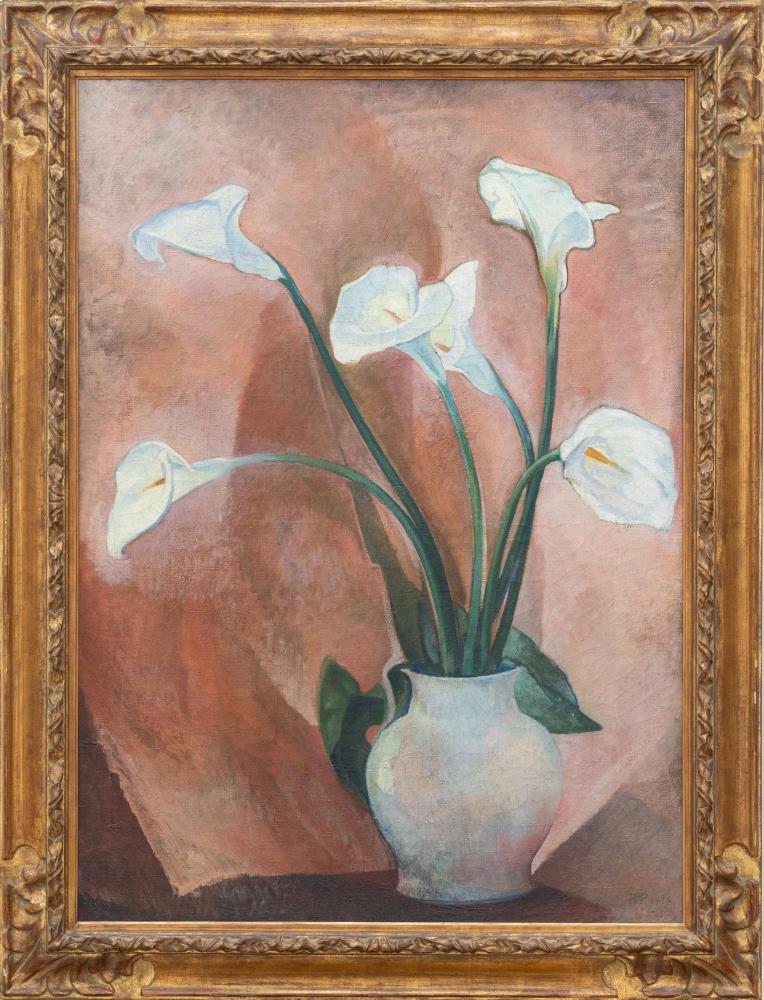
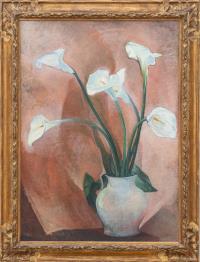
Pechstein's flower still life from 1917 reduces the genre to its essentials. Six inflorescences and two leaves stand in a bulbous, light-colored vase on a small round table; the flowers themselves seem to lean here and there at random. The background is formed by an indeterminate red surface. The simplicity of the scene reveals Pechstein's skill with color and composition. The vase is not "just there" in the pictorial space, the painter places it on ¾ of the picture surface. Together with the flowers, which have just been carefully considered and are by no means standing around wildly, this results in an almost ideal golden ratio. The flowers, in all their angles of inclination, also correspond with the folds and color tonalities of the background, resulting in perfectly balanced arcs of tension and gradients. Nothing is left to chance in Pechstein's painting, on the contrary! Pechstein signs, demonstrates perfectly that simple is the most difficult. What seems simple is often the result of the highest precision - think of the perfect simplicity of Japanese bowls, for example.
In 1917, Pechstein was working on the memories of his trip to the South Seas, his "Palau pictures". The horrors of the First World War, in which he served as a soldier at the front, were particularly fresh in his memory. In his still life of the calla vase, there is no direct evidence of either. There are no exoticizing details to be seen, such as certain textile patterns. Nor does the shadow of war loom behind the flower arrangement. And yet, knowing the recent developments in Pechstein's biography, one cannot help but wonder what influence the events at the front in particular had on the artist: Is not the white blossom, in its natural beauty, immaculately presented as a singularity, a counter-design to the man-made horror still raging in 1917? Isn't pausing and losing oneself in the aesthetics of simplicity an expression of (conscious) fading out?
Incidentally, the correct German name for the flowers would be Zantedeschien. But that's not really conducive to sales.
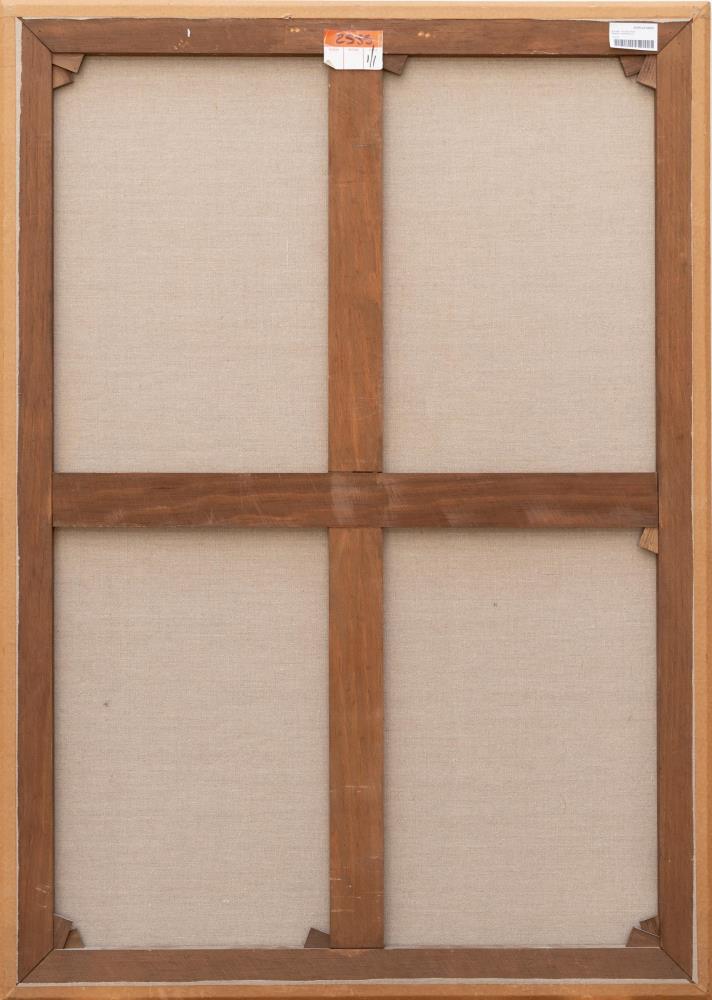
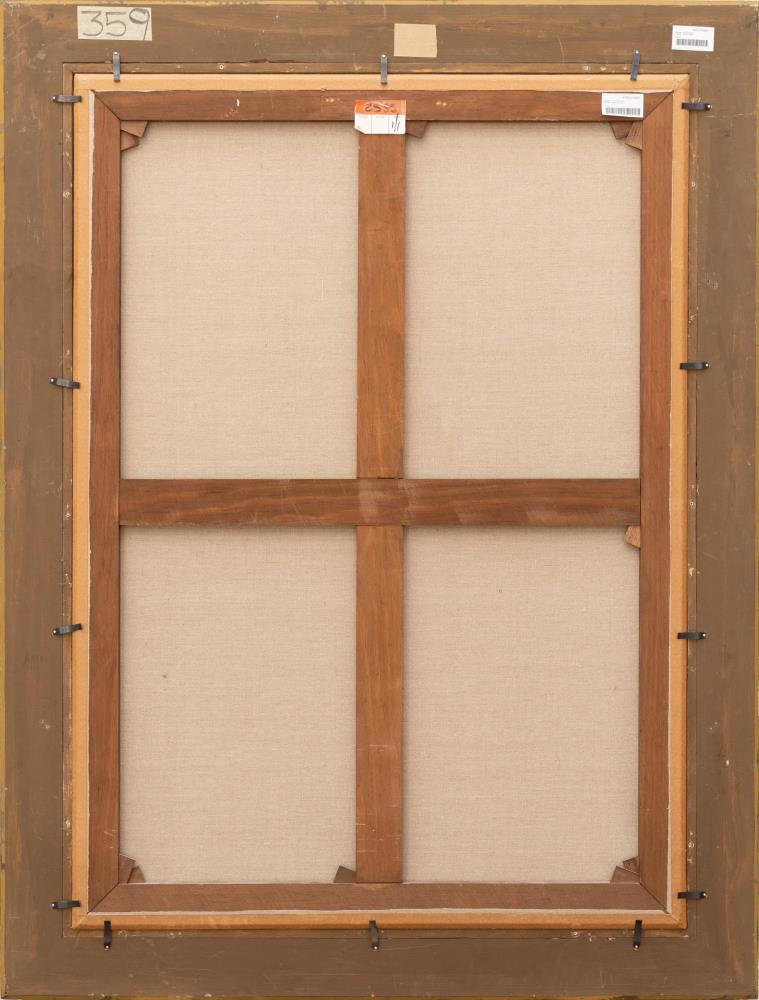
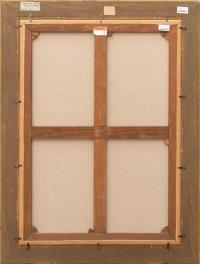
According to the catalog raisonné, the painting was signed, dated and titled "Calla Lilien 1917 HMPechstein" on the reverse of the canvas before it was doubled.
Soika 1917/24.
- The work was created in 1917, during the period of his Palau and war paintings
- From the collection of Herbert Tannenbaum, the important German-American art dealer
Calla lilies are beautiful. This does not refer to an individual floristic taste - marriages are said to have broken down over a preference for gerberas, for example - but to the origin of the word. It comes from the ancient Greek kalós and means exactly that: beautiful.
Pechstein's flower still life from 1917 reduces the genre to its essentials. Six inflorescences and two leaves stand in a bulbous, light-colored vase on a small round table; the flowers themselves seem to lean here and there at random. The background is formed by an indeterminate red surface. The simplicity of the scene reveals Pechstein's skill with color and composition. The vase is not "just there" in the pictorial space, the painter places it on ¾ of the picture surface. Together with the flowers, which have just been carefully considered and are by no means standing around wildly, this results in an almost ideal golden ratio. The flowers, in all their angles of inclination, also correspond with the folds and color tonalities of the background, resulting in perfectly balanced arcs of tension and gradients. Nothing is left to chance in Pechstein's painting, on the contrary! Pechstein signs, demonstrates perfectly that simple is the most difficult. What seems simple is often the result of the highest precision - think of the perfect simplicity of Japanese bowls, for example.
In 1917, Pechstein was working on the memories of his trip to the South Seas, his "Palau pictures". The horrors of the First World War, in which he served as a soldier at the front, were particularly fresh in his memory. In his still life of the calla vase, there is no direct evidence of either. There are no exoticizing details to be seen, such as certain textile patterns. Nor does the shadow of war loom behind the flower arrangement. And yet, knowing the recent developments in Pechstein's biography, one cannot help but wonder what influence the events at the front in particular had on the artist: Is not the white blossom, in its natural beauty, immaculately presented as a singularity, a counter-design to the man-made horror still raging in 1917? Isn't pausing and losing oneself in the aesthetics of simplicity an expression of (conscious) fading out?
Incidentally, the correct German name for the flowers would be Zantedeschien. But that's not really conducive to sales.
According to the catalog raisonné, the painting was signed, dated and titled "Calla Lilien 1917 HMPechstein" on the reverse of the canvas before it was doubled.
Soika 1917/24.