Alice Halicka
Nature Morte
Artist
Alice Halicka
1894 Krakau - Paris 1975
Further information
With a photographic expert’s report by Marlène Marcoussis, the artist’s daughter, dated 25 January 1979.
Provenance
Galerie Gmurzynska, Cologne;
Private collection, Switzerland;
Lempertz, Cologne, 30 November 2019, Lot 377;
Private collection, North Rhine-Westphalia.
Private collection, Switzerland;
Lempertz, Cologne, 30 November 2019, Lot 377;
Private collection, North Rhine-Westphalia.
Share


Description
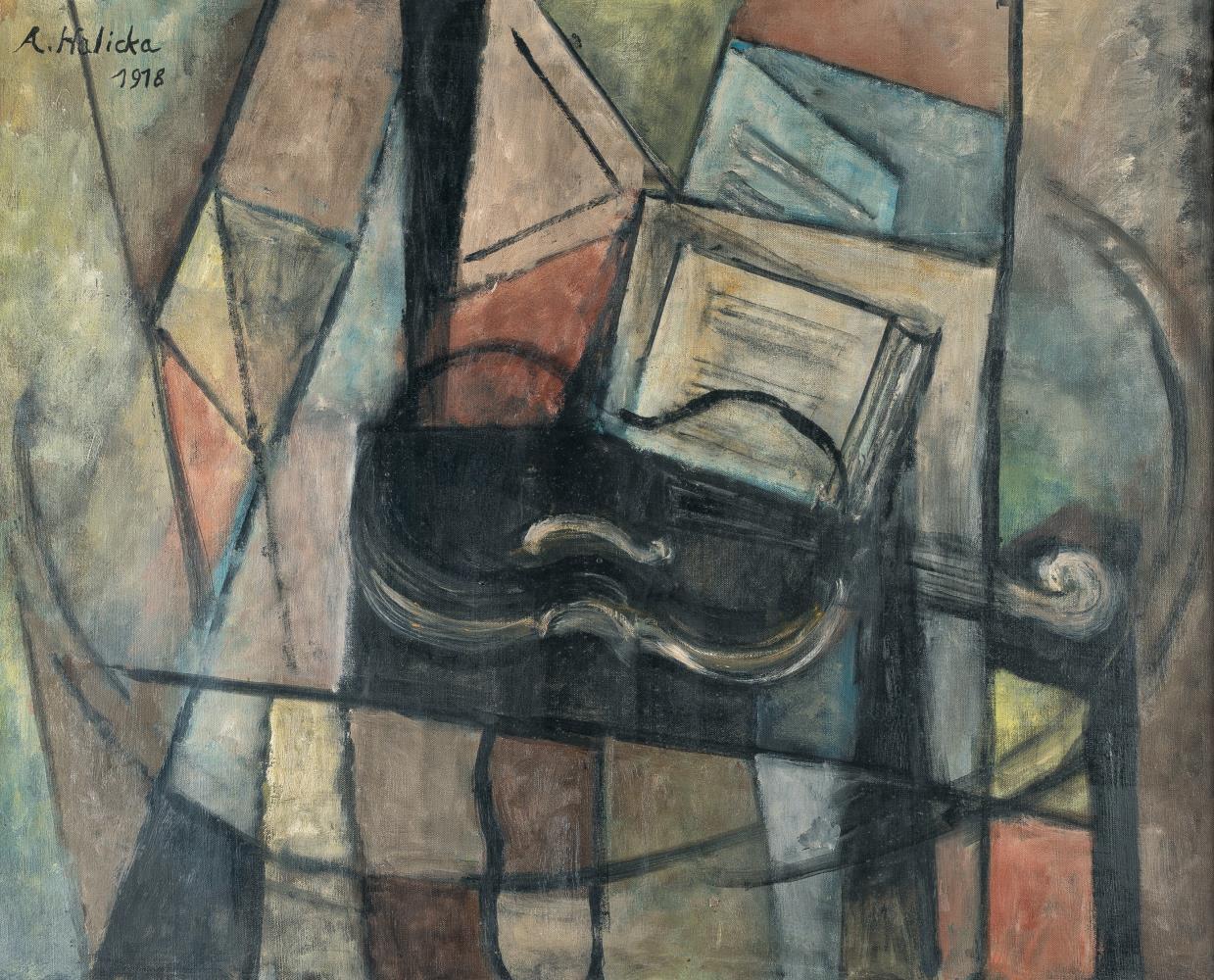
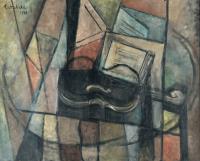
• Early work by the artist, clearly stylistically associated with the Parisian avant-garde around 1918
• Created during Halicka’s Cubist phase in the period of the First World War, when she was associated with the circle around Picasso and Gris
• Typical Cubist still life with multiple perspectives and a fragmented conception of space
Alice Halicka was born in Krakow in 1894, the daughter of a Jewish doctor. She initially took painting lessons with Simon Hollósy in Munich, before moving to Paris in 1912. There she studied under Paul Sérusier and Maurice Denis, before her works were exhibited in Parisian salons. She interrupted her stay in France with numerous trips to Austria, Great Britain, Spain, Switzerland and Morocco, amongst other places. In 1913, she married the Polish painter Louis Marcoussis (1878–1941), who introduced her in 1912 to the circle of Cubists around Juan Gris, Georges Braque, Pablo Picasso and others. She remained associated with this circle of artists until 1921. Her participation in the Salon des Indépendants in 1914 also brought her to the attention of Guillaume Apollinaire. The phase of Cubist still lifes in her work was limited to the period of the First World War; later, she turned once again to the figurative style of the Surrealists.
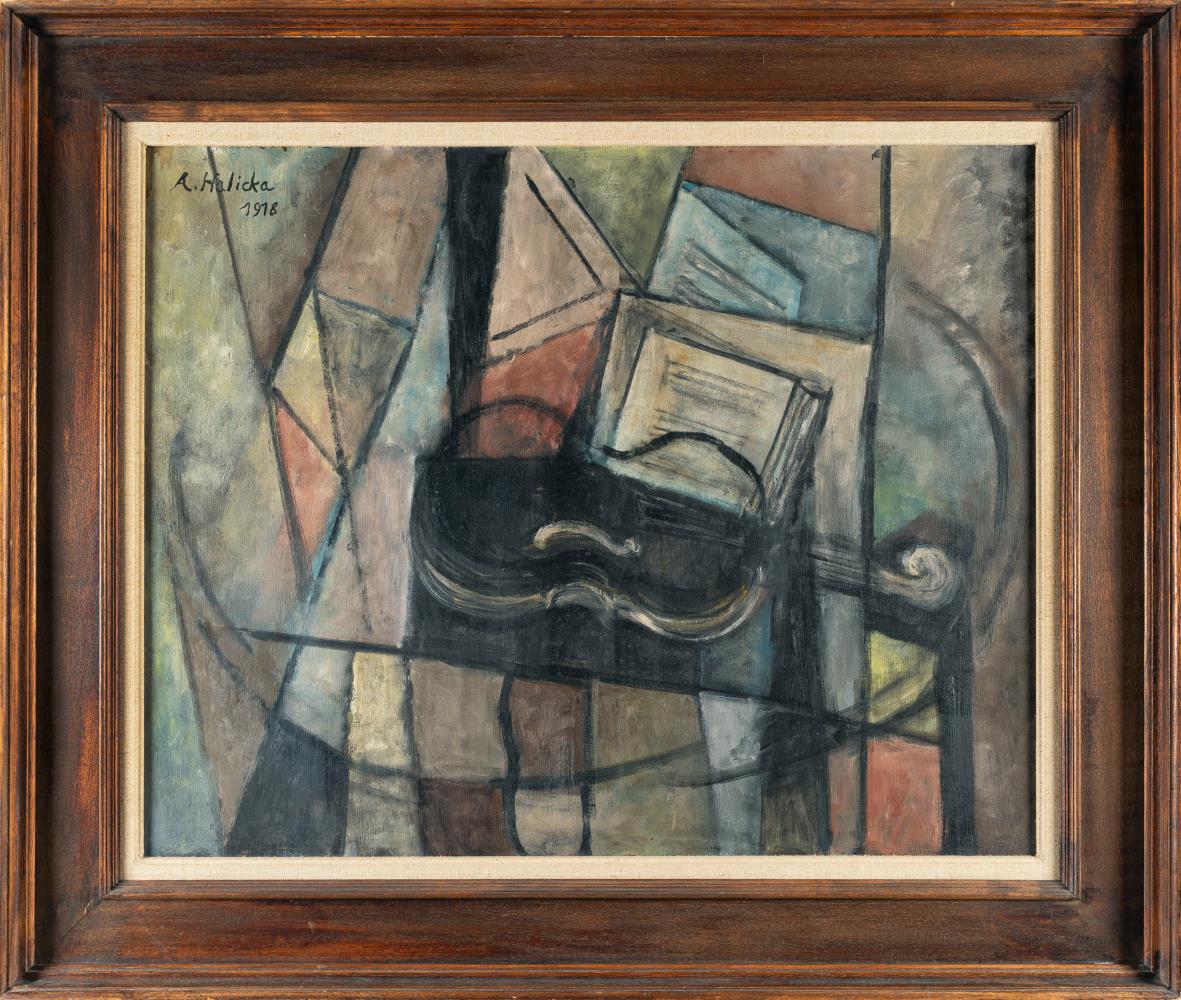
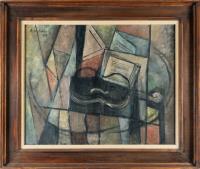
Our work also dates from this creative period and is thematically entirely committed to Cubism. With delicate colour gradients and a rigorous linear composition, the painter plays with views of a table featuring a violin, a newspaper or sheet music, allowing the viewer’s gaze to jump between different pictorial planes.
Subsequent exhibitions followed, including at the Salon d’Automne, the Salon des Tuileries and the Salon des Surindépendants, as well as international group exhibitions (Berthe Weill, Paris 1921; Bernheim-Jeune, Paris 1923; Kunsthaus, Zurich 1926; Wildenstein, Paris 1947).
• Created during Halicka’s Cubist phase in the period of the First World War, when she was associated with the circle around Picasso and Gris
• Typical Cubist still life with multiple perspectives and a fragmented conception of space
Alice Halicka was born in Krakow in 1894, the daughter of a Jewish doctor. She initially took painting lessons with Simon Hollósy in Munich, before moving to Paris in 1912. There she studied under Paul Sérusier and Maurice Denis, before her works were exhibited in Parisian salons. She interrupted her stay in France with numerous trips to Austria, Great Britain, Spain, Switzerland and Morocco, amongst other places. In 1913, she married the Polish painter Louis Marcoussis (1878–1941), who introduced her in 1912 to the circle of Cubists around Juan Gris, Georges Braque, Pablo Picasso and others. She remained associated with this circle of artists until 1921. Her participation in the Salon des Indépendants in 1914 also brought her to the attention of Guillaume Apollinaire. The phase of Cubist still lifes in her work was limited to the period of the First World War; later, she turned once again to the figurative style of the Surrealists.
Our work also dates from this creative period and is thematically entirely committed to Cubism. With delicate colour gradients and a rigorous linear composition, the painter plays with views of a table featuring a violin, a newspaper or sheet music, allowing the viewer’s gaze to jump between different pictorial planes.
Subsequent exhibitions followed, including at the Salon d’Automne, the Salon des Tuileries and the Salon des Surindépendants, as well as international group exhibitions (Berthe Weill, Paris 1921; Bernheim-Jeune, Paris 1923; Kunsthaus, Zurich 1926; Wildenstein, Paris 1947).