Egon Schiele
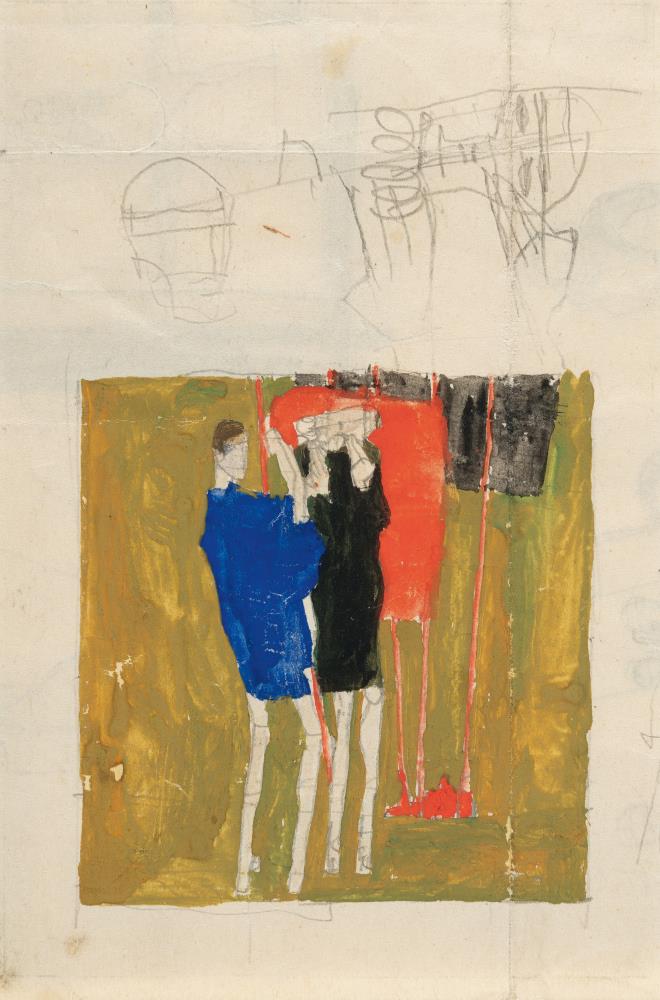
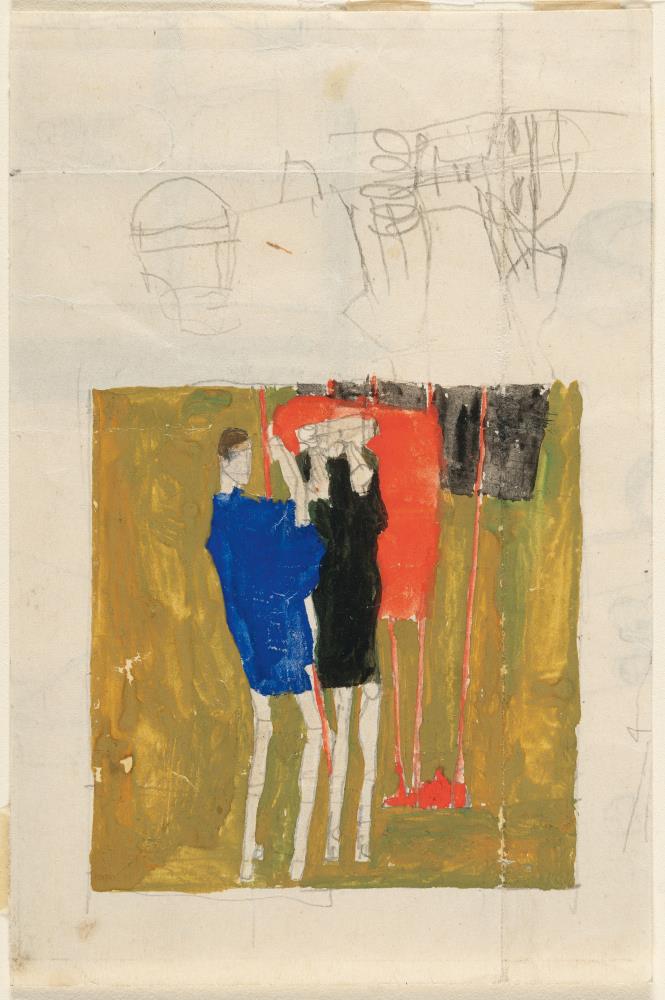
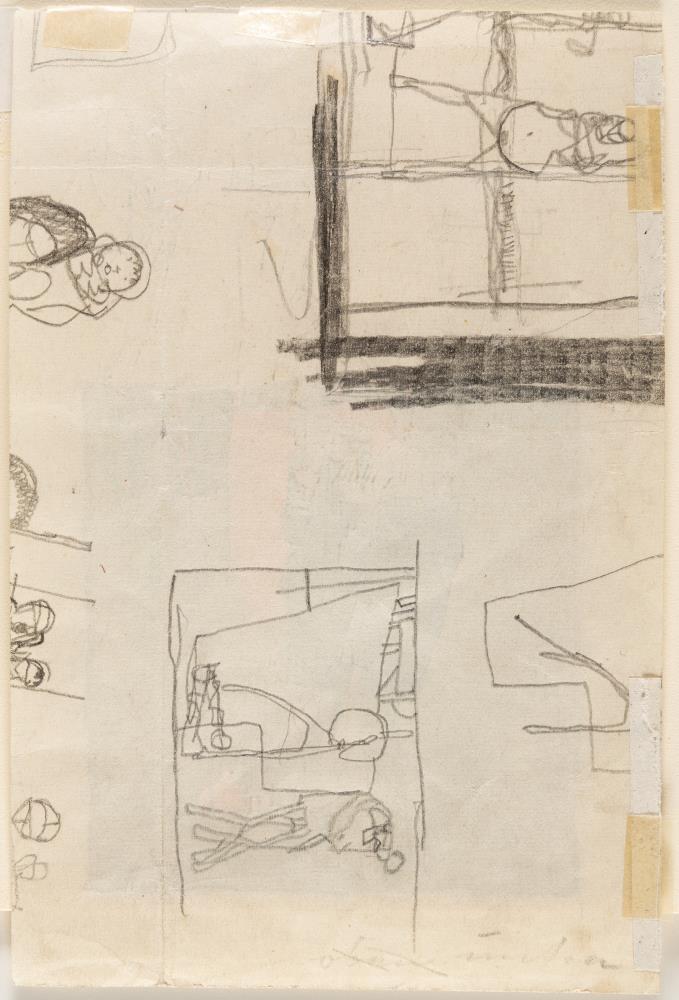
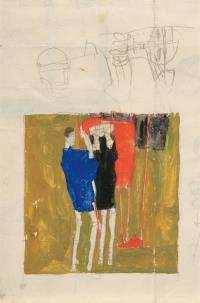
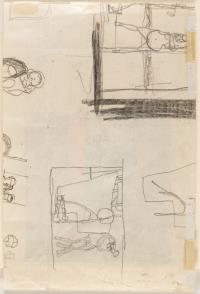
Recto: Two men - Verso: Small figure sketches
Artist
Egon Schiele
1890 Tulln/Donau - Wien 1918
Further information
Nicht bei Kallir.
Jane Kallir, die lt. Sabarsky dieses Werk begutachtet hat, geht davon aus, dass es tatsächlich aus einem Skizzenbuch Egon Schieles stammt. Da sie jedoch grundsätzlich keine einzelnen Skizzenbuchblätter im Werkverzeichnis erwähnt, ist auch dieses Blatt nicht in die aktualisierte 2. Auflage ihres Werkverzeichnisses (1998) aufgenommen worden.
Jane Kallir, die lt. Sabarsky dieses Werk begutachtet hat, geht davon aus, dass es tatsächlich aus einem Skizzenbuch Egon Schieles stammt. Da sie jedoch grundsätzlich keine einzelnen Skizzenbuchblätter im Werkverzeichnis erwähnt, ist auch dieses Blatt nicht in die aktualisierte 2. Auflage ihres Werkverzeichnisses (1998) aufgenommen worden.
Provenance
Serge Sabarsky Collection/Estate, New York;
Vally Sabarsky Collection/Foundation, New York.
Vally Sabarsky Collection/Foundation, New York.
Share


Description
• Fascinating insight into Schiele’s creative process
• Colour-rich composition full of tension
• From one of the artist’s sketchbooks
One of the most exciting experiences for any art collector is being able to look over the shoulder of their favourite artists. Studio visits to artist friends, studio tours organised by art associations, and discussions in galleries and auction houses are correspondingly sought-after (and rare). Here, one can observe the process in the hope of getting closer to the genius – knowing full well that any external observation can never fully capture the inner artistic process. Nowadays, visiting the studio of a contemporary artist is a matter of connections, money and time. For artists of bygone eras, these hurdles become an impossibility: Dürer and Sintenis no longer allow us to look over their shoulders!
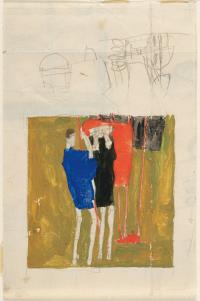
One consolation is the artists who, even after their passing, offer us art enthusiasts insights into their creative process by having documented and archived it. In modern art, we are pleased to regularly offer sketch sheets by artists such as Gustav Klimt or Egon Schiele, which show preliminary studies of details in paintings, such as heads, boots or armchairs. These tidy sheets are works of art in their own right. With the lot ‘Two Men’, we are offering a particular rarity: we see no final drawing, no beautifully conceived sheet. Instead, we find ourselves right in the studio of the wild Schiele, smelling the paints and the struggle to find the image. The sheet bears witness to discovery and rejection, to losing oneself and experimenting. Thus we see numerous abstract sketches, glimpsing a head here, a scene there. The sheet’s central attraction lies in the square executed in gouache. Here, in all their sketch-like quality, two of Schiele’s men are depicted, straining against the frame. Just like Schiele’s artistic spirit, they want to break free, conquer the sheet, take possession of it, grasp it.
• Colour-rich composition full of tension
• From one of the artist’s sketchbooks
One of the most exciting experiences for any art collector is being able to look over the shoulder of their favourite artists. Studio visits to artist friends, studio tours organised by art associations, and discussions in galleries and auction houses are correspondingly sought-after (and rare). Here, one can observe the process in the hope of getting closer to the genius – knowing full well that any external observation can never fully capture the inner artistic process. Nowadays, visiting the studio of a contemporary artist is a matter of connections, money and time. For artists of bygone eras, these hurdles become an impossibility: Dürer and Sintenis no longer allow us to look over their shoulders!
One consolation is the artists who, even after their passing, offer us art enthusiasts insights into their creative process by having documented and archived it. In modern art, we are pleased to regularly offer sketch sheets by artists such as Gustav Klimt or Egon Schiele, which show preliminary studies of details in paintings, such as heads, boots or armchairs. These tidy sheets are works of art in their own right. With the lot ‘Two Men’, we are offering a particular rarity: we see no final drawing, no beautifully conceived sheet. Instead, we find ourselves right in the studio of the wild Schiele, smelling the paints and the struggle to find the image. The sheet bears witness to discovery and rejection, to losing oneself and experimenting. Thus we see numerous abstract sketches, glimpsing a head here, a scene there. The sheet’s central attraction lies in the square executed in gouache. Here, in all their sketch-like quality, two of Schiele’s men are depicted, straining against the frame. Just like Schiele’s artistic spirit, they want to break free, conquer the sheet, take possession of it, grasp it.