Albrecht Dürer
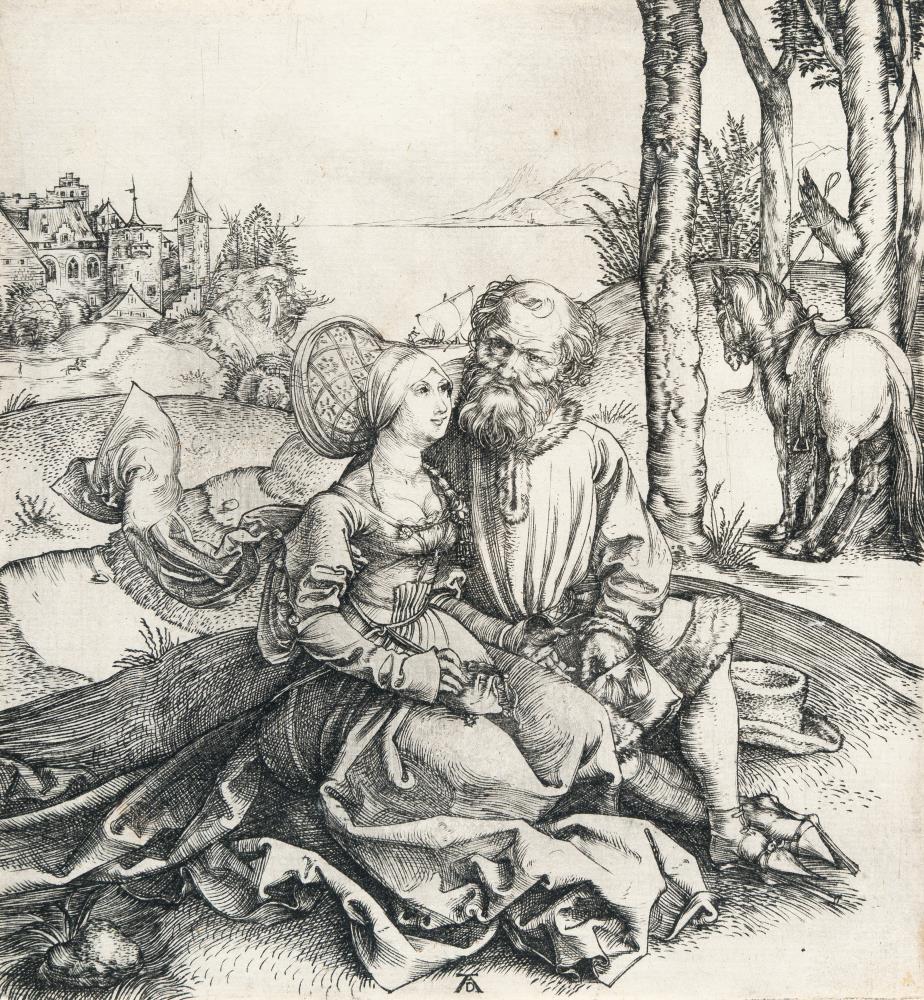
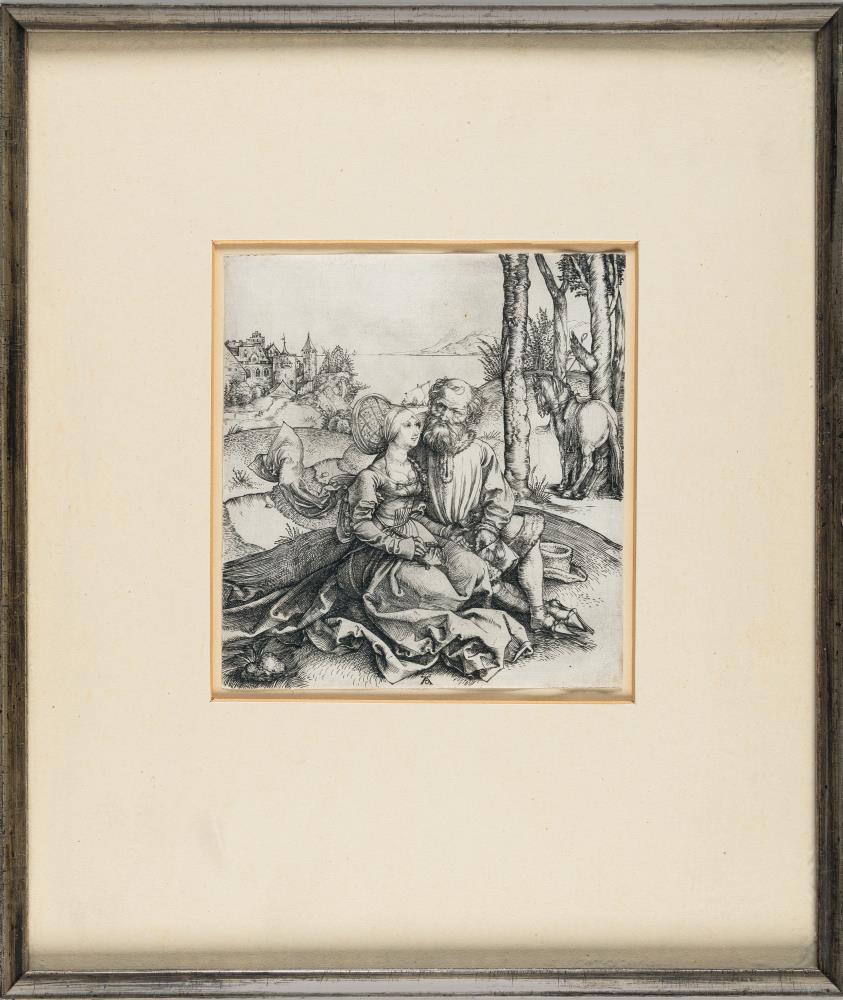
Das ungleiche Paar (Der Liebesantrag)


Artist
Albrecht Dürer
1471 - Nuremberg - 1528
Further information
Bartsch 93; Meder 77 I b-c (of III); Schoch/Mende/Scherbaum 3 I b-c (of III).
Provenance
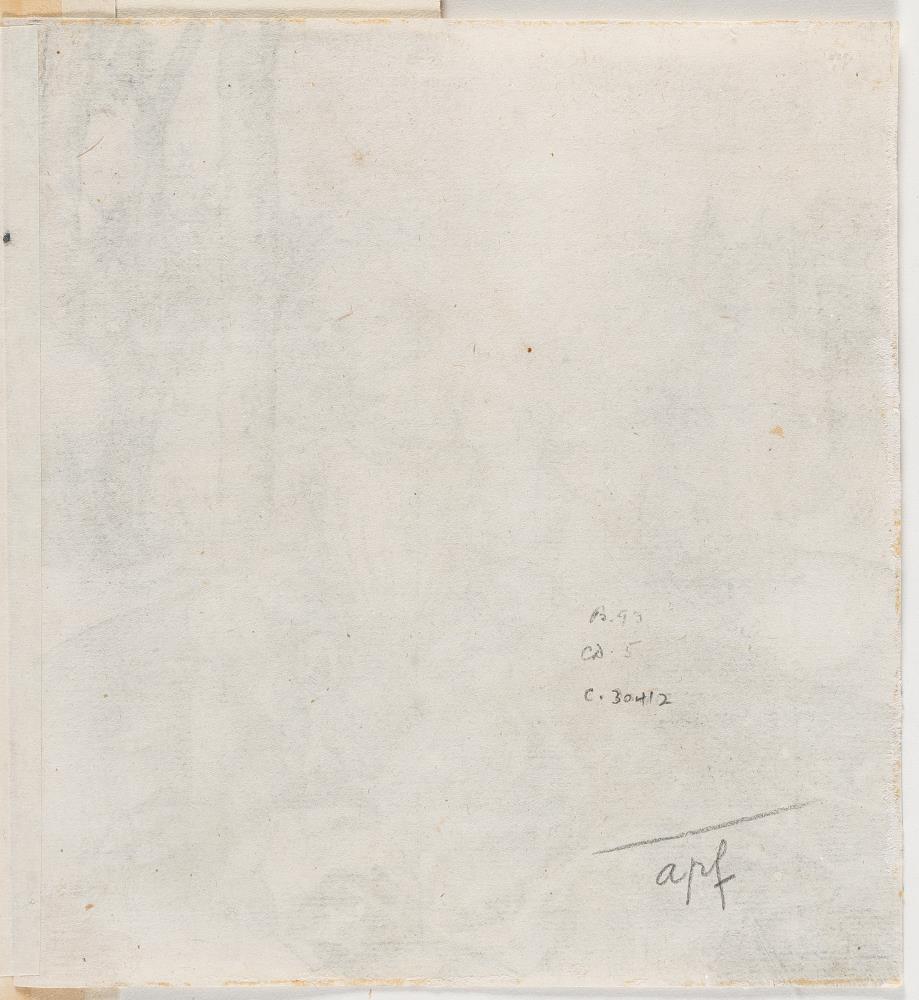
With Colnaghi’s, London, (with their stock number C. 30412 in pencil verso);
Art Gallery W. Welker, Heidelberg;
Private collection Baden-Württemberg.
Art Gallery W. Welker, Heidelberg;
Private collection Baden-Württemberg.
Share


Description
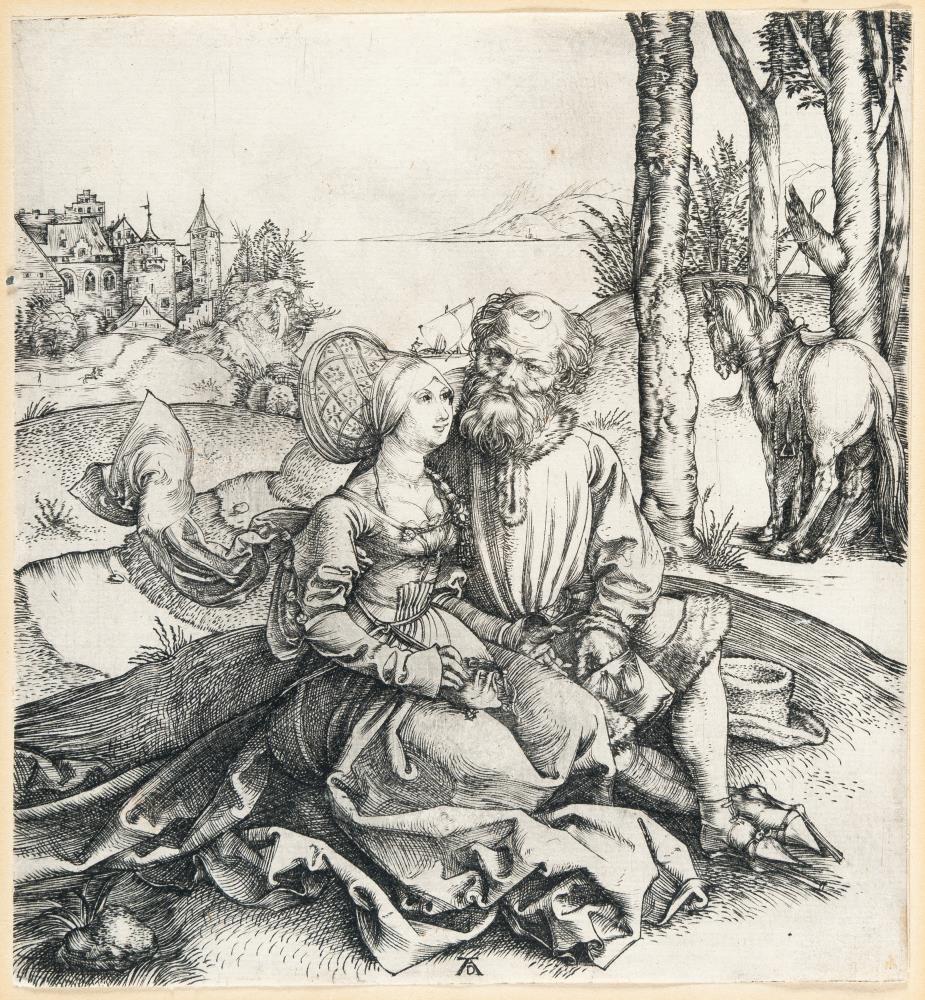
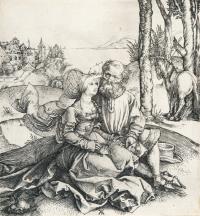
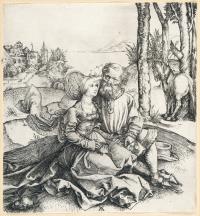
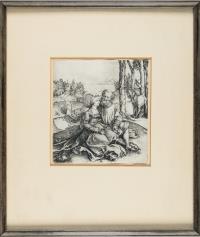
A very fine, rich Meder I b-c impression, printing very sharply and with a light plate tone. The mountains in the background are clearly visible.
One of Dürer's earliest engravings depicts a seemingly idyllic scene at the edge of a forest outside the city. However, the encounter between a young woman and an older man turns out to be not a representation of romantic love, but a transactional relationship, as revealed by the figures' gestures: the man takes a coin from his purse and hands it to the woman, who accepts it.
The depiction reflects the social norms of late medieval class society. While the woman's fashionable clothing – bonnet and tight-fitting bodice – emphasises contemporary elegance, the man is satirically characterised by his old-fashioned costume, discarded fur hat and exaggerated shoes.
The motif of the unequal couple ties in with a long literary tradition from the ancient comedy of Plautus to Sebastian Brant and gained popularity through the spread of print graphics in the last quarter of the 15th century.
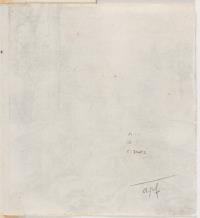
Trimmed to the platemark. – A few tiny, inconspicuous stains. A smoothed, diagonal crease mark on the reverse. Verso scattered remnants of a former mounting and faint pencil notes, otherwise in very good condition.
One of Dürer's earliest engravings depicts a seemingly idyllic scene at the edge of a forest outside the city. However, the encounter between a young woman and an older man turns out to be not a representation of romantic love, but a transactional relationship, as revealed by the figures' gestures: the man takes a coin from his purse and hands it to the woman, who accepts it.
The depiction reflects the social norms of late medieval class society. While the woman's fashionable clothing – bonnet and tight-fitting bodice – emphasises contemporary elegance, the man is satirically characterised by his old-fashioned costume, discarded fur hat and exaggerated shoes.
The motif of the unequal couple ties in with a long literary tradition from the ancient comedy of Plautus to Sebastian Brant and gained popularity through the spread of print graphics in the last quarter of the 15th century.
Trimmed to the platemark. – A few tiny, inconspicuous stains. A smoothed, diagonal crease mark on the reverse. Verso scattered remnants of a former mounting and faint pencil notes, otherwise in very good condition.