Schwaben
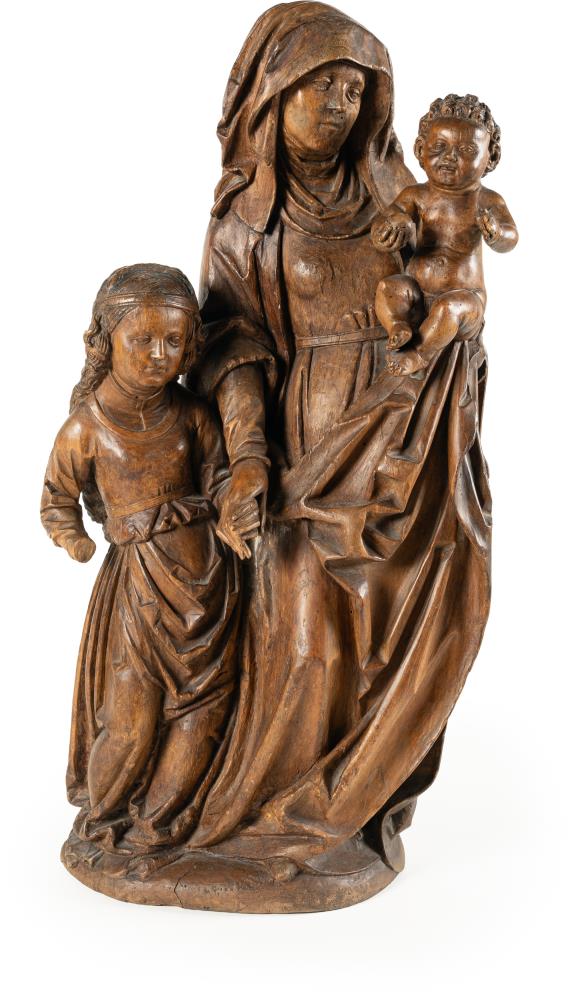
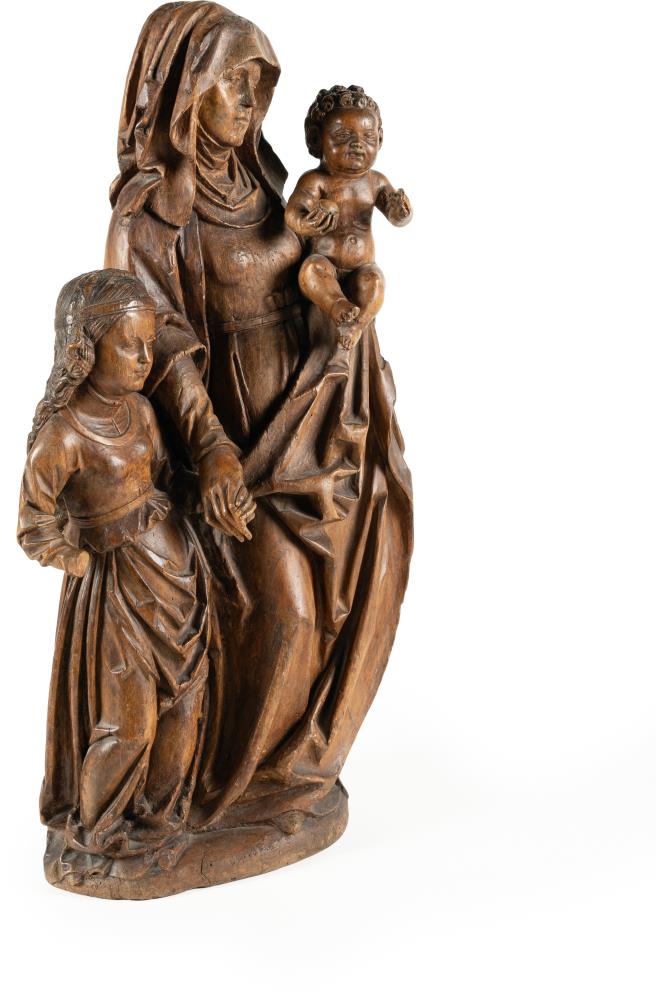
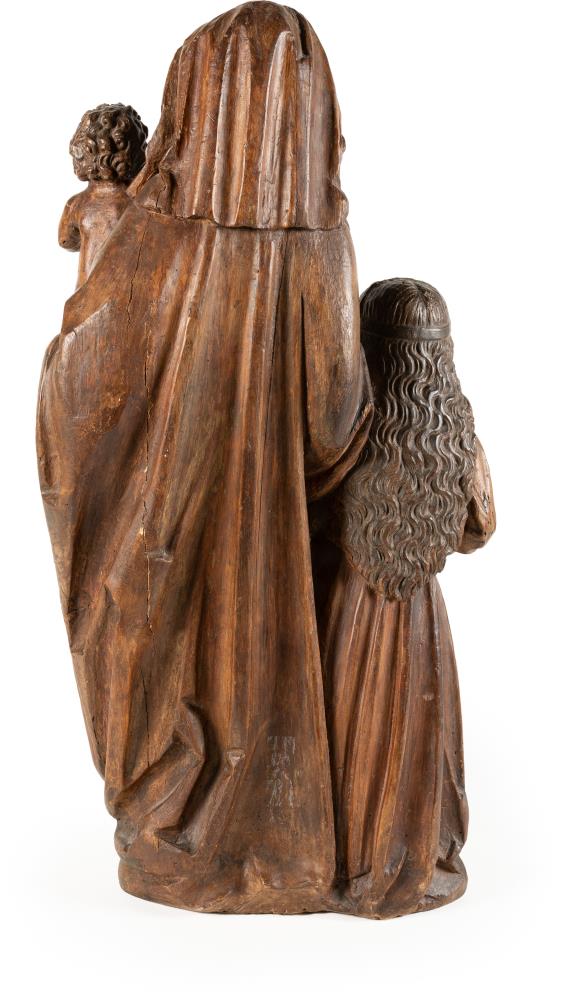
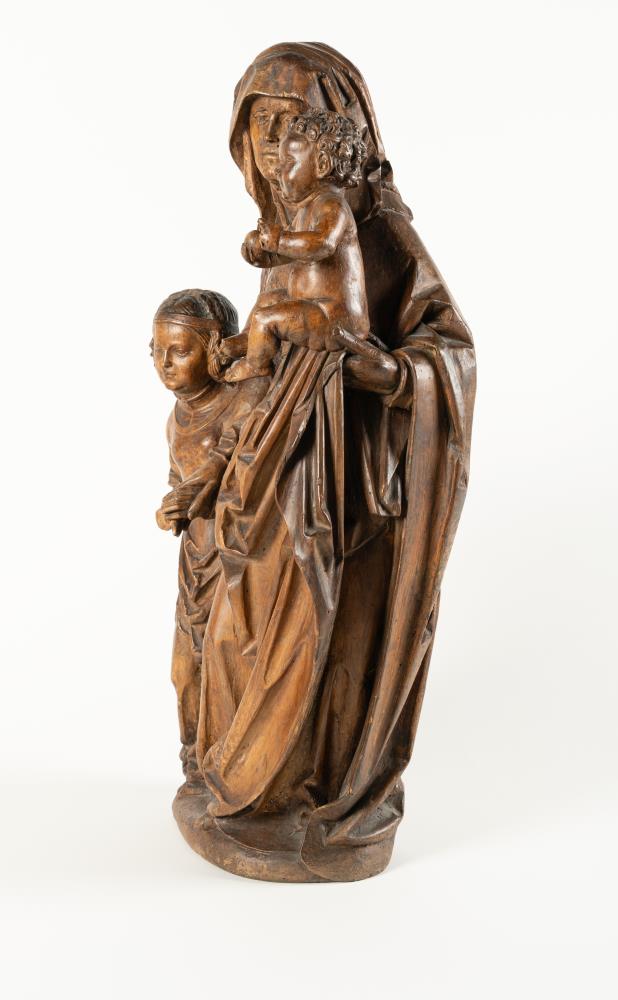
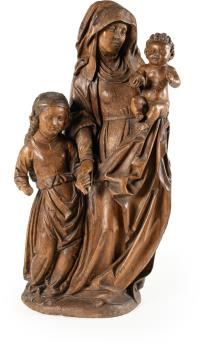
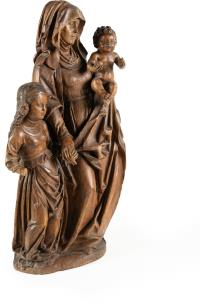
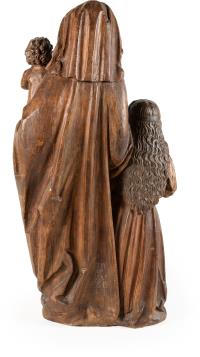
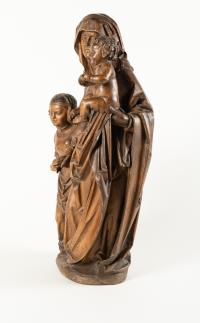
St Anne with the Virgin and Child
Artist
Schwaben
Literature
Friedrich Lübbecke, ‘The Ullmann Collection in Frankfurt am Main: Medieval Sculpture’, in: Georg Biermann, *Der Cicerone*. A fortnightly journal for the interests of art researchers and collectors, Vol. 8, Nos. 19/20, Leipzig 1916, pp. 379–399, Fig. 18; Hubert Wilm, The Gothic Wooden Figure, Its Nature and Technique, Leipzig 1923, p. 155, fig. plate 71; Father Beda Kleinschmidt, Saint Anne. Her Veneration in History, Art and Folklore, Düsseldorf 1930, p. 241; Maike Brüggen, Art in Crisis. The Hedwig and Albert Ullmann Collection and the Frankfurt Art Market in the Wake of the First World War, 2022, p. 250.
Provenance
Antique dealer Gustav Mögle, Frankfurt (until 1907); Hedwig and Albert Ullmann, Frankfurt am Main (from 1907–1938), acquired from the aforementioned (see: Der Cicerone. A fortnightly journal for the interests of art researchers and collectors, Vol. 8, Nos. 19/20, Leipzig 1916, pp. 379–399, Fig. 18, https://digi.ub.uni-heidelberg.de/diglit/cicerone1916/0411/image.info); Hans W. Lange auction, Berlin 7–9 April 1938, lot 88, consigned by Hedwig Ullmann; Julius Böhler Art Dealership (https://boehler.zikg.eu/wisski/navigate/11966/view); private collection, North Rhine-Westphalia, acquired from the aforementioned on 25 November 1939; private collection, Hesse (inherited from the aforementioned).
Share


Description
The depiction of Saint Anne with the Virgin and Child is one of the common iconographic themes of late medieval piety and shows Saint Anne together with Mary and the Christ Child as a genealogical trio. Our sculpture is characterised by the figures’ close intertwining and a lively interaction. Mary appears as a young girl, her hand held by Anne in a protective, maternal gesture. Stylistically, the work is characterised by a softly flowing, partly deeply carved treatment of the robes. The gently modelled faces and the rounded depiction of the child suggest a date of creation around 1520, at the threshold of the late Gothic and the early Renaissance. This wooden sculpture comes from the significant Frankfurt collection of Albert (1862–1912) and Hedwig Ullmann, née Nathan (1872–1945), which was built up from the 1890s onwards with great art-historical rigour. It comprised several hundred objects and was distinguished in particular by its high-quality selection of 19th-century paintings, medieval sculpture and works of decorative art. The sculpture ‘Anna Selbdritt’ was acquired by the Ullmanns in 1907 from the Frankfurt antiquities dealer Gustav Mögle and was published in 1916 in the journal ‘Der Cicerone’ as a key work in the collection. Following Albert’s death in 1912, Hedwig Ullmann continued to manage the collection independently and shaped its profile into the 1920s. As a Jewish collector, she was subjected to increasing persecution and economic pressure from 1933 onwards; in 1938, she was finally forced to sell parts of the collection. Thus, the sculpture "Anna Selbdritt" was auctioned in April 1938 at the Berlin auction house Hans W. Lange, together with other works from Hedwig Ullmann’s collection. That same year, she left Germany and emigrated via Italy to Melbourne, where she died in May 1945. The descendants of the 1939 buyer, in consultation with the heirs of Hedwig Ullmann and with the assistance of KARL&FABER, have agreed on an amicable and fair solution. The work is therefore free from any restitution claims.