Wassily Kandinsky
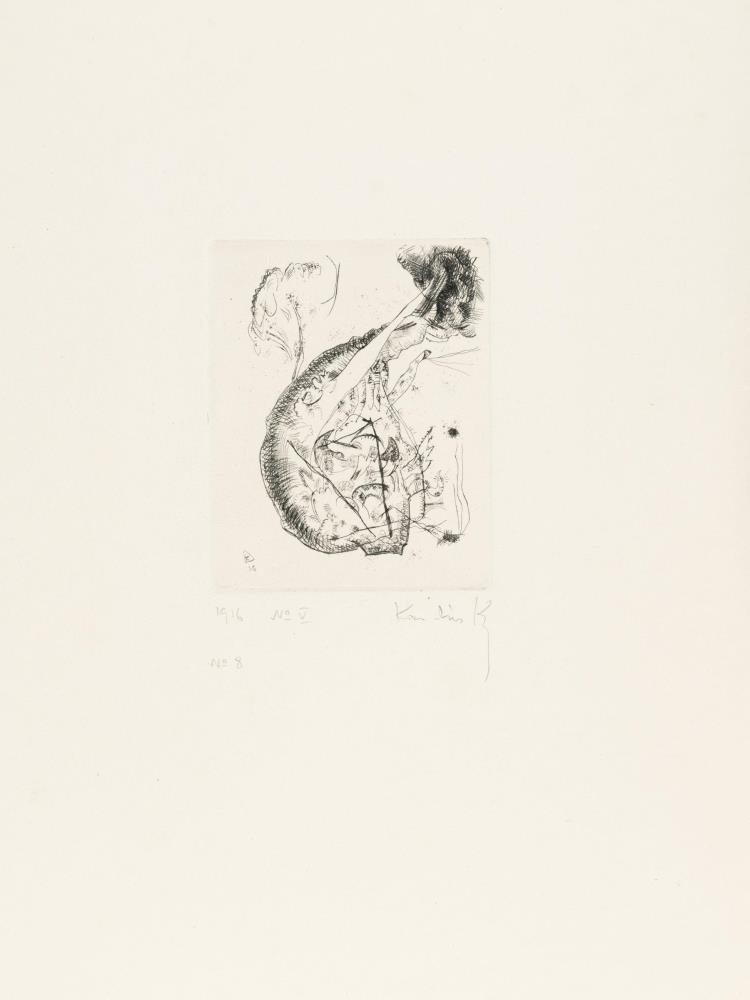
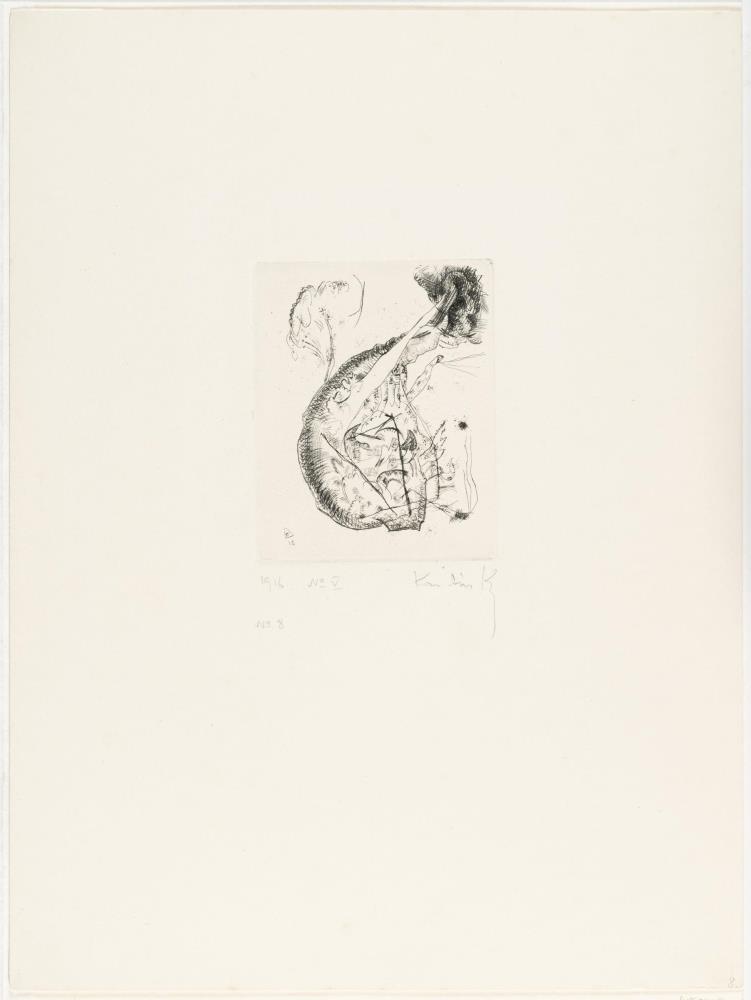
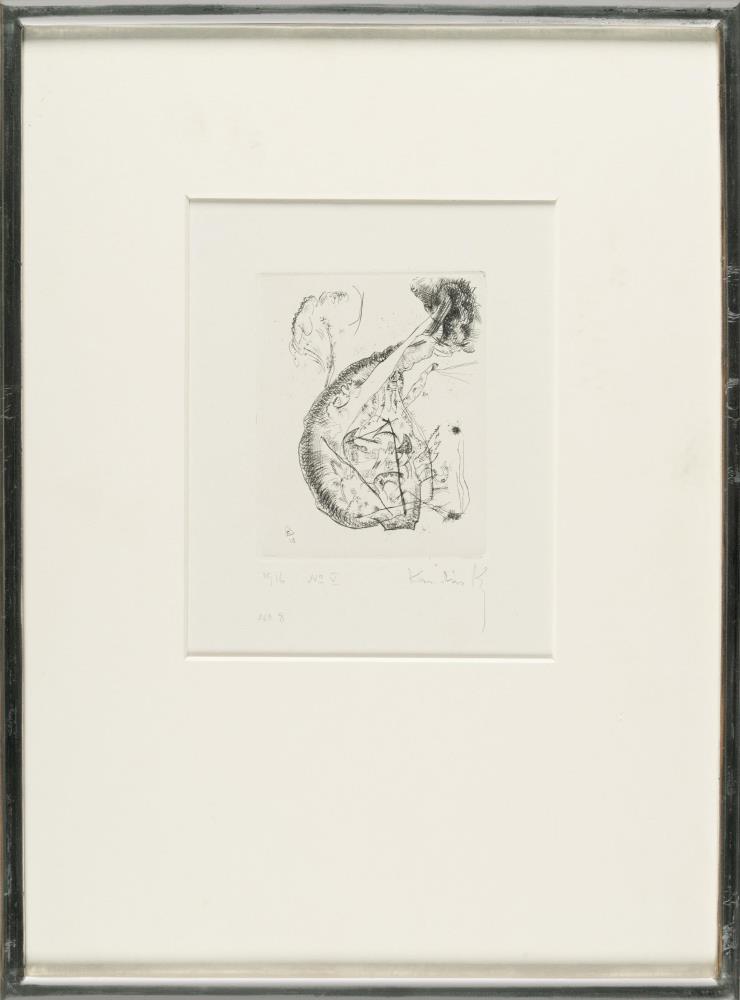
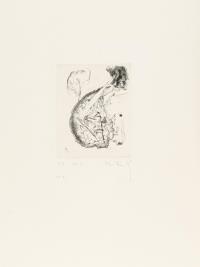
„No. V“




Description
- As one of the most important representatives of abstraction, Wassily Kandinsky left behind an equally outstanding oeuvre of prints alongside his paintings
- Only 10 numbered prints exist
- "No. V" is one of the few sheets created during the First World War, which are also extremely rare on the market
Before moving to Munich in 1896, Kandinsky had already spent a year managing an art print shop in Moscow and was therefore very familiar with the various printmaking techniques. Initially, however, he worked primarily with woodcuts, and it was not until 1913 that he produced his first etching. With etching, the line in all its nuances and subtleties - sometimes delicate, sometimes strong, sometimes individual, sometimes as a bundle of strokes - found its way into his graphic work.
After the outbreak of the First World War, Wassily Kandinsky was forced to leave Germany and initially moved to Switzerland with Gabriele Münter, before traveling on to Moscow alone. In Moscow, his work as a painter initially came to an almost complete standstill; he limited himself to watercolors and reverse glass paintings, which surprised with a clear return to representationalism.
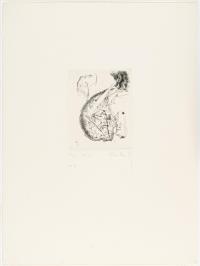
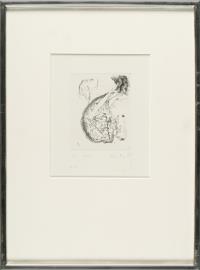
On February 2, 1915, he wrote to Gabriele Münter: "Maybe I'll do some engravings." Work on the etchings could therefore have already begun in the course of 1915. However, they were not printed until the beginning of 1916 in Stockholm, where Kandinsky and Gabriele Münter met at Christmas 1915. A total of six drypoint works titled with Roman numerals were created in 1916, all of which were published in an edition of only 10 numbered copies. The repertoire of motifs on display evokes associations with Russian fairy-tale figures, ladies in hoop skirts and body parts, some of which swirl through the room in breathtaking poses.
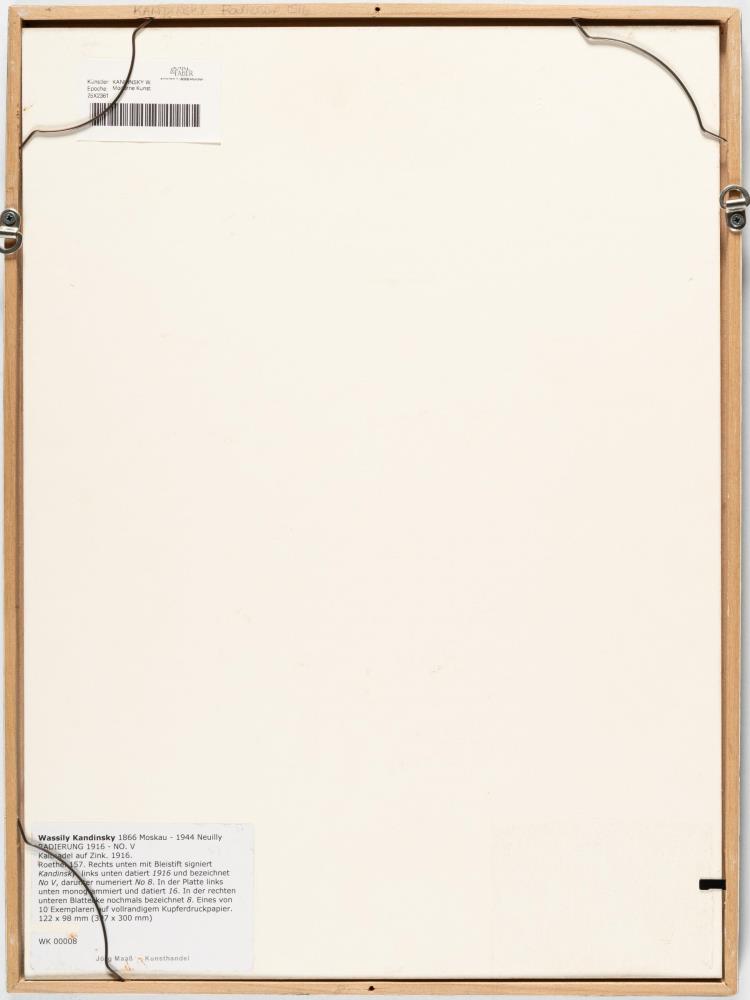
Roethel 157.
- Only 10 numbered prints exist
- "No. V" is one of the few sheets created during the First World War, which are also extremely rare on the market
Before moving to Munich in 1896, Kandinsky had already spent a year managing an art print shop in Moscow and was therefore very familiar with the various printmaking techniques. Initially, however, he worked primarily with woodcuts, and it was not until 1913 that he produced his first etching. With etching, the line in all its nuances and subtleties - sometimes delicate, sometimes strong, sometimes individual, sometimes as a bundle of strokes - found its way into his graphic work.
After the outbreak of the First World War, Wassily Kandinsky was forced to leave Germany and initially moved to Switzerland with Gabriele Münter, before traveling on to Moscow alone. In Moscow, his work as a painter initially came to an almost complete standstill; he limited himself to watercolors and reverse glass paintings, which surprised with a clear return to representationalism.
On February 2, 1915, he wrote to Gabriele Münter: "Maybe I'll do some engravings." Work on the etchings could therefore have already begun in the course of 1915. However, they were not printed until the beginning of 1916 in Stockholm, where Kandinsky and Gabriele Münter met at Christmas 1915. A total of six drypoint works titled with Roman numerals were created in 1916, all of which were published in an edition of only 10 numbered copies. The repertoire of motifs on display evokes associations with Russian fairy-tale figures, ladies in hoop skirts and body parts, some of which swirl through the room in breathtaking poses.
Roethel 157.