Rembrandt Harmensz. van Rijn
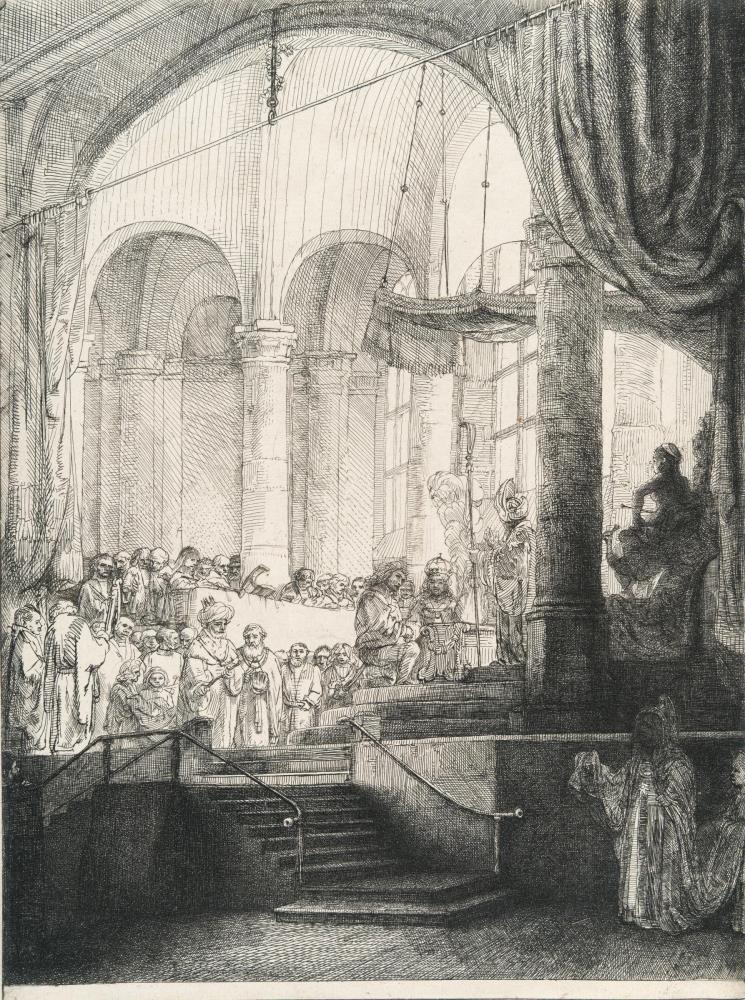
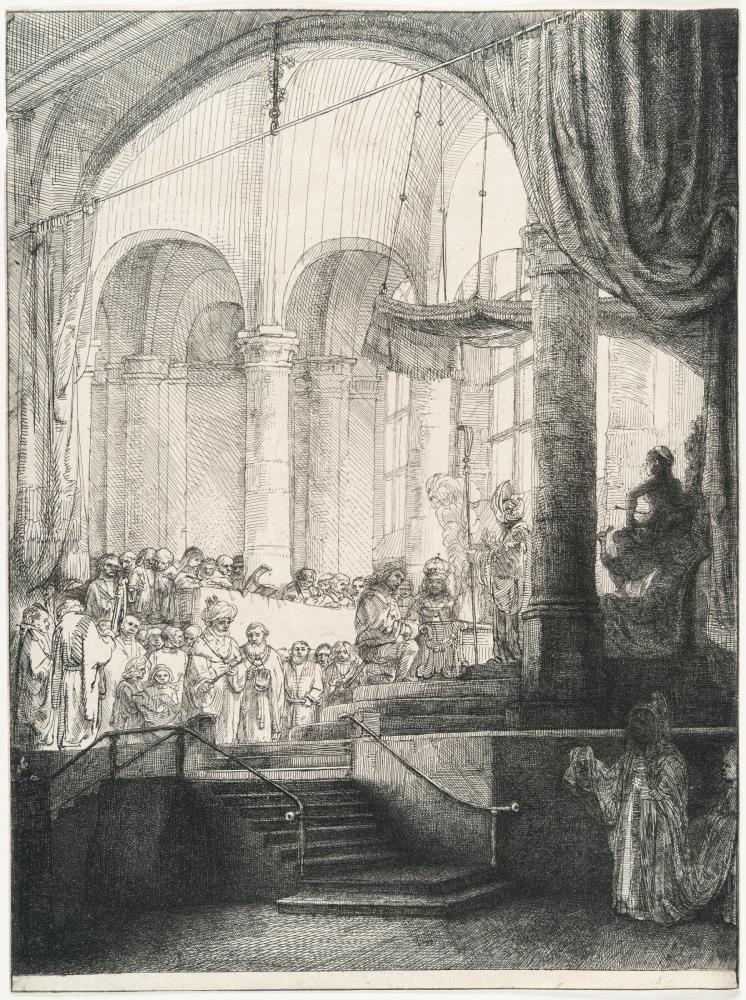
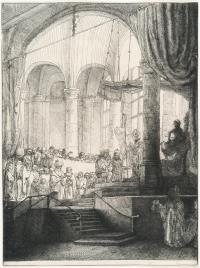
Medea oder die Hochzeit des Jason und der Kreusa
Künstler
Rembrandt Harmensz. van Rijn
Weitere Informationen
Bartsch 112; White/Boon 112 I (of V); Hinterding/Rutgers (The New Hollstein) 241 I (of V).
Provenienz
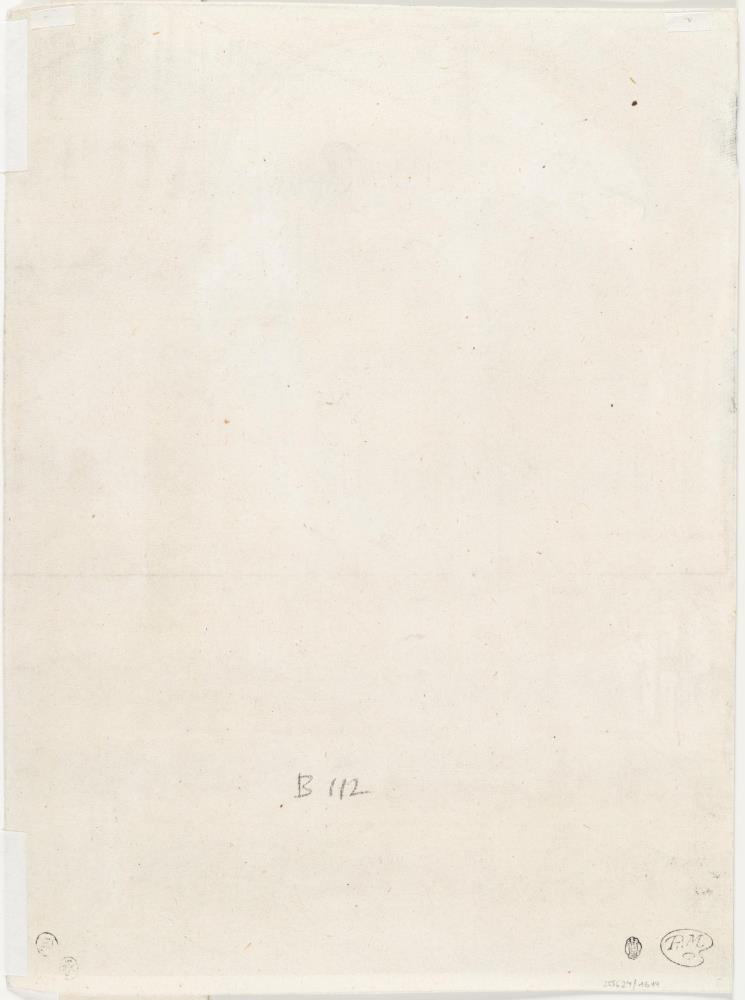
Julian Marshall (1836-1903), London, verso with the collector's stamp (Lugt 1494); Paul Mathey (1844-1929), Paris, verso with the collector's stamp (Lugt 2100b); André-Jean Hachette (1873-1952), Paris, verso with the collector's stamp (Lugt 132); Alphonse Hirsch (?) (1843-1884), Paris, verso with the collector's stamp (Lugt 133).
Teilen


Beschreibung
A superb, atmospheric lifetime impression of the first state, before the extension of Medea’s robe and that of her servant, which was added with drypoint. The sculpted figure of Juno is wearing a cap, which was later replaced by a crown. Rembrandt created illustrations for three books, with Medea being his second. Commissioned by Jan Six for the title page of his tragedy, Medea had been performed in October 1647 at the Amsterdam Stadsschouwburg and published twice (1648 and 1679). However, only the fourth state of the etching was used as the frontispiece for the first edition, while the fifth state appeared in deluxe copies of the second edition. Impressions of the first three states—before the signature, date, monogram, and the verses in the lower margin—are rare. For his depiction, Rembrandt chose the wedding scene, though Six did not include it in his adapted version, likely to encapsulate the tragic climax in a single image. The viewer’s gaze is guided by a spiraling staircase from the wedding couple to Juno, the goddess of marriage, seated in attendance. Medea, Jason’s first wife, appears in the shadows below, holding a dagger, poised to fulfill her vow and murder her children and Jason’s bride. Through this intricate circular composition, Rembrandt vividly conveys the full scope of the tragedy. One of the very few impressions on laid paper: most surviving impressions of the first state were printed on Japan paper. Pen borderline. Thread margins or trimmed on the platemark; top right corner irregular. – The paper shows slight thinning and a small dent along the left edge. Slight horizontal crease visible on the verso. Verso in the upper corners with remnants of previous mounting. Otherwise in very good condition. Very rare in this early state!